
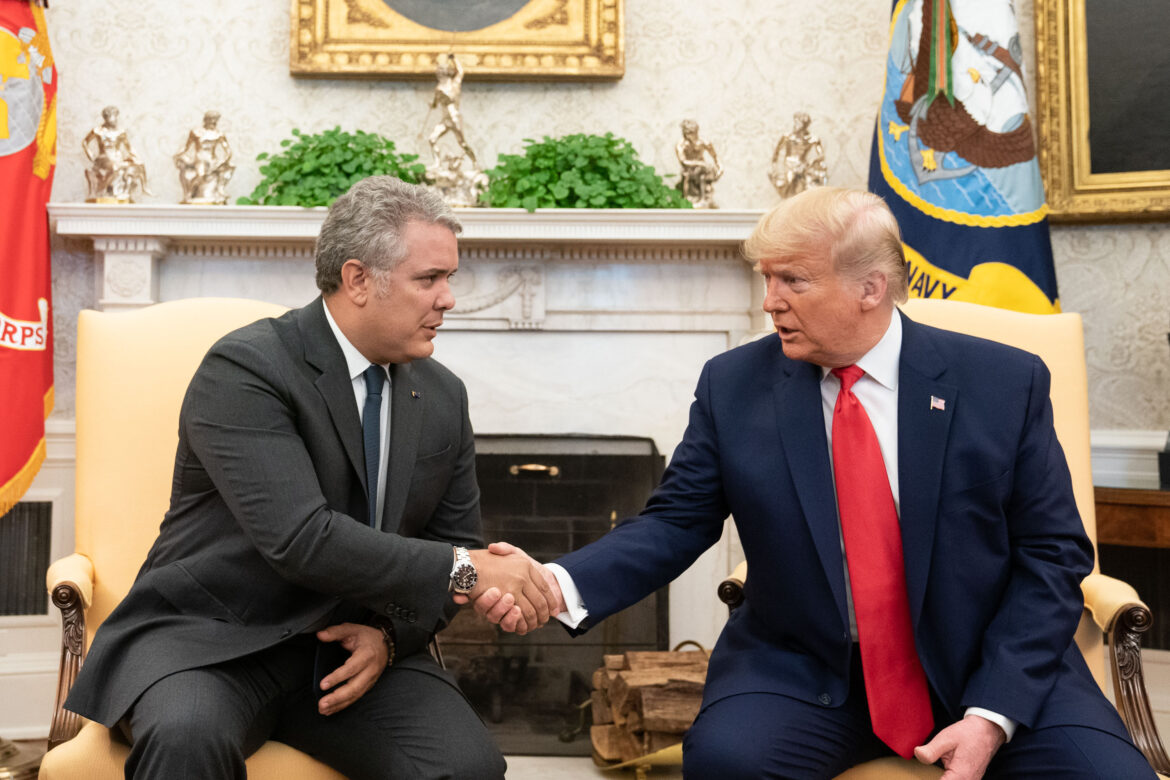
On February 26 of this year, Donald Trump announced that his administration would eliminate over 90 percent of foreign aid contracts developed through the U.S. Agency for International Development (USAID), along with $60 billion in global assistance. The move came just three days after the U.S. president had placed almost all of the agency’s staffers on leave. By early March, following Executive Order 14169—titled “Reevaluating and Realigning United States Foreign Aid”—83 percent of the proposed cuts had already been implemented. Trump cancelled 5,800 out of 6,200 existing multiyear USAID contracts, cutting a total of $54 billion in funding. The administration’s act—one supposedly designed to deal with “significant waste stemming from decades of institutional drift”—marks one of the most devastating setbacks to U.S. humanitarian funding in history. Media backlash has primarily focused on the projected setbacks to poverty-focused development, especially pertaining to food aid and disease relief, while paying little attention to security implications—which are already unfolding with particularly severe consequences in Colombia.
Colombia is the top recipient of USAID in the Western hemisphere, receiving over $440 million annually. Of this, USAID allocated approximately $29.6 million towards conflict, peace, and security—a critical focus given the country’s persistently high homicide rates. With such a large share of government expenditure coming from the U.S., current aid freezes risk paralyzing Colombian security efforts. Given the current rapid pace of the cuts, Colombia lacks the financial capacity to offset the shortfall—raising the danger of gang remilitarization and the gradual erosion of post-conflict stability established by the 2016 peace accord with the FARC.
Colombia’s Peace Accord with the FARC
In November 2016, the Colombian government signed a historic peace deal with the Revolutionary Armed Forces of Colombia (FARC), ending more than fifty years of armed conflict and initiating efforts to reintegrate former rebels into civilian life. As part of the agreement, FARC revolutionaries agreed to surrender their weapons over a 180-day period in exchange for government-provided job training, education, rural reform, and financial assistance to transition into civilian life. The accord has significantly reduced violence and drug trafficking in conflict-ridden regions, with an estimated 107,000 direct beneficiaries.
However, the Trump Administration’s cuts have put this progress at risk. The U.S. provided 42 per cent of the aid necessary for the accord’s implementation, even committing additional funding to the specific protection of ethnic minority communities affected by violence in 2022. Reintegration programs, which once received a total of $1.26 billion in U.S. bilateral aid, are now unable to provide thousands of ex-combatants with the economic opportunities they need, leaving them at risk of returning to illicit activities.
FARC fighters are particularly sensitive to gaps in government capacity. In 2019, some resumed armed activity, claiming the government had failed to uphold the terms of the peace deal. Now, with critical programs outlined in the accord beginning to unravel, the situation is growing increasingly dire. Projects aimed at providing alternatives for former coca farmers, for instance, were cancelled in early March. With nearly half of the required funding now gone, it is unlikely that the Colombian government can fulfill most of its promises—raising the risk of renewed violence. This poses a significant threat to President Gustavo Petro’s “total peace” strategy, which seeks to negotiate with armed groups and implement structural reforms to mitigate conflict.
Jóvenes Resilientes
The 2016 peace agreement is not the only umbrella initiative in jeopardy following USAID cuts. Programs like Jóvenes Resilientes (Youth Resilience) also face uncertainty; these initiatives aim to address the root causes of insecurity by preventing young Colombians from joining criminal organizations in the first place. Before February, it had reached 60,000 young people and operated 30 offices across Colombia. In just one office, 200 gang members were rehabilitated and mentorship programs were provided to 3,100 youths—hence why officials claimed its programs were equally as vital as peace negotiations to reduce gang activity. Jóvenes Resilientes had been entirely funded by USAID and was set to receive $3 million in 2025 before the Trump Administration’s sweeping aid cuts. Now, unable to meet payroll for its employees, the program has been forced to shut down completely.
Moving Forward
USAID funding cuts have further strained Colombia’s already fragile security apparatus. In February, President Petro reassured Colombians that, with the help of the national budget, the government would cover funding gaps in transitional justice programs. Yet so far, this promise has not materialized. Given that the government is unlikely to meet its financial commitments under the peace accord, criminal activity will likely resurge—particularly in the absence of programs aimed at preventing youth from joining gangs.
U.S. Homeland Security Secretary Kristi Noem visited Colombia in late March as part of a broader series of Latin American visits to discuss immigration and crime policies. The visit focused on strengthening border security. Leaders agreed upon the use and sharing of biometric data to better identify and prevent criminals from crossing borders—but did not once discuss aid cuts.
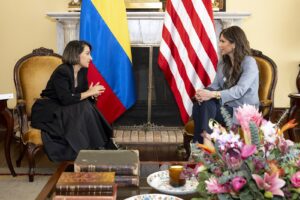
Photo Credits: “DHS Secretary Kristi Noem Travels to Colombia on March 27” by The United States Department of Homeland Security, published on March 27, 2025, licensed under Wikimedia commons. No changes were made.

Practically, the retraction of U.S. aid risks triggering a domino effect of insecurity, with rising violence in Colombia likely to magnify migratory concerns and greater regional instability. Colombia is already the third-largest source of displaced people in the world, with over 5.1 million internally displaced persons, and more seeking asylum abroad. In 2022, the International Crisis Group warned that setbacks in implementing the peace accord could reignite violence and push more Colombians to flee, exacerbating existing migration pressures across the continent. These concerns are not hypothetical, either—neighbouring Ecuador has already seen a surge in transnational crime linked to Colombian armed groups, while Panama reported an 18 percent increase in Colombian asylum applications between 2023 and 2024 alone.
Colombia’s struggle to compensate for cuts in USAID funding is far from unique. Across Latin America, numerous countries have developed a dependency on U.S. assistance to maintain internal stability through youth violence prevention and rehabilitation programs. Such initiatives—such as Alianza Jóven in Guatemala—have contributed to significant reductions in homicide rates. A study by Vanderbilt University determined that programs like Alianza Jóven have effectively lowered perceptions of gang presence and increased community trust in local governance.
Although the freeze was set to last only 90 days—during which Elon Musk’s Department of Government Efficiency promised to reassess current aid flows—layoffs within USAID offices signalled troubling consequences early on. Rescissions and outright terminations of contracts quickly followed the supposedly temporary freeze. These cuts lay bare the tedious dependence of Colombia and much of Latin America on foreign aid and reveal their vulnerability to the ebb and flow of external support. For the sake of long-term stability and security, the Colombian government must diversify its donor base and pursue aid partnerships beyond the United States. Countries like Norway—which played a central role in facilitating the 2016 peace negotiations—could serve as key allies in sustaining peacebuilding efforts. Similarly, support from Latin American neighbours, through regional cooperation frameworks or bilateral agreements, may help Colombia navigate immediate funding gaps while shielding the peace process from future geopolitical changes.
Edited by Olivia Moore
Disclaimer: This is an article written by a Staff Writer. Catalyst is a student-led platform that fosters engagement with global issues from a learning perspective. The opinions expressed above do not necessarily reflect the views of the publication.
Marina Gallo is in her second year at McGill University, pursuing a B.A. in Political Science with a minor in Economics. She is particularly interested in Latin American politics and U.S. economic policy.