
Amidst a changing tariff landscape and turbulent global conflicts, Brazil’s recent acts of judicial accountability sharply contrast the global trend of increased democratic backsliding. In spite of domestic divisions and retaliation from the Trump administration, Brazil is succeeding where a myriad of countries failed: successfully investigating and prosecuting a leader who attempted to overthrow a democratic government.
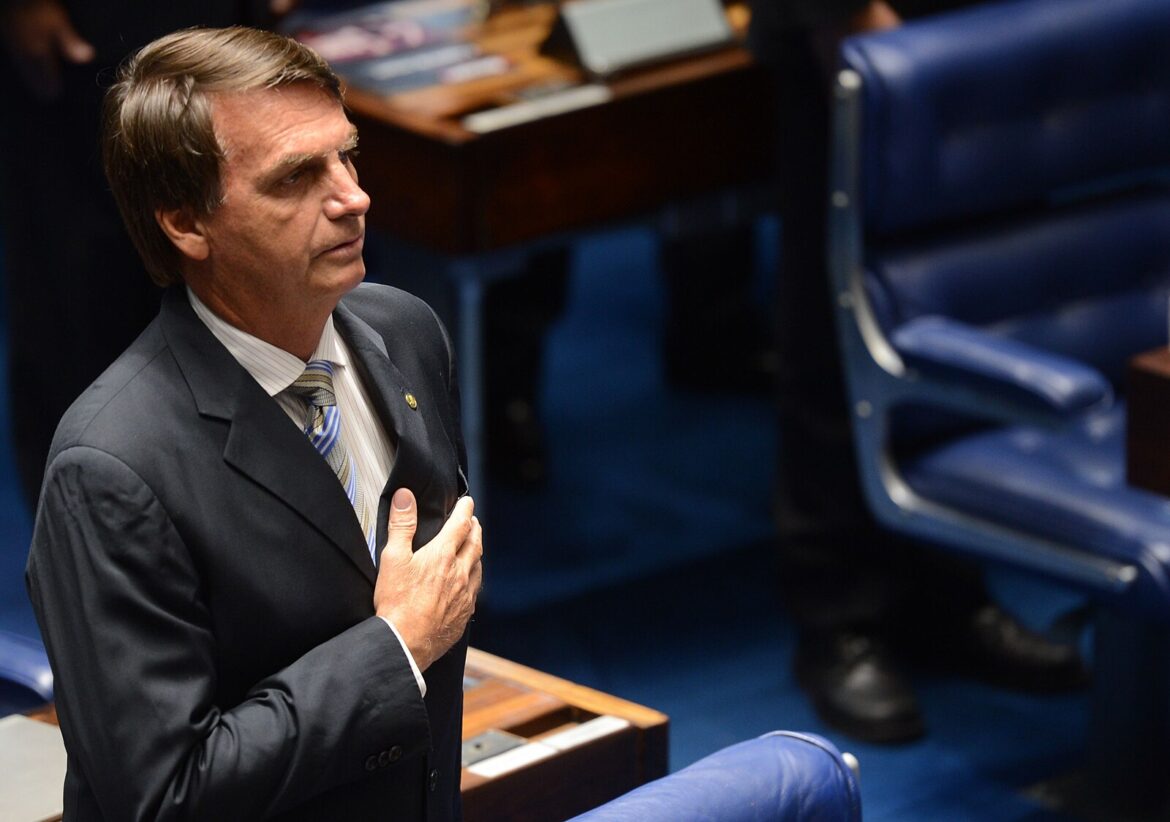
On September 11, the former president of Brazil, Jair Bolsonaro, was found guilty of plotting a military coup and was sentenced to 27 years and three months in prison. The narrow circumvention of an attempted government takeover and the success of the subsequent prosecutorial effort demonstrates Brazil’s robust system of checks and balances and a steadfast leadership corps. As the trial draws to a close, we should consider Brazil as a case study for democratic resilience, focusing on the elements that facilitated this contentious prosecutorial feat.
Bolsonaro’s Rise and Fall
During his three decades as a Congressman in the Chamber of Deputies (1991-2019), former army captain Jair Bolsonaro remained on the inflammatory fringes of Brazilian politics due to his far-right views and fervent support of the past military dictatorship. However, growing public tensions during the mid-2010s—including the impeachment of President Dilma Rousseff and mass protests against government corruption—facilitated his rise to power. Backed by a coalition of populist masses, business actors, and Evangelical Christians, Bolsonaro was elected president in 2018. The New Yorker writes that his platform offered “a total inversion of political power and ideology,” which exemplifies the populist, anti-establishment rhetoric that has been successful elsewhere in recent years.
During his tenure, President Bolsonaro’s trajectory paralleled that of the first Trump administration: he assembled a cabinet of politically inexperienced close partners, implemented laissez-faire pro-business policies, and rolled back several environmental protections that had previously limited Amazonian deforestation. However, his loss of popularity was palpable after he fervently denied the legitimacy of COVID-19 and enacted unsubstantiated health measures. A 2021 report details the consequences of Bolsonaro’s ineffective prevention strategies, which were contingent on deliberate herd immunity and unproven alternative medications.
Attempts to erode the democratic process only emerged during Bolsonaro’s 2022 re-election campaign when the focus of his political strategy shifted to challenge the perceived security of the electoral system through misinformation on social media. This strategy aimed to discredit the marginal but legitimate victory of his opponent, Luiz Inácio Lula da Silva, who previously served as President from 2003 to 2011 and was successfully reelected in 2022. Following President Lula’s inauguration, pro-Bolsonaro supporters continued to protest, demanding the annulment of the election results. On January 8, Bolsonaro supporters stormed Congress, the Supreme Court, and the presidential palace in Brasília in large numbers.
Security forces swiftly resolved the attack, and the federal judiciary opened an investigation to determine whether Bolsonaro and his close aides were complicit in a coup attempt or whether opposition to the winning party acted in a legitimate manner. They concluded that the event was part of a larger plan to assassinate President Lula, and when Bolsonaro was found guilty, it was on the basis of a “vast trove of prosecutorial evidence”—a testament to the importance of a robust judiciary.
However, the prosecutorial effort faced international resistance during the investigation. At the behest of Bolsonaro’s son, Trump instituted 50% tariffs on Brazil’s imports in retaliation for what he termed a “witch hunt” against his close ally and political counterpart. In response, President Lula wrote a statement for the New York Times reaffirming Brazil’s national sovereignty and the rule of law, which demonstrates the lingering contentions over the future of Brazil’s leadership.
Mechanisms for Accountability
Systems of accountability globally rarely succeed in significantly checking the authority of leaders who exhibit authoritarian and patrimonialist tendencies or weaponize government agencies for personal gain. This inadequacy can be attributed to the fact that concentration of power is often accompanied by attempts to discredit judicial systems, challenge election processes, and erode rule-of-law norms, as observed in various leaders, such as Turkish President Recep Tayyip Erdoğan and Hungarian Prime Minister Viktor Orbán.
Political scientists propose various theories to explain the factors that distinguish Brazil from the current trend. Professors Filipe Campante and Steven Levitsky suggest that Brazil is more cognisant of the risks of military authoritarianism relative to other democracies because it has already experienced the harm it can create. Jack Nicas from the New York Times highlights the importance of ruling Bolsonaro ineligible for reelection even before the criminal prosecution and the role of right-leaning moderates in bipartisan efforts. Crucially, the federal judiciary also acted as the principal bulwark against democratic backsliding by ensuring independently-run election stations, cracking down on Bolsonaro’s misinformation campaign, and initiating the prosecutorial effort.
Leading the effort was Justice Alexandre de Moraes, a controversial yet persistent figure in the trial whose fervent dedication to constitutional law elevated him to celebrity status in Brazil. His far-reaching actions, which included raids, censoring online accounts, and arresting protestors without due process were crucial to the prosecution effort but also garnered some criticisms. Although critics are concerned that the extension of the judiciary’s powers could become its own risk towards authoritarianism, it also highlights the importance of an independent judiciary, which is especially relevant in comparison to Trump’s recent attempts to discredit American judges.
The Current Situation
However, Brazil did not emerge unscathed from this difficult period. Trump’s calls for the release of Bolsonaro persist, as have the imposing taxes levied on Brazilian imports in what seems to be a sanction strategy normally reserved for war crime accountability. On September 22 of this year, the U.S. government sanctioned Justice Moraes, citing “serious human rights abuses.” For many Brazilians, American meddling in the country’s politics is reminiscent of the 1964 CIA-backed coup d’état, which initiated the beginning of a brutal military dictatorship.
Additional backlash against Brazilian actions extends beyond the trial to the business sector. The Trump administration criticized Brazil’s new digital payment system, PIX. PIX is part of a larger effort by Brazil and other BRICS countries to resist the dominance of the U.S. dollar on international markets and strengthen bilateral trade within the Global South. The Trump administration believes PIX is “unfairly [undercutting] U.S. companies” and thus, sabotaging American interests.
President Lula characterizes this backlash on his government as an infringement on Brazilian sovereignty and Trump’s tariffs as a form of economic blackmail. He remains steadfast in the face of foreign pressures, a kind of persistence that is essential to protecting democracy in Brazil and elsewhere.
The aspects of Brazil’s governmental structure and judiciary that facilitated this contentious act are a valuable source of insight for political scientists as international actors seek to preserve democratic statehood. By upholding judicial independence and demonstrating a resolute commitment to constitutional principles despite domestic and international pressures, Brazil’s recent trial is a reminder that a democracy’s strength lies in its ability to hold even its most powerful leaders accountable.
Edited by Lily Christopoulos
Disclaimer: This is an article written by a Staff Writer. Catalyst is a student-led platform that fosters engagement with global issues from a learning perspective. The opinions expressed above do not necessarily reflect the views of the publication.

Noé Beaudoin is a second year student at McGill majoring in International Development Studies and Economics and minoring in English. As a writer for Catalyst, she seeks to explore the interaction between current events abroad and cultural discourse and is particularly interested in the Middle East and climate action.