
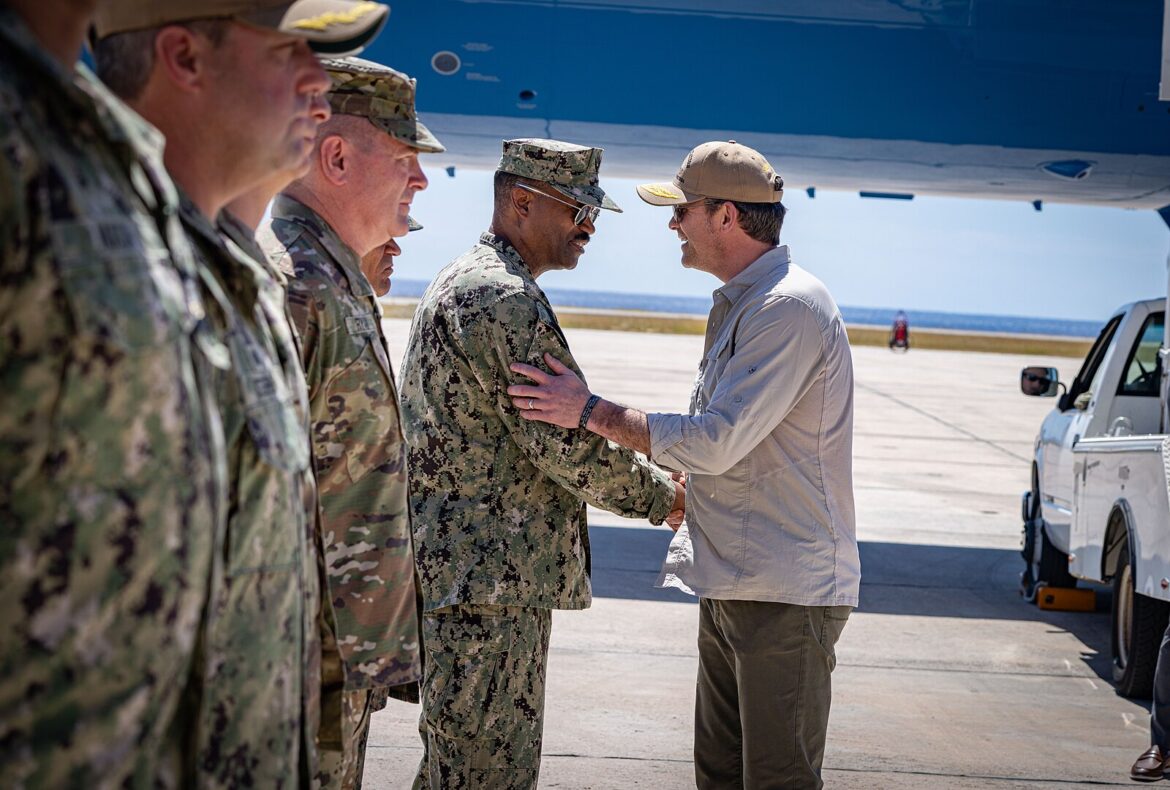
On October 17, US Navy Admiral Alvin Holsey announced his retirement as commander of US Southern Command (SOUTHCOM), a branch of the Department of Defense focused on security and conflict in Central America, South America, and the Caribbean. Holsey’s early resignation—just one year into his appointment—has drawn renewed scrutiny to SOUTHCOM, which has faced mounting criticism over the legality of its anti-narcotics operations in the Caribbean. The US military has conducted at least five maritime and air strikes in the region since September, the latest targeting a vessel off the coast of Venezuela and killing six men on board, just three days before Holsey’s announcement. President Trump claimed the men were “narcoterrorists” and justified the move on his social media platform Truth Social immediately after it was carried out, yet did not identify their alleged organization or provide evidence to support the accusation. Holsey himself has reportedly cited concern about the legality of SOUTHCOM’s actions as a reason for his resignation. Now, the Pentagon, which sits at the heart of US defense operations, appears to have taken secrecy to a new level, instituting measures that raise even deeper questions about accountability.
A New Culture of Secrecy
Though the exact legal violations committed by SOUTHCOM in the Caribbean remain ambiguous due to limited information, the US military’s lack of transparency strongly suggests that something is amiss. As of October 28, US troops and officials involved in SOUTHCOM operations were required to sign non-disclosure agreements before being greenlighted to carry out their assignments. This order is highly concerning; National Security Reporter Phil Stewart explained that military personnel are already bound by standard security-related NDAs. Whatever this new agreement conceals goes beyond routine operational secrecy, prompting serious questions about oversight. The move is unprecedented, as there are no prior reports of the Pentagon requiring NDAs for operations in Latin America. Even more troubling, members of Congress also report being left largely uninformed about critical elements of SOUTHCOM’s mission.
This information firewall is not just limited to the NDA—Secretary of Defense Pete Hegseth has taken many other measures to manipulate and restrict the flow of information within the US government. In an October 15 memo, he barred military officials from speaking with Congress without explicit approval from a centralized office under his authority. He also revoked the credentials of nearly all Pentagon-based journalists for failing to sign a new press access policy—one that required his permission before any information, classified or un-classified, could be published. Senator Jack Reed explained that Hegseth is clearly “afraid of the truth” in limiting what not just the journalists, but also congressional offices, know about the developments in the Pentagon.
An Expanding Military Footprint in the South
In the meantime, SOUTHCOM has been quietly building up power. The naval and aerial strikes carried out by the US in the last three months have already killed over 57 people from Colombia, Ecuador, and Venezuela. In the meantime, the Pentagon has bolstered SOUTHCOM’s forces to include another 10,000 troops, F-35 fighter jets, missile defense systems, and a nuclear submarine—yet has not justified why such virility is necessary for counter-narcotics operations. SOUTHCOM also established a separate task force on October 10, led by II Marine Expeditionary Force (II MEF), to oversee these specific efforts.
The United States’s influence in the Caribbean extends beyond offshore missions. In mid-October, President Trump granted the CIA the authority to conduct operations inside Venezuela’s borders under the pretext of curbing drug trafficking and migration. The move not only blurs the line between counter-narcotics enforcement and covert intervention, but also infringes on Venezuela’s sovereignty, coming perilously close to endorsing the removal of Venezuelan President Nicholás Maduro himself. This growing foreign military presence has therefore fueled widespread fears among Venezuelans of an impending US invasion.
Fortunately, Congress has not been silent in the face of this growing intrusion. In early October, Republican Senator Rand Paul announced that he was cosponsoring a “War Powers Resolution” aimed at curbing unilateral military action by the Executive. The measure would have required the president to notify Congress within 48 hours of deploying forces, and to seek congressional authorization for any combat operations which last more than 60 days. Rand argued that “Congress must not allow the executive branch to become judge, jury, and executioner,” warning against unchecked military power and the subsequent erosion of democratic oversight. Yet, the resolution was struck down on October 14 after a 48 to 51 vote in the Senate.
The situation unfolding in the Caribbean is not merely a regional campaign, but a test of whether democratic institutions can restrain a military increasingly operating beyond public scrutiny. If left unchallenged, the Pentagon’s quiet power grab may mark a dangerous precedent for America’s role in foreign policy.
Edited by Elizabeth Kiff
Disclaimer: This is an article written by a Staff Writer. Catalyst is a student-led platform that fosters engagement with global issues from a learning perspective. The opinions expressed above do not necessarily reflect the views of the publication.
Marina Gallo is in her second year at McGill University, pursuing a B.A. in Political Science with a minor in Economics. She is particularly interested in Latin American politics and U.S. economic policy.