
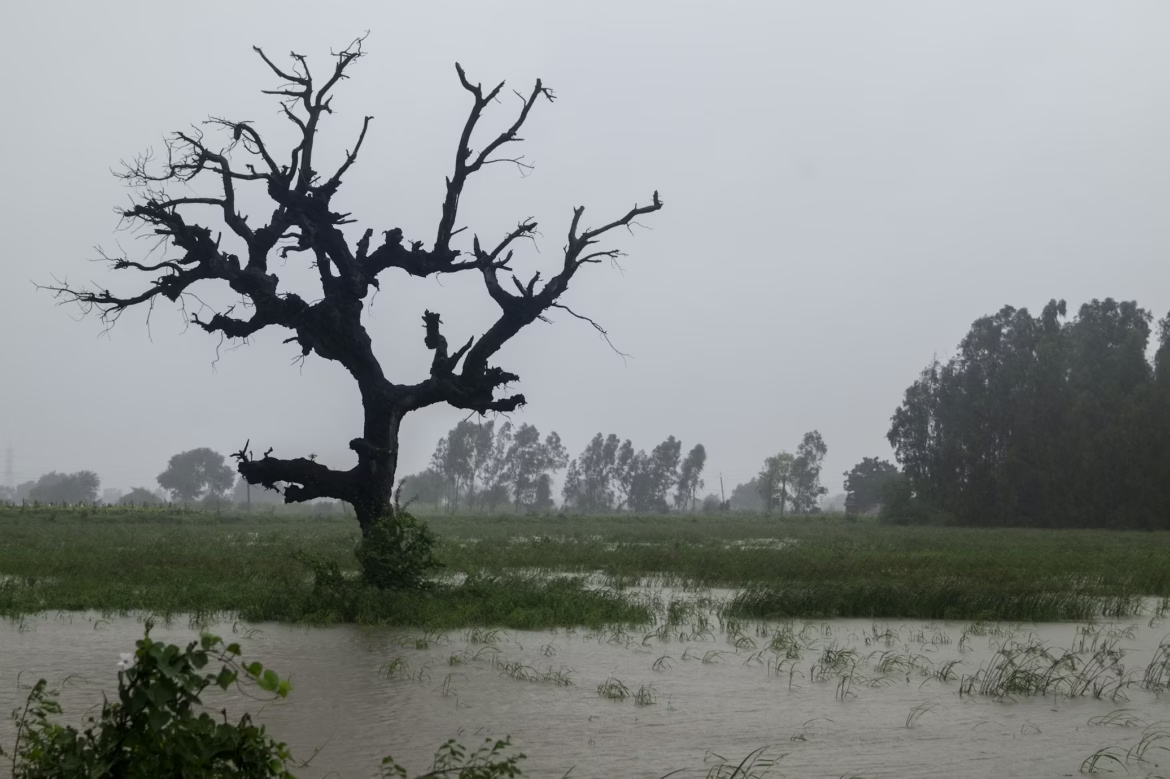
Water and vector borne diseases (WVBDs) plague millions of communities globally. These diseases can be transmitted through contaminated drinking water, animals, and insects that transmit harmful pathogens to humans and amongst humans. Especially as the consequences of climate change become more prominent and global surface temperatures reach all time high levels, flooding and intensified monsoon seasons throughout South Asia exacerbate the impacts these transmissions can have on local populations.
As of 2024, vector borne diseases accounted for 17% of all infectious disease, globally, causing about 700,000 deaths per year. Diseases such as dengue, malaria, yellow fever, chikunguniya fever, Zika virus fever, and many others are contracted by hundreds of thousands of people each year. Mosquitoes are a significant transmitter of these diseases. After stinging one affected person, they continue to carry pathogens for the rest of their lives, infecting anyone they sting and impacting entire communities. Other vectors include fleas, lice, ticks, and other anthropods that either transmit disease biologically or mechanically. Biological transmission occurs when mosquitoes and ticks carry pathogens that multiply in their bodies and are transmitted through biting, while mechanical transmission occurs when flies and other vectors pick up diseases by landing on infectious agents and transmitting it externally.
These diseases affect large populations and communities because more infection leads to the existence of more vectors, causing a positive feedback loop. Climate change allows for longer seasons and increased geographical ranges where vectors, especially mosquitoes, are active. And its impact on local biodiversity and habitats also means changes in the emergence and transmission of these diseases, making the spread all the more unpredictable.
Greenhouse gas emissions and rising global temperatures lead to unpredictable precipitation and melting of glaciers, making subsequent monsoon seasons unbearable for populations not equipped to handle them. In 2022, Pakistan’s precipitation levels rose around three times the average amount for that season, and some states received seven to eight times more precipitation than expected. Equally, India’s heavy rainfall levels increased 85% since 2012. These developments stem from rapid industrialization and fossil fuel usage occurring in various parts of the world, whose effects are felt most by these marginalized populations.
WVBDs impact primarily tropical and sub-tropical regions and poorer communities. In part, due to less infrastructure and health facilities to adequately respond to sudden needs for healthcare, especially when hit with raging floods, they may be destroyed or compromised in their facilities. Cholera, diarrhea, dysentery, hepatitis A, and typhoid are among the common diseases linked to water contaminated with infectious agents, toxic chemicals, and radiological hazards. The heavy rain in countries like India, Pakistan, Bangladesh, and Nepal has caused intense flooding, destroying houses and forcing people into congested, crowded camps. The water collected from these camps can remain stagnant for weeks due to a lack of adequate infrastructure, becoming a breeding ground for mosquitoes to transmit various diseases. These camps also lack substantial sewage facilities and sanitary measures, making diseases like diarrhea and cholera more prevalent and even allowing for increased transmission of COVID-19.
Women are disproportionately exposed to WVBDs in these areas as a result of occupational norms. The majority of agricultural workers in India are women, with 63% of female workers employed in agriculture, while only 43% of men work in this sector. This means they work long hours in close proximity to stagnant water bodies, making them susceptible to mosquito transmitted disease. Working with livestock also means vulnerability to zoonotic disease, or disease transmitted between animals and humans. Health data from the Asian Infrastructure Investment Bank shows that Indian women account for a higher percentage of premature deaths from WVBDs than men. The responsibility of providing freshwater to the household also falls on women, heightening their exposure to contaminated water sources, especially in areas lacking sanitation facilities. These risks have also been proven to complicate pregnancy and can cause severe issues impairing fetal health. Barriers to access to healthcare facilities can exacerbate these health problems. Social and economic circumstances can make it difficult for women to reach healthcare facilities, allowing their symptoms to continue to worsen.
Various legislation exist throughout South Asian communities struggling with access to fresh water sources. Water, sanitation, and hygiene (WASH) programs like the Jal Jeevan Mission in India and the National Water Supply and Sanitation Strategy in Bangladesh are examples of country-wide missions to curb the many challenges associated with a lack of fresh, accessible water. However, policies are rarely directed specifically towards the issue of WVBDs and their exacerbation due to climate change. The visible and persistent consequences of climate change are ever evolving and require constant research, especially to determine the effects it can have on smaller, rural communities. Since the COVID-19 pandemic, awareness of contagious diseases has risen considerably, but still requires further research, especially when it comes to WVBDs. The Epidemic Diseases Act passed in India in 1897 gave the government power to prescribe regulations as needed during an epidemic and has been used in situations regarding WVBDs since. The Infectious Diseases (Prevention, Control and Eradication) Act in Bangladesh, again, gives the government power to do what is needed to prevent, control, and eradicate diseases. However, these policies are either outdated or require further development to fully address the extent of WVBDs in a perpetually changing environment. They provide reactive solutions to outbreaks, rather than preventative measures for limiting the spread and keeping populations safe.
Water and vector-borne diseases pose an escalating global health crisis, especially across South Asia, where climate change, inadequate infrastructure, and social inequalities compound their effects. Intensifying monsoons, rising temperatures, and severe floods expand the reach of disease-carrying vectors while destroying sanitation systems and healthcare facilities that communities rely on. Women and marginalized populations remain most at risk, facing greater exposure and fewer resources for treatment. Without immediate, coordinated efforts to strengthen public health systems, invest in climate resilience, and ensure equitable access to clean water and care, these preventable diseases will continue to spread, threatening millions of lives and undermining regional stability.
Edited by Alex Alikakos
This is an article written by a Staff Writer. Catalyst is a student-led platform that fosters engagement with global issues from a learning perspective. The opinions expressed above do not necessarily reflect the views of the publication.

Suhani is in her fourth and final year at McGill University as an International Development student, with minors in Environmental Studies and Psychology. She is originally from New York City and is especially passionate about environmental issues and policy making that can have critical impacts on global communities.