
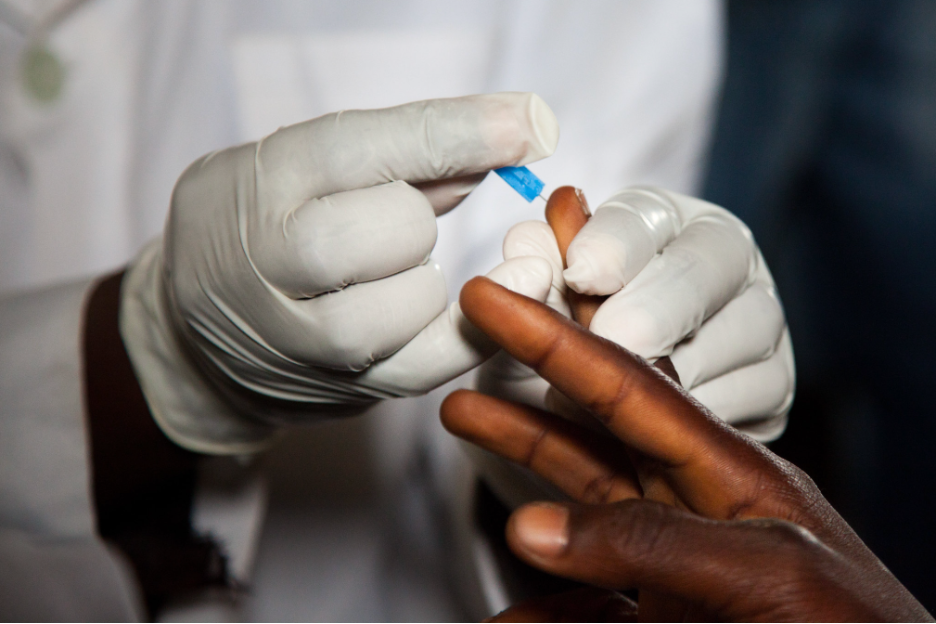
Within one week of US President Donald Trump’s January 2025 announcement of Executive Order 14169 to suspend all USAID funding, 36% of organizations that received funding from the President’s Emergency Plan for AIDS Relief Initiative (PEPFAR) reported having already had to shut down due to a lack of funds, according to a PEPFAR Watch Survey. A shocking 19% of organizations did not have the funds to last longer than one month, and 31% of organizations did not know how long they could last. An “Emergency Humanitarian Waiver” was released by Secretary of State Marco Rubio in February 2025 for the continuation of immediate, life-saving HIV care, but, due to mass firings of USAID staff, went largely unimplemented. Ten months later, the absence of USAID in HIV care is still reverberating around the world, especially in Sub-Saharan Africa. In Nigeria, where two million people are currently HIV positive, the funding pause exasperated long-known vulnerabilities in healthcare caused by a dependence on foreign aid. Without US aid, Nigeria has no long-term structural support for HIV prevention or treatment. President Bola Ahmed Tinubu’s administration quickly voted to allocate some 3.2 million USD to distribute over 150,000 HIV treatment kits, however, the distributions ended in June 2025. Today, Nigeria’s path towards HIV eradication by 2030 (under the recommendations of UNAIDS) is uncertain.
Soon after USAID’s suspension of funds, the Chief of the World Health Organization (WHO), warned that“disruptions of USAID could undo 20 years of HIV progress”. In Nigeria, where over 80% of its HIV/AIDS programmes are financed by donor funding, this is not an overstatement. According to Nigeria’s Minister of Health and Social Welfare Muhammad Ali Pate, this dependency on donor funding is indicative of neo-colonial inequities “embedded in global health”. Western organizations have created investment frameworks in their home countries according to Eurocentric perceptions of those countries’ needs. As seen with USAIDS, funding stability shifts along with the domestic politics of donor countries. Rather than working with receiving countries to build long-term, sustainable solutions to health emergencies, donor countries create cycles that make receiving countries perpetual recipients of charity, preventing them from achieving self-sustaining development.
Nigeria, along with other African countries, has been attempting to address the need for health sovereignty since before the funding freeze. President Tinubu’s Health Sector Renewal Initiative, which commits to creating a healthcare system not reliant on donor funding and promises to expand the local manufacturing of life-saving medicines and vaccines, has been in progress since 2023. In 2024, Nigeria’s National Agency for the Control of AIDS (NACA) held Nigeria’s first ever HIV Prevention Conference, which brought together domestic policymakers and international NGOs to strategize optimization of HIV prevention through increasing domestic funding and community ownership of HIV programmes. These initiatives have led to some encouraging results. In May 2025, 4 months after President Trump suspended USAID, the WHO adopted a Nigeria-sponsored resolution at the 78th World Health Assembly to improve domestic health financing. The same month, Codix Bio, a Nigerian health technology company, announced an agreement with the WHO to start local development and manufacturing of rapid diagnostic tests (RDTs) for HIV.
Such developments make Nigeria’s goal for future health sovereignty more realistic, which leads to more affordable and reliable HIV care. The absence of USAID will undeniably impact the future of HIV prevention programmes throughout Nigeria, however, a HIV-free Nigeria without dependency on foreign aid is possible. If international organizations shift their relationships with Nigeria from one of donor-recipient to one formed by collaboration (as WHO’s agreement with Codix Bio reflects), Nigeria will have the capacity to bolster its health independence and create sustainable programmes for HIV eradication. Further, if Nigeria continues to mobilize toward greater domestic healthcare, its capacity to eradicate HIV as a public health threat by 2030 will only increase.
Written By: Asher Pearce
Edited By: Alexandra MacNaughton
Disclaimer: This is an article written by a Staff Writer. Catalyst is a student-led platform that fosters engagement with global issues from a learning perspective. The opinions expressed above do not necessarily reflect the views of the publication.
As part of the World AIDS Day initiative and in partnership with Catalyst, the First Year Council of the International Development Studies Association presents “First Year Voices,” a space for IDS students to share their reflections on global health and justice.