
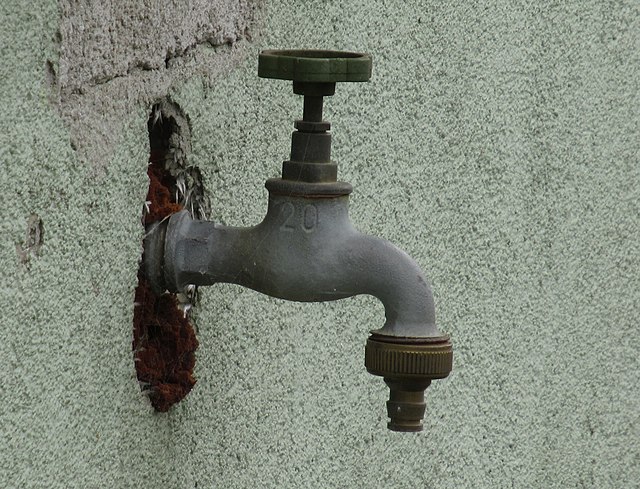
On July 28, 2025, President Masoud Pezeshkian announced that Tehran could run out of water within mere weeks if quick action was not taken. Four months later, that date has arrived. As of early November, with nearly ten million inhabitants and a metropolitan area surpassing 15 million, the capital city holds over ten percent of the entire country’s population. While the drought has lingered across the past six years, the intense water scarcity is reaching its limit. Taps are running dry. Informal rationing has already begun; the president has announced that if it does not rain by late November (now extended to the end of December), the government will have to begin formally rationing. As of Thursday, November 20th, President Pezeshkian urgently reiterated that the capital must be relocated and informed citizens that the government will explore a potential southern relocation.
The issue has been exacerbated by perceived foreign threats, economic inequality, and climate change. Sequestered from the global economy by the United Nations Security Council, the nation has nowhere to reach. Existential threat and bombing only sustained the crisis mode Iran was already in; leaders have long drained every drop of water past the level that can be replenished, ignoring environmental effects in the name of resistance against existential threat.
Only one millimeter of rain has fallen in the entire country during 2025. In the sixth year of drought, 20 Iranian provinces have not seen a single drop of rain. This means climate change decreased rainfall by 89 percent in 2025, compared to the long-term average. It also increased temperatures in the already arid country, spiking to over 50 degrees Celsius, requiring more water as people try to cool down from the extreme heat. Citizens will suffer if they are forced to ration water while enduring these unnatural and unsustainable temperatures. Kaveh Madani, director of the UN University Institute for Water, Environment, and Health and former Deputy Head of Iran’s Department of Environment explained that the government is opting to address the effects without tackling the root cause – this drought would not be affecting so many millions if it had not been for decades of water mismanagement.
The government’s inefficient farming practices and excessive groundwater pumping have pushed water usage far past the natural limit. According to Scientific American, scientists have been warning against the unchecked amount of groundwater extraction for nearly twenty years. Due to this over-extraction the plateau that the aquifers sit under has been sinking by nearly 35 centimeters a year, leaving nowhere for groundwater to pool and replenish itself. Ninety percent of Iran’s water is used for agriculture and lost through inefficient irrigation, despite only contributing 12 percent of GDP. Iran grows these ‘thirsty crops’ in its arid landscape as an attempt to increase food security. Furthermore, Iran’s government operates in a fragmented way. The bodies in charge of energy, environment, and agriculture each focus on their own goals, not interacting and therefore not collaborating to ensure efficiency. Oil and gas, huge Iranian industries, are extremely water-intensive. This grab for self-contained efficiency overlooked the longevity of its operation and subsequently destabilized water security for millions of its citizens that it hoped to protect.
Currently, the government has implemented short-term solutions to address the absolute worst of the crisis. Chemicals were sprayed into clouds in an attempt to induce rain. In some regions, authorities have begun to fine for overconsumption. Water is being transported into the city, granted to only those able to afford the storage tanks needed to keep it. Additionally, the price of power has shot up as hydroelectricity suffers from the shortfalls in dam capacity. This economic barrier is making the crisis especially hard on those of lower socioeconomic status.
Madani writes that Iran must pivot away from resisting external threat and rather push its resources towards the resilience of its people. This would include phasing out water-intensive crops and industries, so that its citizens are no longer so heavily economically reliant on water systems. This would further entail a renewed outlook on water; prioritizing water sustainability. However, he recognizes that this is deeply unlikely; sanctions imposed by the US and other major power players make it nearly impossible economically and the government would be hesitant to admit their mismanagement. President Pezeshkian’s government has tactfully placed the blame on past administrations and climate change. Others proposed solutions include shifting foreign policy to promote collaboration, and allowing the government access to modern technology and increasing funding. Tools such as space satellites and Artificial Intelligence can improve monitoring and call attention to overlooked regions and help with the formation of policy decisions.
While no real moves have been made toward evacuating the capital, the citizens of Tehran lay in a precarious state with no water and no tangible ideas of what might happen to their city. Other major cities such as Cape Town in South Africa have seen water crises improve with rainfall, but as of now there is no drop of precipitation in sight.
Edited by Natasha Bhimji
Disclaimer: This is an article written by a Staff Writer. Catalyst is a student-led platform that fosters engagement with global issues from a learning perspective. The opinions expressed above do not necessarily reflect the views of the publication.
