
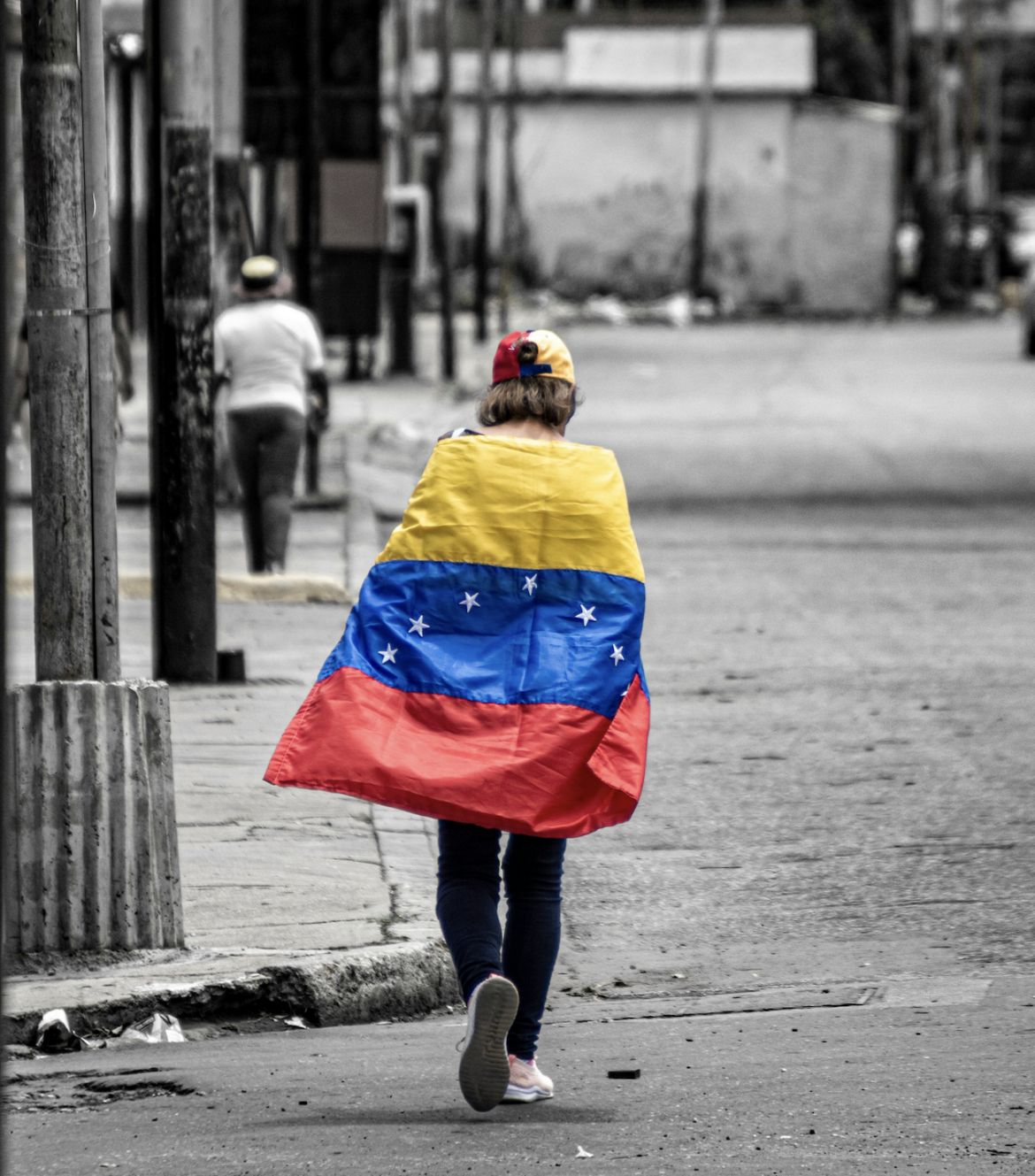
In a recent phone call, US President Donald Trump allegedly gave Venezuela’s President Nicholas Maduro an ultimatum, warning him to leave Venezuela before the United States military engages in its next phase of ground operations in Venezuela. This escalation comes after the Trump administration ordered covert CIA operations in Venezuela this October, with US officials discussing the possibility of ‘regime change’ in the country. Their reasons? Trump claims that Maduro and his government are part of the “Cartel de los Soles,” recently designating the name as a Foreign Terrorist Organization (FTO) for alleged facilitation in trafficking drugs such as fentanyl to the US to harm its citizens. This designation raises pressing questions: What is the Cartel de Los Soles, and is there any truth to these accusations about them? Similarly, does Trump have ulterior motives in Venezuela, other than those involving the cartel?
Cartel de Los Soles
Cartel de los Soles (Spanish for Cartel of the Suns) is a common phrase used in Venezuela to refer to the alleged involvement of certain high-ranking government and military officials involved in corruption and organized crime, specifically through criminal drug networks. The term is now used more broadly to describe the police and government due to the strong prevalence of corruption in the country. However, Cartel de los Soles does not refer to a specific group of people. In other words, it is a figurative term, not a literal cartel, that Venezuelans use to express their discontent with the corrupt government officials who use the cartel to further their power.
Despite this, the Trump administration argues that Cartel de los Soles is a formal ‘cartel’ headed by Maduro and his government. He alleges Maduro is involved in supporting and facilitating the criminal activities of cartels such as the Mexican Sinaloa Cartel and the Venezuelan Tren de Aragua Cartel, which are involved in the trafficking of drugs, exploitation of women and children, and human smuggling. The Sinaloa Cartel, one of the most powerful in Mexico, according to the US Treasury, is involved in the smuggling of drugs at the US-Mexico border, and the Tren de Aragua Cartel is involved in widespread violence and crime within Venezuela. These allegations began in 2020 when Trump indicted Maduro and offered rewards of up to $15 million for information leading to his arrest. In August 2025, the reward increased to $50 million. The US Treasury maintains that placing sanctions on the ‘cartel,’ designating them as an FTO, and calling Maduro an illegitimate narco-terrorist leader is necessary to fulfill Trump’s promise to put America First and preserve the country’s “peace and security.”
Unspoken Interests?
If Trump’s escalation efforts are successful, they may result in the end of Maduro’s twelve-year presidency. Although the Trump administration did not explicitly state an interest in spreading a political ideology favourable to the US, it is difficult to argue that they are not at least aware of potential economic advantages to be gained through this escalation. For one, a capitalist Venezuela, as opposed to a socialist one, would make Venezuelan oil freely disposable to American corporations, a great freedom compared to the one American company currently extracting oil in Venezuela. The US could have access to one of the largest oil reserves in the world, with 303 billion barrels of proven reserves. Under a different regime, Venezuelan oil and gas could be bought and sold to and from international companies on the free market. This would be the perfect reason for the US’ backing of opposition leader Maria Corina Machado who in her Nobel Peace Prize Acceptance speech, claims that if given power, she would open up oil and gas reserves to foreign investment and markets. These are unquestionably issues that Donald Trump, and other gas and oil-dependent countries, would find enticing in a leader and give reason for support.
In opposition to Trump’s threats on his country, Maduro maintains that Trump has interests in Venezuela’s oil, not in putting an end to drug-trafficking. In a letter to OPEC, Maduro claimed that the US was responsible for making threats towards Venezuela and its regime which negatively affect Venezuelan oil production on the international market. However, when responding to Colombian President Gustavo Petro’s claims about US interests in Venezeulan oil, the US State Department denied claims that Trump’s interests in Venezuela are about oil, and rather about drug trafficking. The Trump administration states that it remains “firm in its counter-drug operations in the Caribbean and its commitment to protecting Americans from the Maduro regime’s deadly poison.”
Political commentators are concerned that the current situation could signal a return to Cold War-era politics, similar to President George H. Bush’s “Operation Just Cause,” in which he ordered a military invasion of Panama and ousted the de facto ruler, Manuel Noriega, restoring democracy.
It is no question that Trump has unstated motives in the Caribbean, and while his exact interests are only to be speculated about, his subsequent decisions will further reveal the truth.
Edited by Lily Christopoulos
Disclaimer: This is an article written by a Staff Writer. Catalyst is a student-led platform that fosters engagement with global issues from a learning perspective. The opinions expressed above do not necessarily reflect the views of the publication.

Dala is in her third year at McGill, pursuing an Honours B.A in International Development Studies with a double minor in Political Science and World Islamic and Middle East Studies. She is particularly interested in the politics of the Middle East and North Africa, and immigration.