
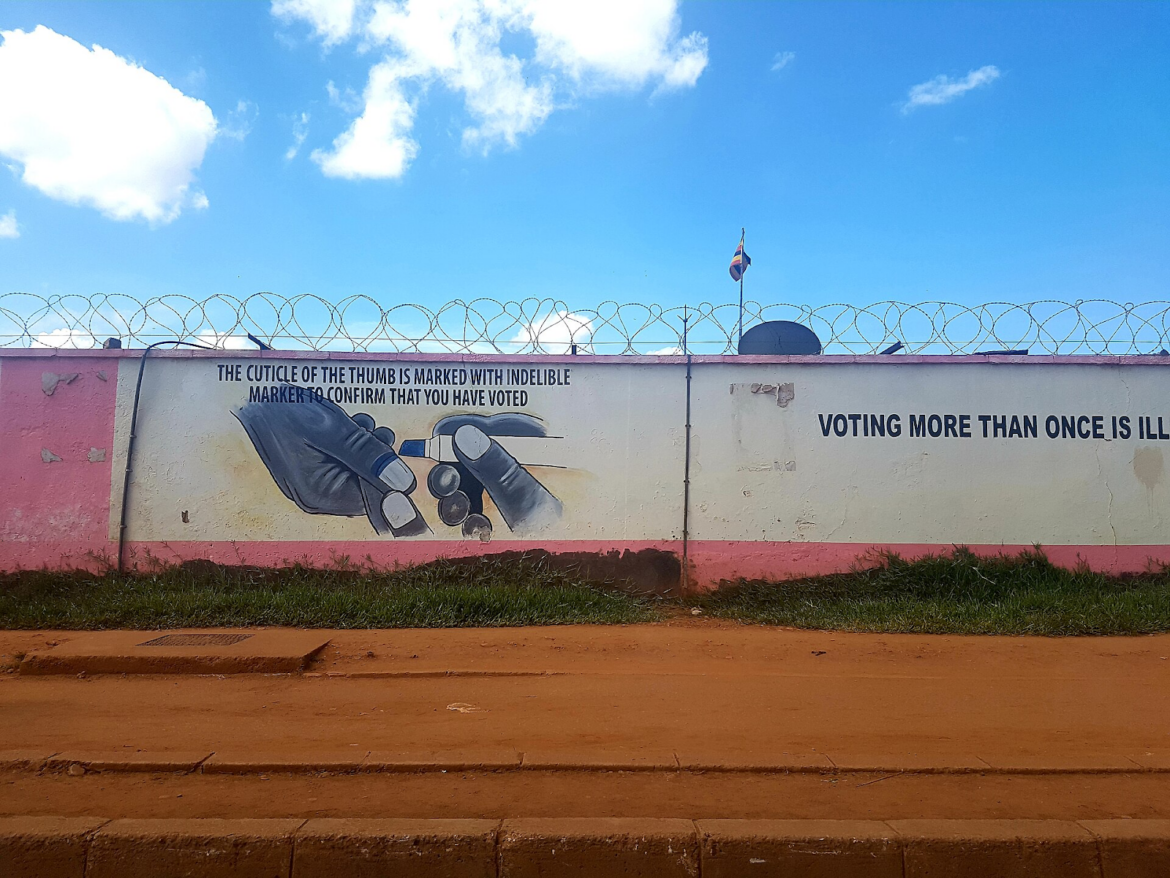
Since its independence in 1986, Uganda has been ruled by President Yoweri Museveni, who is now 81 years old and has secured reelection with 72% of the vote, while his greatest opponent, Bobi Wine, only amassed 25%. While this figure is exceptionally high, Museveni claimed that he expected to receive 80% of the vote, suggesting Bobi Wine was a formidable opponent to the current leader.
During the most recent elections, which took place on January 15, 2026, the government shut down the internet across the country, closing access to online news, email, social media, and messaging. The government justified the blackout by citing the role of online media threatening the nation’s security. The Ugandan ambassador to the United Nations, Adonia Ayebare, noted in an interview that “the security establishment is always nervous about stability.”
However, this desire for stability exists alongside an unfree government. Freedom House’s report in 2025 ranks Uganda at 54/100 for Internet Freedom, remarking that during the period that data was collected, the internet freedoms deteriorated. For example, the score for the penalization for online activities dropped from 3/6 to 2/6 because during the coverage period, two people received prison sentences of multiple years.
It is through measures such as this internet blackout during the election period that has enabled the maintenance of power by the National Resistance Movement Party and Museveni. During the 2021 elections, Wine said, “When state resources are deployed, then it is inevitable that its candidates will win.” In these most recent elections, the internet has been a significant stage for government control, with some voters saying the blackouts “emphasized their powerlessness.”
Bobi Wine, né Robert Kyagulanyi, initially gained a following as a pop star, eventually turning to politics in 2017. Young, urban Ugandans, particularly in Kampala, were in strong support of Wine, accounting for a significant proportion of Uganda’s population, which is one of the youngest in the world.
Wine has utilized the social media site X throughout his campaign and the elections. With 1.3 million followers, he has a great influence on this platform. However, through the internet blackouts, the influence of his posts was severely limited. Wine claimed to have been abducted by state security forces, later putting out a video statement that he “use[d] [his] skills and escape[d] [his] house.” There was an additional deleted post on X by General Kainerugaba to Wine, giving him “exactly 48 hours to surrender himself to the police.” The heated exchange, before its deletion, was unable to be seen by typically digitally connected Ugandans, limiting their electoral freedoms. The deleted post could be a result of political intimidation on the part of the existing regime, and aligns with the broader pattern of a lack of free speech protections across social media platforms in Uganda. The African Union election observers condemned the shutdown, noting how the internet came back on only a few hours after the results of the election were declared, naming Museveni the winner.
Though the African Union found no evidence of ballot stuffing, the lack of these traditional interference methods does not imply the presence of a democracy. In the modern age, social media and the internet have a continuously increasing level of influence over election results. With a popular opponent such as Wine, Museveni’s party had an even greater incentive to control Ugandans to maintain its hold over the nation. Social media has become a tool for politicians beyond Uganda to ensure continued rule, despite the holding of elections. As the internet continues to play a growing role in informing citizens globally, the protection of internet freedoms is becoming essential for a functioning democracy. It is only through these freedoms that opposing candidates may gain the strength to succeed longstanding rulers.
Edited by Gita Kerwin
This is an article written by a Staff Writer. Catalyst is a student-led platform that fosters engagement with global issues from a learning perspective. The opinions expressed above do not necessarily reflect the views of the publication.

Kendall Fagan is a third-year student at McGill University currently pursuing a BA Honours in International Development and a minor in Economics.