
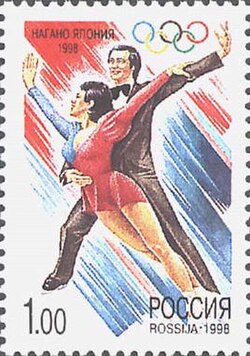
Following Russia’s 2022 invasion of Ukraine, the International Olympic Committee (IOC) banned Russian athletes from participating in the upcoming Olympic Games. Further, Russian athletes were also banned from competing in World Cup games. This was purportedly done as an effort to put pressure on President Putin to end his campaign in Ukraine. However, that was three years ago, Russia is still at war with Ukraine and Russian athletes are still banned. That being said, other states which have also broken international law, such as Israel, are not sanctioned or pressured. The purpose of this article is not to defend Russian military actions but rather to demonstrate the uneven application of punishment measures in the international system.
Russia invaded Ukraine in February 2022, following a 2014 invasion of Crimea, in pursuit of full Black Sea access or perhaps to defend the western border from NATO expansion. This action violated Article 2(4) of the UN Charter, which prohibits a state from using force to violate the territorial integrity of another state. Russia has argued that this action was collective self-defence under Article 51, which permits self-defence and the defence of special groups. However, this claim was dismissed as language of international law veiling the use of force. This is strengthened by the fact that Ukraine had not previously launched an attack against Russia, nor was there sufficient evidence of a genocide in Russian-occupied areas for Article 51 to be exerted. It was for this illegal invasion that the IOC suspended the Russian Olympic Committee on the 12th of October 2023. The IOC prohibited the invitation of any Belarusian or Russian officials to any games and affirmed its solidarity with Ukraine. The IOC aimed to apply pressure to Russia by constricting its international activities.
However, this international standard is not equally applied. Countless countries have violated international law, disregarded human rights, or functioned as repressive regimes. North Korea, Tajikistan, Myanmar, China, Saudi Arabia, Cuba, Iran, Bahrain, Uzbekistan, Laos, Venezuela, Nicaragua, Chad, and Gaza are all examples of ‘Not Free’ countries which participate in the Olympics, although this is not an exhaustive list. South Sudan, the third least free globally, has an Olympic committee and participates in most Summer Olympics despite an ongoing human rights crisis. The fourth least free globally, Turkmenistan, has experienced the consolidation of an authoritarian regime. Yet, it is Israel that makes the best parallel case study to examine the uneven application of international pressure. First, like Russia, Israel illegally invaded territory, launched brutal campaigns against the native population, and committed severe human rights abuses. Second, Israel and Russia have comparable human rights ratings. The Russian-occupied territories of Ukraine have a rating of -2/40 in Political Rights and 1/60 in Civil Liberties. Similarly, the Gaza Strip is -2/40 in Political Rights and 4/60 in Civil Liberties. In comparison, the Gaza territories are 5th on a global rating, whereas Russian-occupied Ukraine has a rating of one, the least free. Finally, the ICC put out an arrest warrant for Israel’s PM, Netanyahu, and Russia’s president, Putin, further marking the regimes’ profile similarities. Both regimes have committed serious crimes against humanity. Both have broken international law. Yet, only Russia is banned from Olympic events while Israel is permitted to compete.
However, the Olympics are the rule, not the exception, for there is a pattern of Russia being unfairly excluded from sporting events. Russia is also banned from FIFA World Cup events. Interestingly, the Republic of Congo, arguably facing one of the worst humanitarian crises globally and perhaps in the 21st century, is allowed to participate. Israel, too, is allowed to compete in FIFA events. Historically, countries that have been banned, especially for long periods of time, and that were not a result of administrative decisions, were banned because of serious crimes against humanity or acts of aggression. For example, apartheid-era South Africa, Yugoslavia during the Yugoslavian wars, and Germany and Japan post-WWII have previously been banned. The rest were temporarily banned for money mismanagement, external meddling, or fielding incorrect players and are therefore not relevant to this argument. The pattern is the use of banning as a punishment against countries that commit international crimes. That being said, why is Israel not banned? Why is Congo not banned? If the standard for being banned from the Olympics or World Cup is serious crimes against humanity or arrest warrants, why is only Russia banned when so many other regimes globally commit the same crimes? If committees are simply interpreting existing evidence of crimes against humanity or crimes of aggression, and then rendering a punishment or incentive, why are so many countries included despite their crimes?
One obvious answer is politics. Despite nearly identical war crimes, Israel and Russia do have a noticeable political difference–allyship with the US. Israel is a close ally of the US and has become a high-salience agenda in the Trump administration as the war in Gaza continues to define geopolitics. In contrast, Russia has historically been a political and cultural ‘other’ to the US and Americans widely negatively responded to Russia’s invasion of Ukraine. This has leaked into global events such as the World Cup and the Olympics. In September of 2025, a spokesman from the US State Department announced they “will absolutely work to fully stop any effort to attempt to ban Israel’s national football team from the World Cup” following the UN’s commission determined a genocide was being committed in Gaza. Further, the FIFA chief Gianni Infantino is close to the president and has spent time at Trump Tower. Another example: an Israeli bobsledder had posted several times his support for Israeli military action in Palestine despite a ban on athletes participating in actions supporting war, including through their social media. In parallel, the Ukrainian sled racer was disqualified from the Olympics for wearing a helmet decorated with the faces of Ukrainian athletes killed in Russia’s invasion. The Olympic authorities disqualified him on account of his political speech during the competition, which is banned. The Israeli bobsledder was not disqualified. Whether the helmet was political speech or a simple memorial is not the point; rather, the unequal dealing of punishment should be critiqued. For the same ban broken, the athletes faced two different treatments. For the same humanitarian laws broken, two countries faced two different treatments.
While the US continues to be able to leverage its strength to strongarm certain organizations, global backlash is also a force to be considered. Israeli athletes were faced with boos as they made their entrance to the Olympics. The last World Cup bore a plethora of videos depicting Israeli visitors being turned away or shunned in public by other visitors. Further, the Netherlands, Spain, Ireland, and Slovenia have withdrawn from Eurovision after its committee decided Israel would be allowed to compete. Nonetheless, Russian teams and athletes continue to be barred and held to a higher standard than those of other countries despite near identical infractions, exemplifying the double standard preston in today’s political landscape.
Edited by Jamie Silverman
Disclaimer: This is an article written by a Staff Writer. Catalyst is a student-led platform that fosters engagement with global issues from a learning perspective. The opinions expressed above do not necessarily reflect the views of the publication.

Sonia Oulamine is a second-year student at McGill University, currently pursuing a B.A. in International Development Studies with minors in Political Science and Arabic Language. She serves as a writer for Catalyst and has a particular interest in international relations, law, and human rights.