
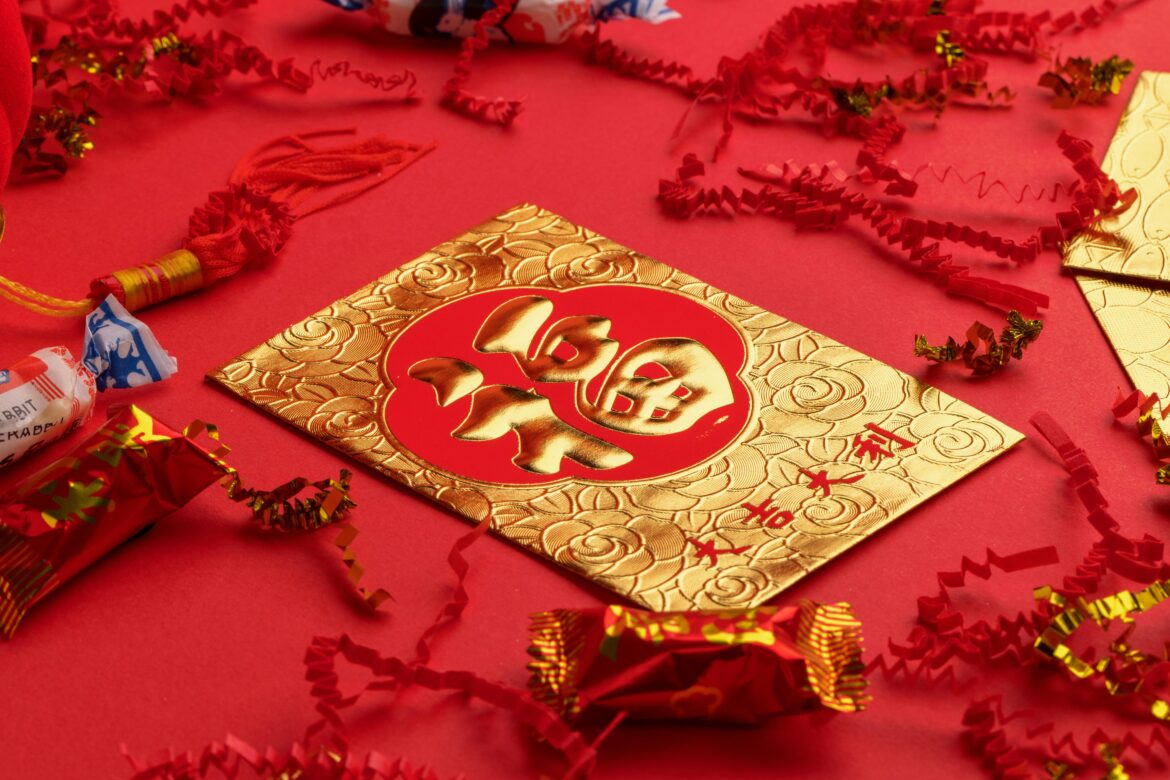
As February 17 officially began the Lunar New Year, it also marked 153 years since Japan last celebrated the Lunar New Year nationwide—a tradition that was put to an end when the Emperor of Japan announced that the calendar they had been using for over a thousand years was “false, has no factual basis, and hinders the development of human knowledge,” and therefore would be abolished.
Lunar New Year, also known as Chinese New Year, refers to the beginning of the new year according to the traditional lunisolar calendar. This calendar system was first developed in the 14th century BCE Ancient China, and was soon adopted by neighbouring countries with a common cultural heritage. Today, many East Asian countries, such as Korea, Vietnam, and Singapore, continue to honour the Lunar New Year through family gatherings, firecracker-fuelled festivals, and the exchange of money envelopes. However, Japan is not among them. Its decision to abandon the lunisolar calendar in 1872 was no accident, but a historical consequence of its efforts to modernize during the Meiji era.
Japan’s “Lost Month”: Historical Background
Japan’s transition to the solar Gregorian calendar, which is based on the Earth’s revolutions around the Sun to align with the seasons, was abrupt. The people of Japan quite literally experienced a “time travel” on the 3rd of December 1872, when the government announced that they would restart the date from 1 January 1873. For this reason, the 27 days that vanished in 1872 are known as Japan’s “lost month.”
Though the transition was easy on paper, the lived experience of people living through the lost month suggests otherwise. Hirochika Nakamaki, Professor Emeritus at the National University of Ethnology in Japan, explains that the transition had a disruptive impact, especially on the agricultural sector. For instance, fishing communities often relied on the lunar cycle to estimate tidal patterns. An 1889 nationwide survey similarly suggests that rural and coastal communities had a harder time transitioning than urban centers and state institutions.
Furthermore, the lunisolar calendar naturally embodied Japanese belief systems, in which holidays were reserved for various rituals and prayers to spirits associated with agriculture. In other words, the previous calendar functioned not only as a system of timekeeping but also as a cultural and spiritual framework for the Japanese. Consequently, it was common to see households use both the lunisolar and Gregorian calendars to help them acclimate to the new rhythm that now dominated their lives. Many also continued to use the old calendar, despite it being abolished by law.
Why Did Japan Abandon the Lunar New Year?
The Japanese government’s decision to adopt the Gregorian calendar in 1872 was a direct result of the Meiji Restoration (1868-1869), a critical political revolution that restored imperial rule under Emperor Meiji and dissolved the feudal system dominated by the samurai class.
Prior to the Restoration, Japan pursued an isolationist policy (Sakoku) that significantly limited contact with the West. However, the forced opening of Japanese ports to American trade in 1854 exposed Japan’s vulnerability to Western colonization, thereby intensifying a sense of national urgency to safeguard sovereignty through modernization. This reform coincided with the Meiji’s broader politico-economic system under the slogan Fukoku kyōhei (rich country, strong military), which encouraged the adoption of Western knowledge and practices to present itself as a modern power. Thus, the abandonment of the traditional, belief-based system of timekeeping in favour of a more ‘rational,’ secular one portrayed Japan as on “equal footing” with Western liberal-capitalist nations.
Since then, Japan’s New Year (Oshōgatsu) has been a public holiday on January 1, reserved for celebrations like the rest of the Western world.
Impact on Korea:
However, Japan’s modernization initiative did not end there. In fact, they extended beyond its border to Korea from 1910 to 1945, during the period of Japanese colonization.
Justified under its broader effort to culturally assimilate Korea, the colonial government repeatedly attempted to replace the Korean lunisolar calendar with the Gregorian calendar. This implied the active suppression of the Korean New Year (Seollal), during which the Japanese authorities prohibited all forms of celebration, including ancestral rites and the making of rice cakes.
Even after the Japanese occupation ended, Korea’s early leaders continued to favour the Gregorian New Year over Seollal, to align Korea with “civilized” nations. However, Korean attachment to Lunar New Year traditions proved resilient. A 1986 census found that 85.3% of Koreans continued to celebrate the traditional New Year. Finally, in 1989, Korea saw the full revival of Seollal as a public holiday. Local Korean newspapers reported that the restoration of the holiday was met with nationwide joy, describing an “unprecedentedly festive atmosphere.”
Japan and Korea’s different outcomes regarding New Year celebrations are a reminder that cultural identity is shaped by historical processes. Korea’s continued celebration of the Lunar New Year is a testament to how deeply rooted traditions can endure, despite periods of political suppression.
A Hybrid Identity: Not Quite Western, Not Quite Asian
Surprisingly, Japan’s New Year’s celebrations remain culturally distinct from those observed in Western countries. For example, on the dawn of the New Year, it is a long-standing tradition to visit shrines or temples to pray for good luck (and yes, they also receive a Japanese equivalent of red envelopes known as Otoshidama), retaining many of the shared Confucian values and customs of Asian countries. Although this may seem contradictory to Japan’s historical efforts to Westernize, it can also be interpreted as the country’s attempt to retain parts of its Asian identity. For example, traditions to celebrate the Lunar New Year still endure in some regions of Japan, such as in Okinawa and Amami Oshima.
Overall, Japan’s adoption of the Gregorian calendar in 1873 reflects a decisive step toward modernization. At first glance, the discontinuation of the Lunar New Year may appear to signal a cultural rupture. Yet, Japan’s continued retention of East Asian traditions within the Western timeframe suggests that this shift was not a complete abandonment of Japanese identity, but a selective and necessary adaptation shaped by historical circumstances.
Edited by Lily Christopoulos
Disclaimer: This is an article written by a Staff Writer. Catalyst is a student-led platform that fosters engagement with global issues from a learning perspective. The opinions expressed above do not necessarily reflect the views of the publication.

Leina Pham-The is in her first year at McGill University, currently pursuing a double major in Political Science and International Development. She serves as a writer for Catalyst and has an interest in topics where culture, history, and human rights intersect.