
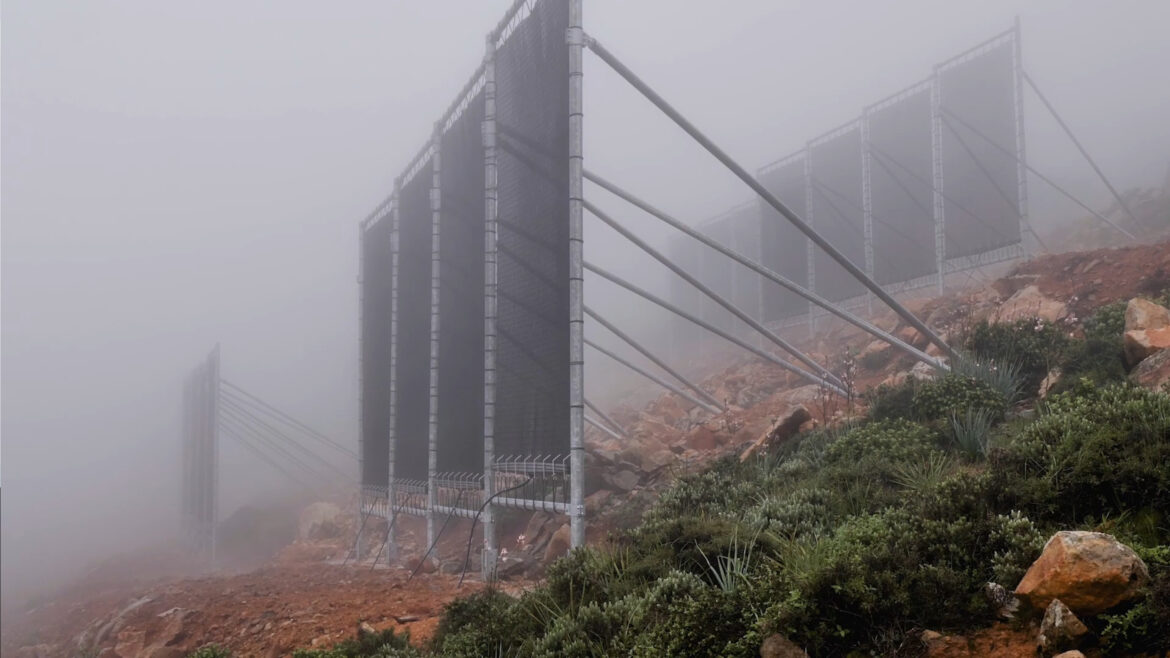
The Fog Catchers of Peru
Peru, notably one of the driest countries on the planet, has been struggling with water security for years. Recently, largely due to the organization Movimiento Peruano Sin Agua, better known in Peru as Los Sin Agua (Those Without Water), the revival of ancient conservation techniques and the aid of other international organizations have hopefully jump-started the country into a new era of water security.
Outside of the main cities, the ability to access clean water has always been an issue, especially for those living in desert settlements, the edge of the Amazon, or the urban slums. Peru’s population is 34 million, 17 million of whom (or about 50% of the population) lack access to safe and sanitized water. Due to the country’s diverse terrain and seemingly long dry season, water provider companies insist that accommodating those in rural areas is impossible, arguing that it is these settlements that should move closer to the city center.
Los Peruanos Sin Agua
Abel Crus Gutierrez, a Peruvian industrial engineer, suffered the consequences of growing up in rural Peru. He explains that one of his household responsibilities was “fetching water from a spring 600 meters uphill,” which was his family’s and neighbours’ only option for water access. This meant that he would not only have to ration water throughout the day but also calculate and plan for how much water his family needed through the night, as it would be almost impossible to make a trip in the dark. He later moved to Ancón, a desert-surrounded settlement outside of Lima, which, similar to its neighbours, suffered immense water shortages. In attempts to negotiate with the local water supply company, Sedapal, he was instead told to relocate to the city, because “water will never come to the hills.” The villagers of his settlement were forced to rely on expensive water delivery trucks, which were often five times more expensive than running water in already affluent areas. It was then that Gutierrez started making plans for his own alternatives.
Atrapanieblas (“Fog Catchers”)
The settlement of Ancón is unique in the sense that it is constantly trapped in fog. At first glance, this natural resource is seemingly useless, but once utilized, it single-handedly managed to facilitate a system that provides significant water to each household. Gutierrez invented something he calls Atrapanieblas, or Fog Catchers; large nylon nets held up vertically by bamboo poles or wooden frames. To catch the water, large containers are placed under the nets and then connected to channels bringing water directly to homes through the pipes. This water is not drinkable, but is essential for cleaning, irrigation, and washing (Gutierrez has mentioned working on natural purification methods). Depending on cloud density, each net captures between 200 and 400 litres of water per day. Before Gutierrez installs the system of nets, he conducts surveys to ensure the town meets the environmental requirements (having enough fog for the nets to be productive). Each net costs approximately between 750 and 1,050 USD.
Gutierrez and team have also begun other water conservation projects: rainwater harvesting and wastewater management. The Rainwater Harvest project involves capturing rain directly when it touches a house’s roof. As the drops fall through a horizontal panel and channels, it eventually reaches a reservoir where it stays stored. The rainwater is natural; it is full of suspended biomass (bacteria) that is beneficial for speeding up treatment, but oftentimes requires a larger tank (which is more expensive). The team solves this issue by utilizing a standard activated sludge system with a medium (plastic carriers and sponges) and timed aeration to allow the bacteria to break down the pollutants and allow treatment to work, without having to increase tank size. These systems can be underground or on the surface, and can adapt to possible spatial constraints. The limitation here is that this method is reliant on rainfall, something the desert region of Peru is not overly familiar with.
Amunas
Thousands of years ago, to address water scarcity, the Incas devised a series of canals to capture and infiltrate rainfall through the natural breaks in the mountains. In doing so, the Amunas capture water that would usually run off down the hills and streams and preserve it as groundwater. Months later, during the dry season, this water reemerged in springs and rivers, supplying the local population. Essentially, this process allows Amunas to turn aquifers into natural reservoirs. The Incas were able to build a 32-mile underground system; however, as time went on and the Amunas were not properly maintained, many lost function. This was due to a combination of limited public investment and the outward migration of farmers (with knowledge of Amunas) to the cities. Recently, thanks to the organization The Nature Conservancy, restoration and rebuilding have begun. They are hopeful that if more Amunas are up and running, they could reduce the need for new dams- preserving stream connectivity and certain species that don’t survive dam environments. According to the Nature Conservancy, the Amunas were so successful that, “During the 2023 rainy season, amunas in the area recharged 647 million gallons of water.”
International Projects
Organizations such as the World Bank, Water.org, and Collective Localization Satellites have also committed themselves to aiding Peru’s water crisis. The World Bank and Water.org are focused on financing long-term, large-scale sanitation projects. These include new wastewater treatment plants and upgrading infrastructure to support water transportation and prevent water-related risks (flooding, droughts, landslides, etc.). In doing so, these organizations hope to open new jobs for the Peruvian population. Collective Localization, on the other hand, is working on how satellite imagery can monitor lakes and reservoirs. Satellite data can provide insights into the long-term behaviour and patterns of water movement and even detect floods in advance.
Peru, especially Lima, has one of the lowest water access percentages in South America. Although it faces tremendous obstacles, particularly weather-related ones, it is showing early signs of success in expanding access. The Fog Catchers and Amunas’ proven success has even caught the attention of other countries, hopefully inspiring them to revive ancient methods and innovate outside of the box.
Edited by Olivia Moore
Disclaimer: This is an article written by a Staff Writer. Catalyst is a student-led platform that fosters engagement with global issues from a learning perspective. The opinions expressed above do not necessarily reflect the views of the publication.
