
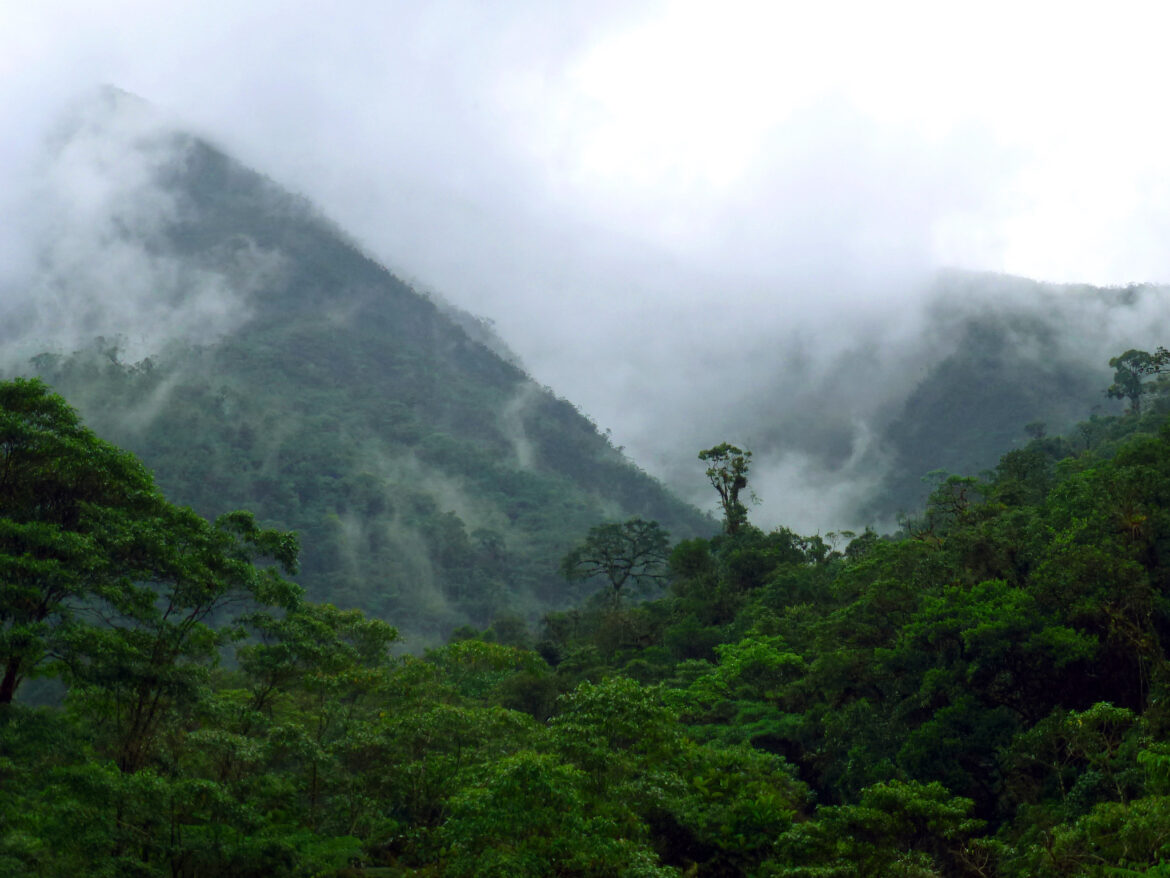
At a time when the planet is showing its limits in terms of resources, leaders come together to discuss what’s best to do. Despite historically having been seen as something “to exploit”, the environment now appears as something to protect. This conversation is built on ethics, on what societies consider right, important, valuable. On the occasion of the COP30 in Brazil, projects like the Tropical Forest Forever Facility, or TFFF, brought attention to the need for incentivising the protection of the environment. The TFFF reflects a shift toward environmental protection, but still reproduces Western economic logics and marginalises alternative ways of valuing nature.
Understanding what TFFF consists of is an essential first step to get a sense of what ethical and political grounds such a project might be built upon. The Tropical Forest Forever Facility is a project of incentivisation of forest protection, championed by Brazil in the context of the COP30. It proposes an annual payment per hectare of protected tropical forest and calls on any state to contribute to this investment fund. Countries like Norway, South Africa, or France have already shown interest in becoming investor countries. More than 70 countries are considered eligible to receive payment for protecting their tropical forest. TFFF is aiming wide in terms of range, as it would benefit countries on multiple continents and be one of the largest multilateral funds ever created. Simply put, the goal of TFFF is to use money to protect nature, when, as the Brazilian Minister of Environment and Climate Change, Marina Silva, explains, “we have already exploited nature too much to generate financial resources”. The initiative would be a way to give back to nature what we have been stealing from it.
At first sight, TFFF looks like an attempt to exit the old Western way of relating to nature – that is, through exploitation – but it remains linked to this vision under many aspects. The project reflects a relationship to nature that happens through valuing the non-commodifiable services the latter provides, such as participating in the water cycle and preventing soil erosion. Putting a monetary value on this capacity very much follows the logic of Western valuation of nature. Indeed, it assumes that financial compensation is necessary in order to avoid environmental exploitation, a phenomenon that is seen as likely to happen otherwise. Another of TFFF’s questionable aspects is the “top-down” aspect to its approach, which implies negative consequences for the people who are in direct interaction with these tropical forests, and whose opinion is not being considered, or not enough. Out of the USD 4 amount given to eligible countries per hectare of protected forest, 20 percent, or 80 cents, would go to indigenous communities of the region. However, for every hectare of “exploited” tropical forest, recipient countries will have to pay USD 400. This is likely going to induce more monitoring of neighbouring communities, leading to bigger sanctions for people who are already vulnerable.
The fact that this project is not centered around the interests of these communities is another proof of its alignment with a Western approach to the environment. More broadly, using the notion of valuing systems helps in understanding the Western way of conceptualising forests, as well as other “natural” spaces. By this notion is understood the way a society collectively agrees on what is important, sacred, worthy of attention, and/or of action. This process of deciding what is valuable shapes the way this society sees the world and interacts with it. The idea of human society being separate from nature started to gain popularity as the West was expanding through colonialism. This served as a premise to make the exploitation of nature morally justified. Hence, the idea of nature as a pool of resources for people to exploit for their personal profit has grown, leading to nature almost only being valued in terms of economic value, that is, exchange value, or benefit, in today’s society. Coloniser states imposed this narrative, pushing any other way of valuing nature outside of the sphere of debates. Yet, in the discussion on how to manage nature in a time where it is showing limits in terms of renewal and resources, taking into account voices that have been silenced so far might open new doors.
In South America, for example, the idea of the forest as an object of extreme value is not new. Indeed, in countries like Ecuador or Bolivia, Nature appears as a legal right-holder in the Constitution. This makes any attempt to violate these rights potentially juridically reprehensible, significantly reducing the incentives of doing so. Among native peoples of the Amazon are multiple ways of relating to Nature and considering the human being in relation to it. These systems of truth have a direct impact on these people’s lives and their way of conceiving the world as a whole.
Here is an example of an alternative to the system of valuation that TFFF is a representation of. The concept of Sumak Kawsay, or Buen Vivir (good living or living well), emerged in Andean communities and seeks to question the binary between man and nature, which is at the center of extractivism and expansionism. Buen Vivir is based on two key points: the criticism of Western development theory and the use of alternatives coming from indigenous traditions, as explained by Eduardo Gudynas in his essay on the concept. The term Buen Vivir is minimised in its English translation, as it encompasses the ideas of living in harmony with others and Nature as well as the notion of well-being, Gudynas argues. Buen Vivir is a path to radically questioning the whole system of Western development, offering the idea of a mutual relationship of care between humans and nature, both benefiting from it. Concepts surrounding Buen Vivir have been given growing attention, as the doctrine of development has shown its numerous flaws. Buen Vivir is a platform for alternative ways of thinking about life. It criticises the system that commodifies everything and prioritises utilitarian value. Additionally, it puts indigenous knowledge at the center and emphasises the need to explore alternatives to the Eurocentric conception of things. The example of Buen Vivir is significant within the critique of TFFF in that it illustrates how the mainstream vision of the environment is being challenged by bottom-up movements. Additionally, concepts like Buen Vivir spark conversations that go beyond community-level organisation, translating into something relevant to the field of international development.
Tropical Forest Forever Facility must serve as an example of how even the most optimistic projects are products of a vision of the world that needs to be questioned. Despite being an attempt to open an international conversation about different ways of valuing natural spaces, TFFF perpetuates the sole economic valuation of nature, as well as the silencing of alternative ways to imagine interactions between humans and the ecosystem they are a part of. The idea of nature and human society being separate must be questioned, as it will only lead to the killing of one in the interest, but also at the expense of the other.
Edited by Lou Didelot
This is an article written by a Staff Writer. Catalyst is a student-led platform that fosters engagement with global issues from a learning perspective. The opinions expressed above do not necessarily reflect the views of the publication.

I’m in my third and final year at McGill University, pursuing a B.A. in Political Science and International Development Studies. I’m particularly interested in social justice, political ecology, feminist theories, and the study of fascism.