
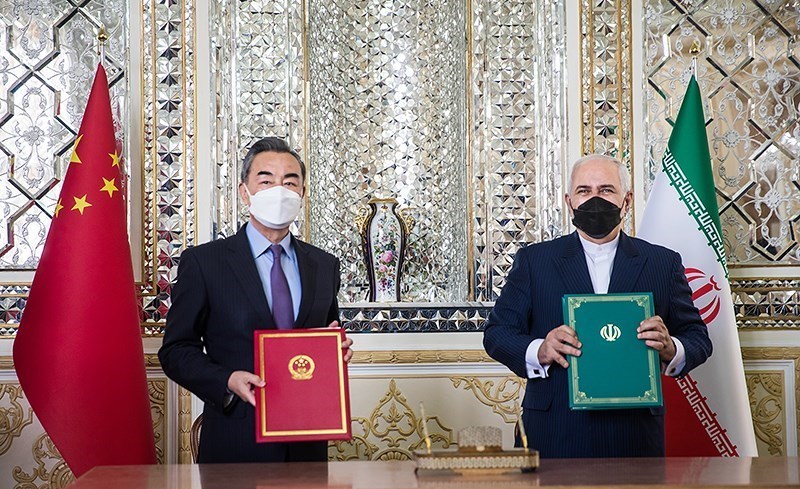
In late February, Israel and its superpower ally, the United States, launched a series of coordinated attacks against Iran, marking the beginning of a long anticipated war on Iran and inciting a series of regional retaliations. While many are unsurprised by this US-Israel alliance, given the countries’ strong commitment to one another and their military and political endeavours, it remains unclear who will support Iran. Russia and China are often involved in conversations surrounding potential intervention on the Iranian side. Russia, for one, has collaborated with Iran in the buying and selling of military technology, whereas China has been more involved in economic cooperation with Iran, as demonstrated by the latter’s membership in the BRICS economic alliance to “overcome the impacts of US sanctions.” This article explores the contributions, if any, of Russia and China in the current military escalation in the Middle East, as well as their interests in a sustained conflict involving the US.
Russia’s and China’s Official Diplomatic Positions
In response to the deployment of US and Israeli airstrikes on Iran, resulting around an initial 1500 civilian casualties and an the destruction of a girls school, the Russian Foreign Ministry condemned the US and Israel as being in clear violation of the “fundamental principles and norms of international law,” invoking the conflict’s “humanitarian, economic, and potentially even radiological” consequences. Russia’s official stance paints Israel and the US as the aggressors, viewing their actions as an attempt to dismantle the Iranian regime because it refuses to “yield to the dictates of force and hegemonic pressure.” These accusations stem from the US’s history of attempting regime change in countries they consider to have hostile regimes, with many examples being in Latin America and West Asia. For example, the 1973 US-backed coup of Augusto Pinochet in Chile effectively toppled the democratically elected President Allende’s socialist democracy in favour of a right-wing dictatorship. Most recently, Venezuela’s regime-change at the hands of the US Air Force. Russia’s statement then concludes with its commitment to assist its allies in reaching peaceful solutions grounded in “international law, mutual respect, and a balanced consideration of interests.”
China, on the other hand, is taking a more cautious stance, with no official condemnation from the Chinese Foreign Ministry at the outbreak of the conflict. Weeks later, however, a Chinese spokesperson, Mao Ning, replied with a hesitant condemnation of the assaults on Iran when questioned by an Iranian journalist.
While both Russia’s and China’s public statements indicate their support for the Iranian camp, and while this escalation occurs in the broader context of long-standing military and technological cooperation among the three countries, whether or not Iran’s allies have actually engaged in direct military cooperation against the US and its allies remains unclear.
Russia’s Contributions in the War so Far
In the wake of the war, Russia has shared its technological expertise with Iran and, most recently, its high-resolution satellite imagery, helping the Iranians to better target American interests in the region. However, its ongoing fighting on the Ukrainian front leaves it less capable of mounting substantial, overt attacks in the Iranian war.
The possibility of China offering Iran additional and sustained military cooperation in the current war with the US and Israel remains uncertain. Although increasing its military aid would strengthen the Iranian camp, it could also lead to significant drawbacks for China. According to a researcher at a Chinese research institute, Horizon Insights Center, Yang Xiaotong, on February 4th, roughly a month before Trump waged his latest war, Chinese President Xi Jinping and US President Donald Trump discussed China’s unwavering interest in prioritizing Chinese interests in Taiwan, given the strong American military presence surrounding the Island in the South China Sea. The Chinese president also stressed the importance of maintaining US-China relations. This meeting reveals the strategic nature of the Chinese government and its unwillingness to risk its more valuable assets, such as Taiwan, even if it means sacrificing its current relationship with Iran, its resource-rich ally with access to Gulf markets and trade routes.
Even if China cooperates with Iran behind-the-scenes (or intends to do so in the coming months), as political analyst Silvia Boltuc notes in her risk assessment, both Russia and China have comparatively limited interests and capabilities for conducting full-scale military operations against the US and its allies. Although the two countries’ scaled-back approach might currently work for its global allies, as Iran continues to fight this conflict alone, and as the coordination between Israel and the US grows stronger, Russia and China will eventually have to face the consequences of failing to adequately defend their Global South allies and push forward in their counter-US-hegemonic campaign. Prolonged failure may result in what Boltuc calls a “credibility deficit,” i.e., a decrease in the perceived credibility of Russia and China to follow through on their support for countries hostile to the US, especially by their allies in the Global South. As rising powers like China continue to challenge US hegemony, and as instability and war continues to wreak havoc in the livelihoods of the Global South, China’s respective response, and those of powers alike will reveal a telling story about the future of Global South solidarity.
Edited by Lily Christopoulos
Disclaimer: This is an article written by a Staff Writer. Catalyst is a student-led platform that fosters engagement with global issues from a learning perspective. The opinions expressed above do not necessarily reflect the views of the publication.

Dala is in her third year at McGill, pursuing an Honours B.A in International Development Studies with a double minor in Political Science and World Islamic and Middle East Studies. She is particularly interested in the politics of the Middle East and North Africa, and immigration.