
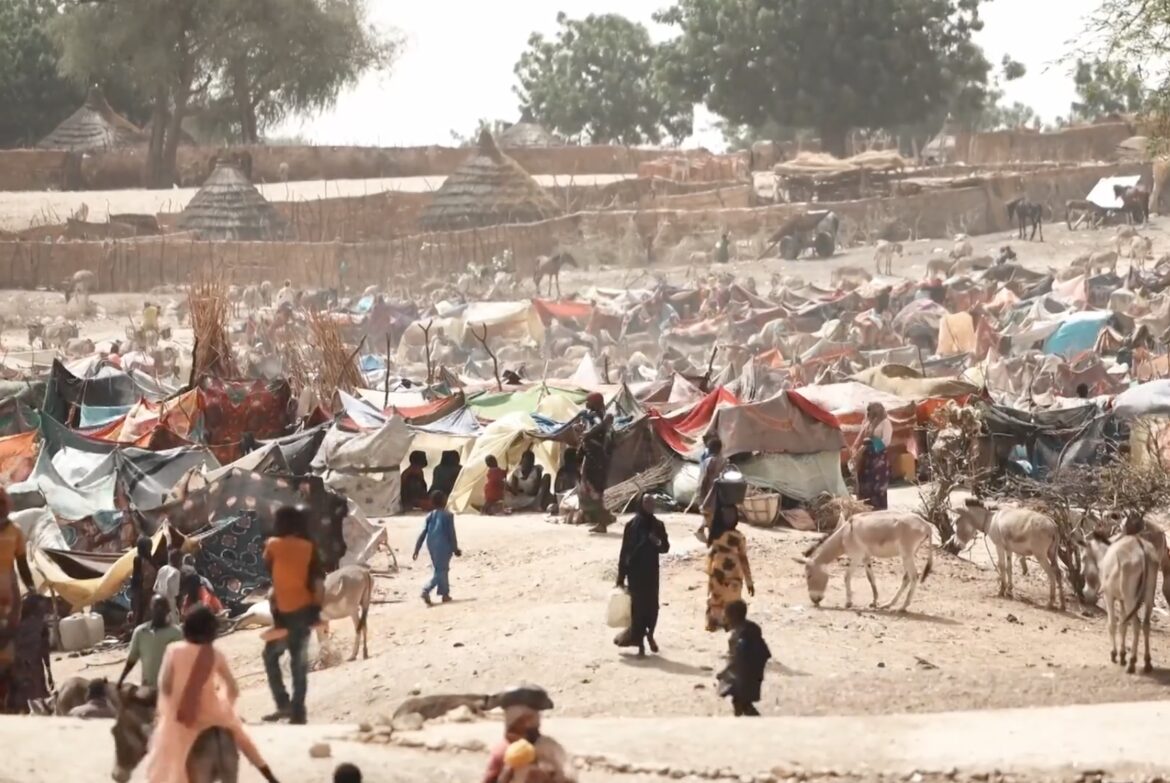
The needs of Sudanese refugees displaced by the Sudan civil war are rising while support for them is shrinking dramatically. Since assuming office in 2025, the Trump administration began significantly cutting funding for the United States Agency for International Development (USAID) — which offered crucial support for victims of this national disaster. Trump and Elon Musk’s Department of Government Efficiency began dissolving the organization as part of a federal purge of “waste”, cutting large amounts of aid and firing many government officials. On July 1, 2025, the Trump administration formally absolved USAID, and its remaining features were merged with the US State Department.
The impact of this austerity can be felt most acutely in Sudan, where in 2023, a civil war between the Sudanese Armed Forces (SAF) and Rapid Support Forces (RSF) erupted and continues today and has already led to over 150,000 deaths and the displacement of nearly 13 million Sudanese civilians. Over 30 million people have been left in need, essential services in Sudanese society have been enormously disrupted. Mamadou Dian Balde, the United Nations High Commissioner for Refugees’ (UNHCR) Regional Director for Eastern and Southern African, calls the situation in Sudan “the world’s largest displacement and worst humanitarian crisis, unfolding in the wake of the most severe global funding crunch in decades.”
Before focusing on the case of Sudan, it is important to begin by noting the relationship between refugees and international aid, and how the asylum seeking community is fundamentally harmed when aid disappears. Refugees and other asylum seekers extensively struggle to meet standards of basic human survival, like access to healthcare, shelter, and food. International organizations, which receive funding from international aid, provide significant protection to these groups by providing access to crucial resources. As a result of Trump’s USAID cuts, these organizations, which include UNHCR, the United Nations agency for children (UNICEF), the Red Cross, and the International Organization for Migration have lost significant funding. Joey Hanna, the Head of the UNHCR Montreal Field Unit, notes that funding has always been UNHCR’s greatest challenge, and this loss of funding has forced UNHCR to significantly reduce its work. The organization has lost almost a third of its workforce, its staff count falling from 20,000 to only 14,000 following the aid cuts. It is currently undergoing an internal audit to determine how to most efficiently continue its critical and life-saving work, Hanna says, but has been forced to cut secondary needs support. UNHCR estimates that nearly 13 million displaced people will face weakened health as a result of these budget cuts, 6.3 million of which are children.
The Reality of Sudanese Refugees
The case of Sudan stands out both in the scale of the impacts of the aid cuts and the subsequent response to this damage from the Trump administration. As the largest provider of food assistance to those in need globally, USAID had assisted Sudanese refugees tremendously in avoiding famine and helping to restore stability. According to the ACAPS Analyst Hub, “given the scale of US funding, USAID’s contributions are essential to the humanitarian response in Sudan”. Now, following USAID cuts, Elizabeth Nyapito, a member of the Jesuit Refugee Service working with refugees in South Sudan says that “those waiting for our support were left stranded, filled with questions”. Stop-work orders (SWOs) have created more widespread food insecurity, suspended shelter programs, weakened protection services, left hospitals nonfunctional, decreased trust in humanitarian organizations and aid, and more.
The crisis in Sudan created large populations of refugees in other countries as well, who are also facing enormous issues following USAID cuts. Of the 9 million Sudanese who fled their homes, many escaped to other parts of the country, but nearly 2 million have fled Sudan entirely. One example of where Sudanese refugees are gathered — and are now facing further collective crisis — is the Kakuma Refugee Camp in Kenya. The Kakuma Refugee Camp was established in 1992, where people have come fleeing deadly violence mainly from South Sudan, though refugees come from nearly two dozen countries. In 2024, the camp received $112 million to support the basic needs of refugees from the World Food Program (WFP), which USAID was funding billions to annually. Consequently, when Trump cut USAID, the agency became unable to fund the WFP, cutting resources for the Kakuma Refugee Camp drastically, thereby causing hundreds of thousands of refugees to starve. Thousands of refugee families in this camp alone have already died because of this, and hundreds of thousands more are at risk of death from starvation and disease from malnutrition. Children in particular have suffered immense immune system damage from malnutrition, with over 12,000 treated for immediate medical attention in 2025 since the famine began.
Dragica Pajevic, a WFP veteran, reports on the situation in Kenya, saying “the only difference between life and death during a famine is WFP and the U.S. government, its largest donor.” With its largest donor absent, the Kamuka Refugee Camp is forced to watch Sudanese refugees starve to death. Experts also say that these aid cuts could cause refugees to spill out of Kenya and into other countries, which Kenyan government officials warn could “[undermine] Kenyan willingness to host thousands of refugees, many of whom would likely otherwise join the illegal migration flows bound for Europe and the United States,” thereby having wider political implications and impacting the international community multidimensionally.
This reality in Kenya was faced with denial and a lack of interest when brought to the attention of the Trump administration. USAID officials reported that when they reported the situation to top foreign aid advisers on Trump’s cabinet, they expressed “zero interest in the subject matter”, and took no responsibility for the consequences the aid cuts had caused. U.S. Secretary of State Marco Rubio, who insisted that food programs would be excluded from the massive USAID cuts in January 2025, continued claiming that “the agency’s mass cuts had spared food programs” despite being warned of the withdrawal of WFP funding evident in Kenya. The Trump administration’s denial of the impacts of USAID cuts on refugees and equally alarming apathy in the matter has allowed conditions to worsen across refugee communities, and has demonstrated that the U.S. has no plan to repair the damages caused by this removal of international aid.
A Need for Systemic Change?
In response to Trump’s immense aid cuts, a senior department official said, “We’re not the world’s policeman. We’re not the world’s social safety net.” The administration claims it is dedicated to a new bureau which provides aid only to those in dire need (“life-saving” aid), and therefore remains silent on the impacts of its elimination of nearly 30 percent of global development aid on millions of refugees and asylum seekers. The Trump administration not avoids accountability for this damage, but thereby leaves communities stranded until other actors find solutions.
The scene that has played out as a result of Trump cutting USAID ignites a broader consideration of the sustainability and ethics of aid as charity. If developed countries like the U.S. support communities in need, like refugees, in the form of large sums of voluntary aid, the cycle of dependency created is dangerous because the nature of this support as charity allows life-saving aid to be withdrawn at any given moment by the whim of the sender. Trump’s actions are a clear example of this. Legally, nothing can be done to demand that the U.S. reinstate this crucial support, as it has always been implemented on a voluntary basis. Trump can therefore avoid facing technical accountability for the damages of cutting this nonmandatory aid, even though the consequences of aid cuts are dire, urgent, and long-lasting. Trump’s policies demonstrate that voluntary aid alone is not a sustainable solution to global conflict and uncertainty.
Experts suggest that a more sustainable path to guaranteeing security for vulnerable groups like refugees could be for the Global South to take leadership in their own development and security with the allyship of the Global North. This would create long-lasting solutions tailored to local communities that wouldn’t be beholden to detached wealthy donors, thereby preventing crises from unfolding when these donors decide to spontaneously withdraw life-saving aid without implementing alternatives to it. Global health expert Madhukar Pai comments on the dangers of charity aid for the health of vulnerable communities, arguing that “the biggest progress will come from leadership by Global South nations, institutions, and people, as they seek to exercise their agency and challenge the saviourism, charity model of global health.” The same logic can be applied towards refugee communities, as they are similarly dependent on international aid for basic survival. The current landscape of international aid — and the damages it has left in its wake — demonstrates the pressing need to locate secure long-term support for vulnerable communities, in Sudan and beyond.
Edited by Noé Beaudoin
Disclaimer: This is an article written by a Staff Writer. Catalyst is a student-led platform that fosters engagement with global issues from a learning perspective. The opinions expressed above do not necessarily reflect the views of the publication.

Sofia Kaplan is pursuing a double major in Psychology and International Development studies at McGill University. She is particularly interested in politics of human rights.