
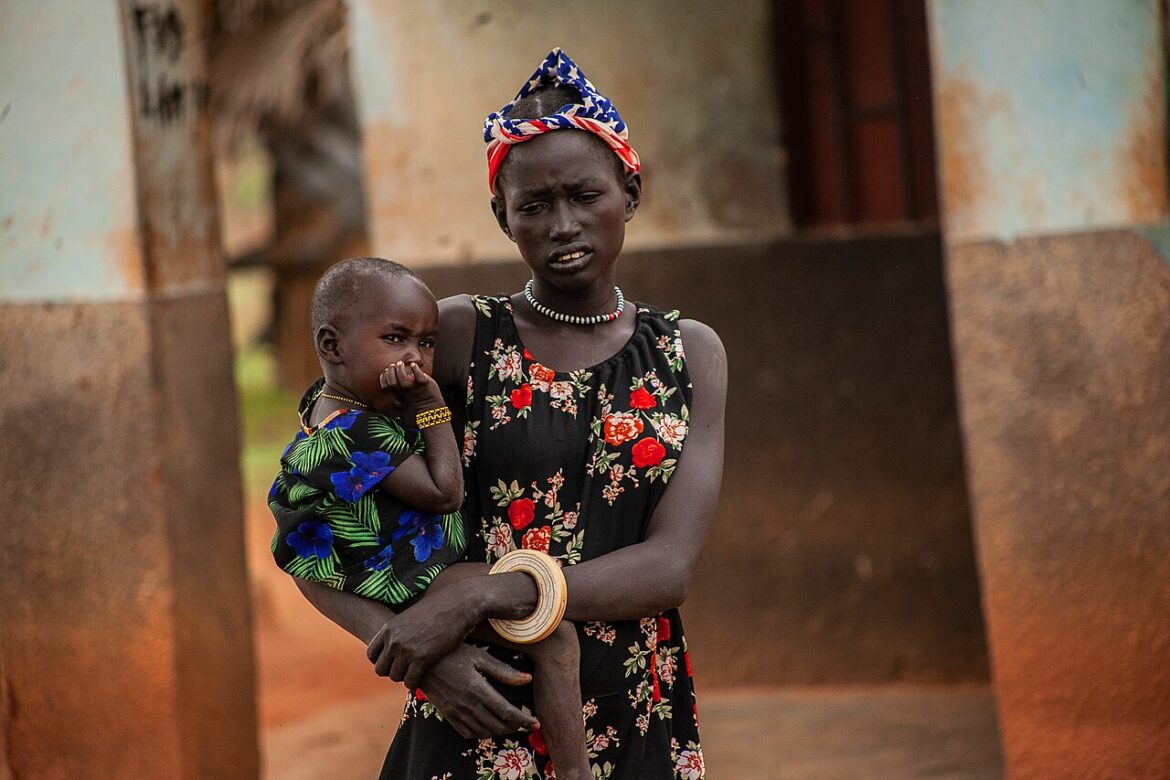
South Sudan has one of the weakest healthcare systems in the world, and, with each passing day, the situation in the East African nation only grows more dire. With a population of 12.4 million– the majority of whom live outside urban centers and below the poverty line– there is a persistent need for resources that is failing to be met.
Nearly a tenth of South Sudanese children fail to reach their fifth birthday due to succumbing to easily curable illnesses while the country experiences a high maternal mortality rate, with between 900 and 1,100 deaths per 100,000 live births, far exceeding the global average.
The current state of health for infants and young children in South Sudan is particularly concerning due to its median age of around 18. With a very young population and an average birth rate that is greater than the average death rate, the number of newborn babies and toddlers requiring urgent care is rapidly growing. As this percentage grows, the ability of healthcare resources to support the nation decreases.
75% of child deaths in South Sudan are caused by preventable diseases such as malaria and pneumonia. These are diseases that are highly treatable, particularly amongst children and youth, with access to the right resources. South Sudan lacks this necessary access, leaving an increasing number of child deaths continuing to occur
There are several major challenges that contribute to South Sudan’s fragile healthcare system. A primary cause is a lack of funding. Despite the South Sudanese government’s previous declaration to allocate 15% of its national budget to healthcare in order to improve healthcare facilities, at the moment only 1.3% of the budget goes toward healthcare. Consequently, the population must rely on donor funding and volunteer healthcare workers from external organizations such as the WHO, UNICEF, and Doctors Without Borders.
However, while these groups have been pivotal in providing medical aid to the South, it is still not enough. Despite receiving 1.4 billion dollars in foreign aid in 2024, the nation’s health outcome remained unimproved. The lack of proper government funding means many healthcare facilities are short-staffed while doctors and nurses are often underpaid and overworked, directly impacting patient care.
In addition, insufficient funding also contributes to medical facilities not possessing proper resources and supplies to treat patients. Medication shortages during peak malaria outbreaks have been common the past few years, resulting in those affected with the ailment unable to receive crucial care. This leads to the outbreak spreading, further stressing the system.
As noted, South Sudan has a high poverty rate with about 76% of the population struggling to afford basic necessities, while 66% faces extreme poverty. This makes access to care near impossible. Many live far from urban centres and healthcare facilities due to affordability issues, and being able to travel can often be difficult. Medications and resources can struggle to reach healthcare facilities due to poor road networks, while patients experience a similar issue when attempting to reach the assistance they need. Many have to travel over an hour to receive medical attention, which even then cannot be guaranteed.
In the South Sudanese town of Pariang, some families have no choice but to travel for days in order to reach treatment centres. “We all must do it,” said Rebeca, a 20-year-old South Sudanese mother that travelled for two days, while carrying her daughter, through extreme heat to the Pariang hospital, “If we have sick children, then we walk.”
While the healthcare provided by external organizations is free, it is also highly limited and cannot be accessed by the entire South Sudanese population. This leads to more deaths, particular for those with weak immune systems such as infants and young children. The life expectancy of the nation is 58.6 years old, years below the African average of 63.6 years old and over a decade below the global average of 71.4 years old.
Furthermore, another leading cause of the poor healthcare system in South Sudan is violence against healthcare workers. Medical facilities are frequently attacked and surgical facilities are forced to prepare in the event of a siege. In fact, between January 2025 and April 2026, numerous attacks on Doctors Without Borders facilities and staff left hundreds of thousands without healthcare, resulting in healthcare access being further limited.
One such attack destroyed a facility in the town of Lankien that over 250 000 people had relied upon for three decades. “The level of destruction is beyond anything we could imagine…our medical supply buildings burned to the ground, while even pediatric equipment was targeted and destroyed,” said Gul Badshah, the Doctors Without Borders operations manager, in a description of the attack. As a result of bombing, looting, and vandalism, the hospital was left with no choice but to permanently close.
Attacks such as these are deliberate and aimed to prevent humanitarian aid from reaching those in need. As South Sudan grows more dangerous for healthcare workers to do their job, the likelihood of medical operations being halted entirely increases.
In conclusion, the healthcare situation in South Sudan is considered catastrophic, and the urgent need for humanitarian aid cannot be understated. The current state of healthcare infrastructure in the nation cannot overcome the numerous difficulties it faces. Even with foreign aid and support from global humanitarian organizations, South Sudan is still struggling to provide proper care for its residents. Both the child and maternal mortality rates will continue to grow unless a way is developed to overcome these challenges.
Edited by Nina Serengulian
This is an article written by a Staff Writer. Catalyst is a student-led platform that fosters engagement with global issues from a learning perspective. The opinions expressed above do not necessarily reflect the views of the publication.
