
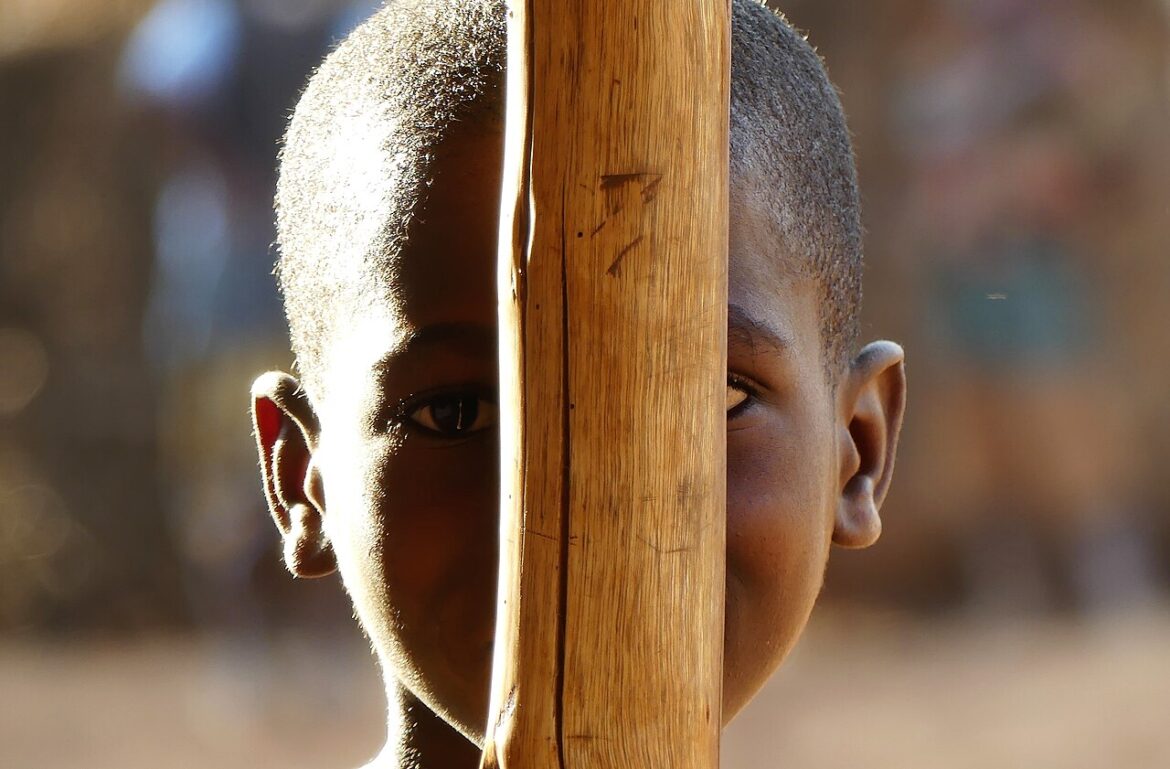
When we speak about state development, we often imagine what must be built today to create a better tomorrow: stronger economies, safer communities, and more effective institutions. Yet, development is not simply about creating stable systems. It is also about who those systems are built for, and whether they allow the next generation to shape the future.
Children are often framed as beneficiaries of development: youth whose vulnerability demands protection and whose rights must be safeguarded. But children are more than recipients. They are the future educators, policymakers, and leaders. Therefore, investing in children today will determine what a country looks like tomorrow.
To understand how this investment works, I spoke with specialists at UNICEF Burundi working across education, child protection, social policy, and partnerships. Their insights offer a closer look at how UNICEF works with government institutions and local communities to address the challenges facing children, from financing essential services to protecting those affected by displacement. Together, these perspectives reveal what it takes to turn commitments to children’s rights into meaningful opportunity.
From a Young Population to a Nation’s Future
Nearly half of Burundi’s population is under the age of 18. In a country of approximately 14.4 million people, millions of children and adolescents are growing up with the potential to shape the country’s future. How Burundi invests in its children today will influence its social and economic trajectory for decades to come. Understanding these opportunities requires examining Burundi’s history, geography, and development challenges.
Burundi is a small, landlocked country in the Great Lakes region of East Africa that borders Rwanda, Tanzania, and the Democratic Republic of the Congo. For children living outside the capital, geography can directly affect access to schools, transportation, healthcare, and other essential services. But geography alone does not explain Burundi’s development challenges. Its history has also left lasting consequences.
Most notably, the 1993 Burundian Civil War killed hundreds of thousands of people, displaced more than a million, and severely damaged the country’s economic and social infrastructure. Although the conflict formally ended through peace agreements in the 2000s, its consequences continue to shape poverty, public services, and institutional capacity. The World Bank described the conflict’s long-term effects as particularly severe in rural communities. Hence, development cannot be separated from whether children have the foundations necessary to be part of Burundi’s future.
Building Opportunities, Not Just Access
For Chieko Watanabe, Education Specialist for Access and Governance at UNICEF Burundi, expanding access to education is only the first step. The quality of learning opportunities and children’s ability to remain in school are equally important.
Burundi has made important progress in expanding access to education. More than three million students returned to primary level education for the 2024–2025 academic year. Yet, as students reach adolescence, UNICEF Burundi reports increased rates of unenrolment. In many schools, students receive substantially fewer hours of instruction per week than children in neighbouring countries. The quality of education also differs significantly in terms of classroom resources, such as course materials and adequate teachers. The divide in education quality is especially stark between children from different socioeconomic backgrounds. UNICEF’s 2024–2025 education budget analysis found that only 7% of children from the poorest households reach secondary school, compared with approximately half of children from the wealthiest households.
As Aristide Kielem, Chief of Social Policy at UNICEF Burundi, explained, these inequalities are closely connected to the state’s financial capacity to sustain the services children depend on. A child’s ability to remain in school is shaped by factors beyond the classroom, including household poverty, safety, geography, and access to essential services. Providing meaningful access to education therefore requires addressing the broader conditions that determine whether children can remain in school and benefit from learning.
When Childhood Is Interrupted
The pathway toward childhood development becomes even more fragile when children face displacement. Burundi is currently navigating two major population movements. First, conflict in the eastern Democratic Republic of the Congo has pushed tens of thousands of people across the border into Burundi. By April 2025, more than 70,000 people had entered the country since the beginning of the year, approximately 53% of them children. UNICEF’s Refugee Response Flash Update reported that many families arrived after abrupt journeys, sometimes separated from loved ones.
Second, Burundi is preparing to receive its own citizens returning from Tanzania. In March 2026, UNICEF reported that Tanzania was hosting approximately 101,917 Burundian refugees and asylum seekers. Burundi and Tanzania, alongside the UNHCR, have been working to accelerate voluntary repatriation. For children, movement across borders can mean interrupted education, lost documentation, separation from family, and difficulty accessing healthcare and other services.
The work of Ildephonse Birhaheka, a Child Protection Specialist at UNICEF Burundi, brings these challenges into focus. Protecting children affected by displacement requires more than responding to immediate risks. It also means ensuring they can access the services and support needed to rebuild stability. This becomes particularly important when returning families enter communities where public services are already under pressure.
The Systems Behind the Services
For specialists Aristide Kielem and Caterina Michelini, supporting children also means addressing the financial and institutional barriers that can prevent programs from reaching them. Their respective work in social policy and partnerships highlights two important dimensions of UNICEF’s approach: ensuring that resources are allocated to children’s needs and that initiatives translate into action within communities.
As Chief of Social Policy, Kielem works on the relationship between public finance and children’s well-being. UNICEF analyzes national budgets to assess whether funding for services such as education and social protection reflects children’s needs. This matters in Burundi, where expanding school access does not necessarily mean every child receives a quality education. By examining how public money is allocated, UNICEF can help identify gaps and advocate for spending that better responds to children’s needs.
Michelini’s work in partnerships highlights another part of this process: ensuring that efforts to support children translate into on-the-ground action. UNICEF works with government institutions and local partners on initiatives that communities can sustain, such as improving school facilities and strengthening access to essential services. Such cooperation matters because UNICEF cannot address every challenge alone. Progress depends on working with local communities and institutions that already serve children.
Ultimately, public finance and cooperation complement each other. Funding determines which services can be provided, while cooperation helps make those services accessible to children. UNICEF’s contribution lies in strengthening the conditions that allow children to benefit from support over time.
Investing in the Children Who Will Inherit Burundi
The challenges Burundi’s children face extend beyond individual services. It raises broader questions about whether institutions have the resources, coordination, and capacity to turn children’s rights into realities. When children lack access to basic resources, the consequences reach far beyond childhood.
Burundi’s young population is an opportunity to shape the country’s future. Realizing that potential requires sustained investment in children, stronger public services, and cooperation between the institutions and communities responsible for supporting them. It also requires looking beyond enrolment figures and policy commitments to consider whether children can actually benefit from the opportunities available to them.
The children of Burundi are not simply the recipients of development. They are the generation that will determine what Burundi becomes. The future of Burundi begins not with what we build for its children, but with what we enable them to build for themselves.
Edited by Anya Sood
This is an article written by a Staff Writer. Catalyst is a student-led platform that fosters engagement with global issues from a learning perspective. The opinions expressed above do not necessarily reflect the views of the publication.

Théry Flora Gahimana is a third-year student at McGill University pursuing a double major in Political Science and International Development. As Co-President of McGill Students for UNICEF and a former staff writer for Catalyst, she is particularly interested in children’s rights, international development, and youth-centred policy.