
Note: This article is a follow-up article to a February 2026 publication, which can be found here.
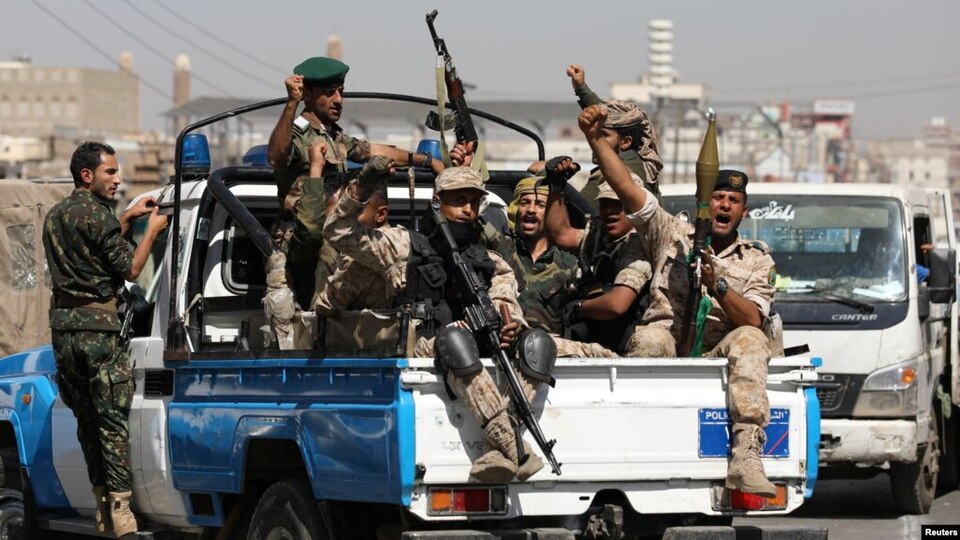
Yemen as a nation has been through an unrelenting series of brutal conflicts and crises, with the most recent example being the civil war that began in 2014 and has been going on ever since. The war has seen various sides and supporters, with different regional powers backing their preferred faction. It has served as a key proxy battleground between rival powers Iran and Saudi Arabia, who back the Houthis and internationally recognized government (IRG) respectively. Between the tail end of 2025 and the very beginning of 2026, an Emirati-backed faction known as the Southern Transitional Council (STC) tried to take on the IRG, but was quite literally wiped off the map by an IRG counteroffensive. From that point on, the IRG and the Houthis had been in a standoff, as the situation in the Middle East around them grew more and more kinetic.
In my previous article from February 2026, I discussed how this new one-on-one standoff between the two remaining major factions was a conflict that was “brewing right under the noses of the world’s great powers.” I wrote my synthesis of the situation in Yemen just before the outbreak of the 2026 Iran War, commencing with joint American-Israeli attacks on Iran, and subsequent retaliation by Iran on the Gulf nations and on Israel itself. With the Strait of Hormuz closed, global fossil fuel prices have risen dramatically, but Iran is not the only Middle Eastern power right beside a strategic shipping chokepoint. It just so happens that the Bab-el-Mandeb Strait lies right next to Houthi-controlled territory in Yemen, which is exactly where this “hidden” proxy cauldron broke through into the global spotlight.
A series of tit-for-tat posturing and small-scale strikes throughout the summer of 2026 made Yemen bubble, positioning the already battered country as the next possible front in an ever-widening regional war in the Middle East. To seize the initiative, the Houthis launched a surprise offensive against the IRG in September, sweeping down the Red Sea coastline and seizing the Bab-el-Mandeb Strait. Not only did this close off a second vital passageway from Saudi interests, but the Houthis also bombed the Saudis’ East-West Pipeline to ensure that their oil exports, already held up by the Hormuz crisis, could not be sent through the Red Sea either. Now it is the Saudis rather than the Houthis that have been boxed in. A seismic development indeed, and an embarrassment for Saudi Arabia and its allies, but why would the Houthis do this? Why did Yemen become the new front?
From a Western perspective like mine, it’s always difficult to come up with definitive reasons as to why conflicts like these run their respective courses, but looking back to earlier in 2026, we can still see how a conflict like this was always on the cusp of taking shape. Throughout the course of the Iran War, the Houthis in Yemen have been functioning less like Iranian proxies and much more like an independent entity of their own. This helps tremendously in not being reliant on Iranian support amidst American and Israeli strikes. In contrast, the IRG is as reliant as ever on their Saudi backers for air and logistics support to try to hold back the Houthi advance. A standoff between the two was always bound to stoke tensions, but the tension wouldn’t necessarily explode unless either side had a motivation to attack. Regardless of whether or not their allies in Iran directed them to do so, the Houthis’ motivations revolve around two main points: IRG weakness, and the Bab-el-Mandeb.
Yet similarly to their motivations, the Houthis likely would not have attacked unless they knew they would gain something from it. As pointed out in February, the Houthis were geographically boxed in, with the Saudis to their north, the Red Sea to their west, and the IRG to their east and south. No tactician would ever order an all-out assault on a line shaped like this unless they knew for a fact that they were better organized and better equipped, which was exactly what was predicted before. I had previously thought that perhaps the IRG would have fired the first shot, seeing their geographical advantage in the front lines, but perhaps the reason they didn’t is because they weren’t ready. The Houthis, however, were.
With the Saudis occupied with Iran, and global oil supplies already in a bad condition, the Houthis smashed through the IRG in September. I didn’t flat-out predict this exact scenario in February, but I did assess that with their advantage in manpower, equipment, and motivation, kinetic action would most likely result in a bad time for the IRG. What of Iran and their support under American and Israeli bombardment, though? Normally, this would be an adequate consideration that could lead some to believe that without their backers, the Houthis would be less powerful, but even though Iran has indeed been dealt a blow, they and their allies are focused while the Saudis are distracted. In other words, Iran is motivated to fight by what it sees as a life or death scenario, whereas the Saudis (until now, at least) had been viewing the situation as broadly more of a prolonged and destructive nuisance. It also doesn’t help that, as mentioned before, the Houthis’ abilities to act more independently allow them to keep kicking even as Iran is under attack.
This is all to say that the conflict has gone from something “brewing right under the noses of the world’s great powers” to being watched and monitored very closely. Who wins, I do not know. Would this have happened without the Iran War, I also do not know. What we have in front of us now are simply the facts of the matter from the ground, those being that the Houthis have shown their power and gritted their teeth as the Saudis and their proxies attempt to respond. I did not predict this; nobody did, but if anything, previously studying these conflicts has shown me that the best tacticians strike the hardest when they know they have something to gain, rather than something to lose. The world is waiting to see if the Houthis can live up to that assessment.
Edited by Emily Nooranbakht.
This is an article written by a Staff Writer. Catalyst is a student-led platform that fosters engagement with global issues from a learning perspective. The opinions expressed above do not necessarily reflect the views of the publication.

Oliver “Ollie” Scott-Hansen is an undergraduate student at McGill University studying history and Russian language, hailing from just outside New York City, yet maintaining similarly strong ties to his familial heritage in north and central Italy. He joined the Catalyst team in Fall 2024 as a staff writer, something he enjoys doing as a hobby as well. With a particularly vested interest in Eastern Europe, the post-USSR world, and the Russo-Ukrainian war, coupled with his various connections throughout the global international relations space, Ollie reports on issues throughout the world that mostly center around key geopolitical developments in contentious places mostly involving war/conflict, and domestic affairs within the United States. He has experience mainly reporting from Telegram, carefully analyzing the Russian Invasion of Ukraine through his updates forum there, but also spends considerable amounts of his free time glued to maps and statistics trying to make sense of the crazy world that surrounds our day-to-day lives.