
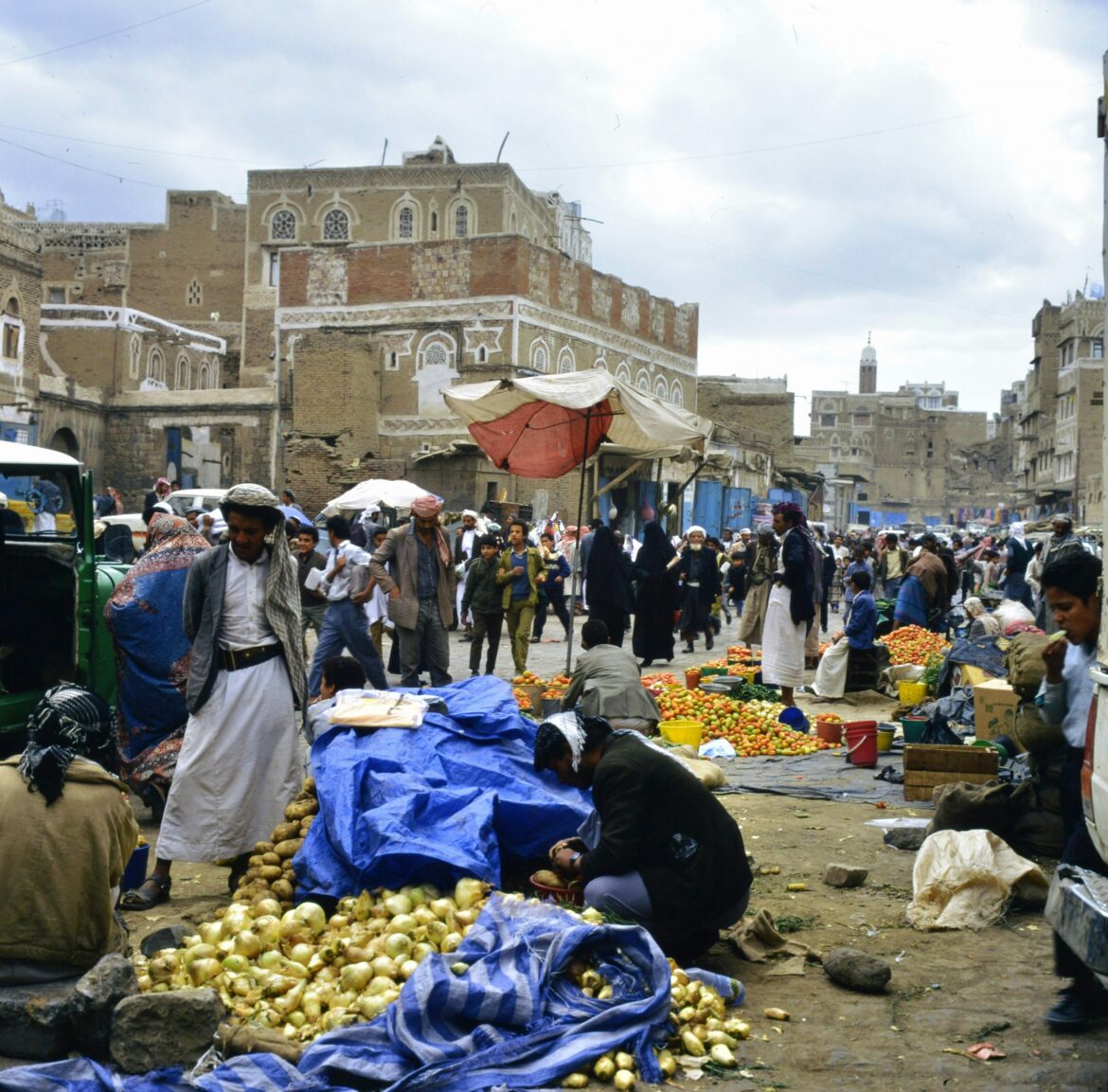
New developments in the conflict in Yemen have left residents of Taiz struggling as the city’s main roads take center stage. Since October of this year, the Houthis have surrounded Taiz, restricting key access points and making it harder for key goods, such as food, fuel, and medicine, to be transported into the city. Although the UN has asked the Houthis to stop choking off access to basic supplies, the Houthis continually claim that the roads are controlled by their Saudi-backed opponents despite little evidence to prove this. As disputes between the Yemeni government and Houthi officials continue, civilians and hospitals are increasingly paying the price.
The current circumstances in Taiz represent a new turn in the ongoing conflict in Yemen, which goes back decades and has led to one of the most devastating humanitarian crises in the world. Internally, the nation is facing the compounding impacts of the war, its subsequent economic crisis, and worsening climate shocks. According to the United Nations High Commissioner for Refugees (UNHCR), an estimated 22.3 million people in Yemen will have required some form of humanitarian assistance in 2026, which represents over half of the country’s total population.
How Did We Get Here?
There are two key players in the current humanitarian crisis devastating Yemen: the Saudi Arabia-backed Yemeni government forces and the Iran-backed Houthis. The Houthis are a religious and political group originating from North Yemen, and represent a subgroup of the Shia Muslim population called the Zaidis. They are a part of a self-proclaimed “axis of resistance” which opposes the broader West and Israel, an ideology aligned with other armed groups such as Hamas and Hezbollah. The Houthis emerged in the 1990s as “Ansar Allah,” meaning “Supporters of God.” They later adopted the name “Houthis” after their founder Hussein al-Houthi and his brother Abdul al-Houthi. Abdul al-Houthi serves as the movement’s de facto leader since 2004.
In their beginnings, the Houthis were fighting against Yemen’s then-authoritarian ruler, President Ali Abdullah Saleh, specifically seeking greater autonomy for themselves in North Yemen. When Saleh was ousted during the Arab Spring, the Houthis captured large swaths of Yemen’s territory, even gaining control of the capital, Sanaa, in 2014. Today, the Houthis have recruited over 350 000 people and are in control of between one quarter and one third of Yemen’s physical territory, which is home to around three-quarters of the country’s population. Western powers, such as the US, UK, and France, attempted to restore the legitimacy of the government. Despite these efforts, the Houthis maintain control over much of the seized territory. Although there was a temporary ceasefire in militaristic attacks in 2022, tensions rose again on October 7, 2023, at the beginning of the war in Gaza.
Recent Escalation
In support of the Palestinian people, the Houthis began firing missiles at Israeli merchant vessels in the Red Sea, which was met with retaliatory strikes on Houthi-controlled territory by Israel. Once again, the conflict saw a pause during the October 2025 Gaza ceasefire. However, it was reinvigorated by the US-Israel attacks on Iran in February 2026. By July, the Saudis had created a “blockade” of sorts on ports and airports within Houthi-controlled territory, prompting the Houthis to retaliate by advancing along 130 km of Yemen’s Red Sea Coastline. This move proved highly impactful, as it allowed the Houthis to control the Bab el-Mandeb Strait, a key passage point for international shipping. It is even more important now because it serves as an alternative route to the Strait of Hormuz, which is heavily impacted by the US-Iran-Israel conflict. Threats to oil routes increase the chances of retaliatory responses, with US President Donald Trump accusing the Houthis of “behaving very badly.” One point remains clear: as the conflict and humanitarian crisis continue to unfold, the people of Yemen struggle to get by. After more than a decade of conflict, Taiz residents need food, medicine, and aid more than ever.
Edited by Anya Sood.
This is an article written by a Staff Writer. Catalyst is a student-led platform that fosters engagement with global issues from a learning perspective. The opinions expressed above do not necessarily reflect the views of the publication.

Mackenzie Easdon is a third-year undergraduate student at McGill University pursuing a degree in International Development and minoring in Economics. She is particularly interested in current political and economic events.