
This month, Mexico became the first country in the world to hold nationwide elections for judicial positions— a major shift from the long-standing previous system where Congress appointed judges. Framed as a democratic milestone by the Morena party, the reform has raised serious concerns about the erosion of institutional checks on the executive branch. Low voter turnout suggests that the election was less about empowering voters and more about the ruling party’s dominance, further eroding judicial independence in a country grappling with pervasive corruption and powerful criminal networks.
The reform, originally proposed by former president Andrés Manuel López Obrador (AMLO) and advanced by his successor Claudia Sheinbaum, was signed into law in September 2024 and implemented rapidly. Throughout his administration, López Obrador was in conflict with the judiciary, framing it as an institution easily influenced by elites and foreign interests. This narrative laid the foundation for his “Plan C,” a judicial overhaul that replaced Mexico’s traditional appointment-based system with one in which judges and magistrates are elected by popular vote at every level. Morena’s congressional supermajority made it possible to pass this constitutional amendment without significant opposition.
While Morena has long framed itself as a progressive alternative to Mexico’s historically corrupt political establishment, the reform risks entrenching the centralized control it once opposed. This tension between the party’s populist messaging— rooted in promises of transparency and accountability— and its increasing consolidation of power over state institutions is becoming increasingly evident. By presenting itself as a champion of the people, Morena is able to justify reforms that, in practice, centralize its power over the country. The danger is that in dismantling old biases, the party is constructing new ones, replacing elite domination with partisan loyalty.
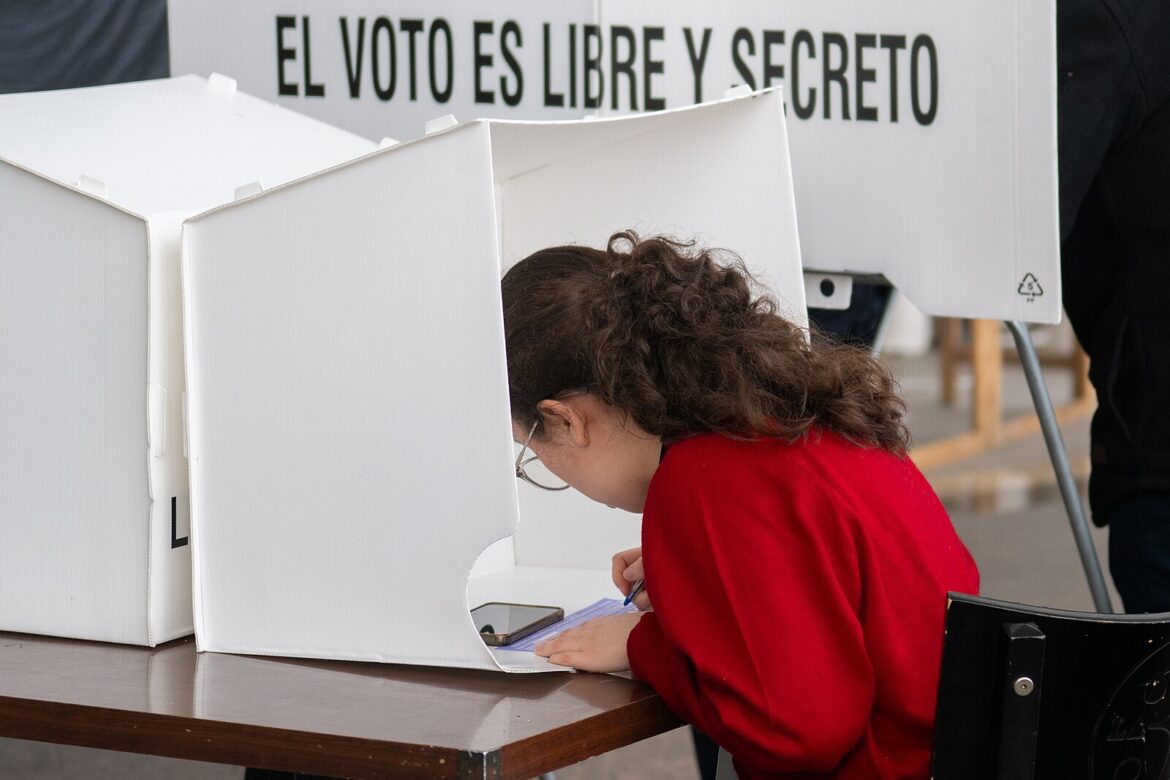
Mexicans participated in the historic judicial elections on Sunday, June 2, 2025. While officials celebrated the elections as a major democratic milestone, the reality told a different story. Turnout was notably low, with only 13 percent of eligible voters casting a ballot – a sharp decline from the roughly 60 percent who participated in the presidential election the previous year. President Sheinbaum nonetheless declared the reform a success, proclaiming that “Mexico is the most democratic country in the world.” This disconnect between official optimism and widespread public indifference exposed the reform’s failure to inspire genuine democratic engagement.
The sheer scale of the elections, both in terms of the number of candidates and the multiple levels of government involved, has been cited as a key factor behind the low voter turnout. This year’s Mexican elections saw over 7,700 candidates competing for more than 2,600 positions at the federal and local levels. Even an individual interested in participating may have felt overwhelmed by the magnitude of this selection. Voters in Mexico City, for example, were asked to choose 51 judges from a list of 293 candidates spread across seven separate ballots, some of which were divided by specialization and gender. Volunteers at polling stations reportedly struggled to explain the categories, and many voters lacked the political knowledge necessary to make educated, informed decisions. Moreover, while presidential campaigns are often straightforward and comprehensible, judicial races are far more complex, requiring voters to analyze legal records and policy positions, an unrealistic expectation for the average citizen.
Widespread confusion among the general public created opportunities for the Morena party to shape outcomes in its favour. Leading up to the day of the vote, the party distributed “cheat sheets” telling voters which candidates to support. Some individuals have even reported visits from party representatives urging them to vote for specific candidates. Given Morena’s popularity in the country, many were likely convinced by these tactics, especially in the absence of accessible candidate information. The final results reflect this influence; all nine seats on the Supreme Court were won by individuals with ties to Morena, including candidates like María Estela Ríos, who referred to herself as “AMLO’s lawyer”. These results are unsurprising considering the vetting process, over which Morena controlled two of the three committees responsible for screening the candidates. Ballots also disclosed which committee had approved each individual, allowing voters to see their party affiliations. Together, these features undermined the integrity of the elections, turning what was supposed to be a democratic breakthrough into what analysts are now describing as a political “designation.”
Another controversial element of the reform is the introduction of “faceless judges” for cases involving organized crime, a procedure which allows judicial officials to remain anonymous for their safety. While this model has been used in other countries grappling with extreme criminal threats, it has been condemned by the Inter-American Commission on Human Rights (IACHR) and Human Rights Watch. They argue that it violates international legal standards, which require trials to be overseen by identifiable, impartial judges. In a system already vulnerable to corruption and coercion, these reforms could normalize secrecy and invite unchecked political interference shielded from public scrutiny.
Moreover, the ruling party has done little to reassure the public that this reform is not a part of a broader effort to consolidate its power over the nation. President Sheinbaum defended the move by claiming that if Morena truly intended to control the judiciary, it could have simply removed oppositional judges and replaced them with loyalists, as former President Ernesto Zedillo did in the 1990s. This kind of logic, which excuses questionable actions in the present by comparing them to the worst ones in the past, only reinforces a political culture of complacency towards corruption. At some point, Latin American nations must move beyond the “best of the worst” mentality and begin demanding genuinely democratic institutions, rather than settling for marginal improvements over historical injustices.
Mexico’s judicial elections have caused deep concern, even among Morena supporters, about democratic backsliding. While the reform has been praised as a step towards more civic engagement, critics warn that it will exacerbate corruption and entrench political control over the judiciary. Low turnout and party interference only reinforce these fears, with early results pointing to a Supreme Court dominated by Morena-aligned judges. The question now is not whether the reform had democratic intentions– it’s whether it will deliver them. If left unchecked, Mexico could gradually take on the undemocratic traits it once sought to overcome.
Edited by Minaal Mirza
Disclaimer: This is an article written by a Staff Writer. Catalyst is a student-led platform that fosters engagement with global issues from a learning perspective. The opinions expressed above do not necessarily reflect the views of the publication.

Gabriela Flaschberger is in her fourth year at McGill University, pursuing a B.A. Honours in International Development Studies with minors in Environment and Urban Studies. She currently serves as the Vice-President Events for the International Development Studies Students’ Association (IDSSA) and contributes as a writer for both The Catalyst and the McGill International Review. Her academic interests include Latin American politics, urban development, and environmental policy.