
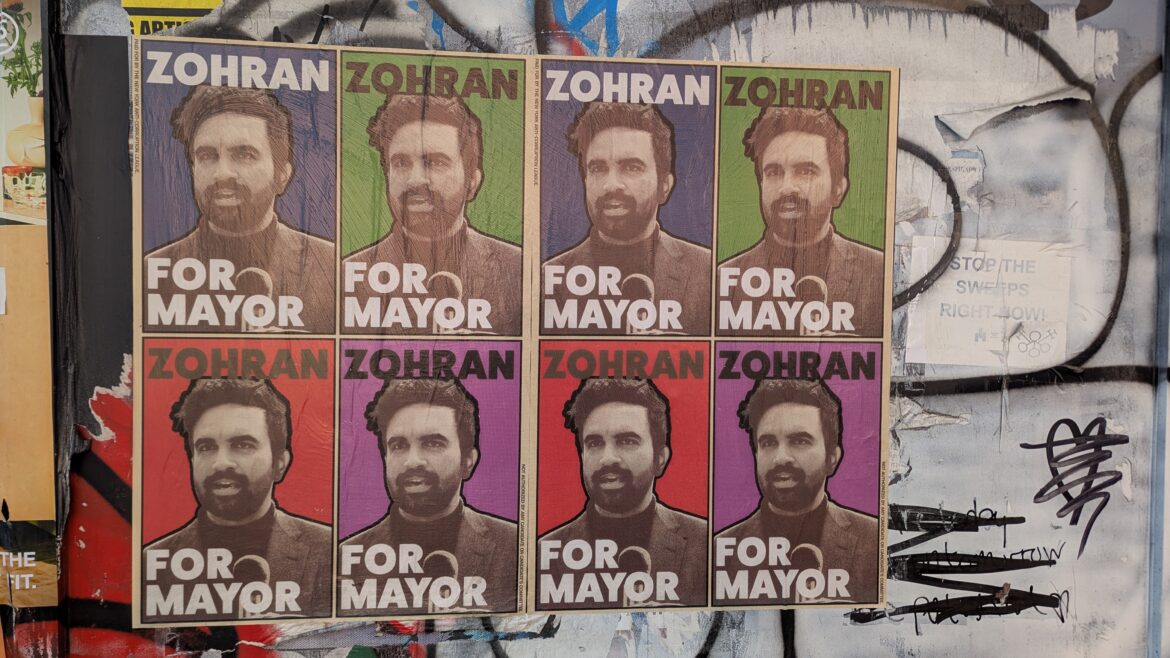
As political disillusionment deepens and establishment figures cling to power, a new kind of candidate is capturing the public’s attention. In New York City, Zohran Mamdani is running a unique mayoral campaign that challenges traditional power structures and reimagines who politics should truly serve.
In a city where billionaires control the tabloids and landlords shape policy, Zohran Mamdani—a 33-year-old democratic socialist — won the Democratic primary for New York City’s mayor. On June 24, Mamdani defeated Andrew Cuomo and nine other candidates, moving one step closer to a potential victory in the November general election. He secured 56 percent of the vote, a landmark achievement for a new candidate going against political giants with billionaire backing. Just months ago, few would have believed that a relatively unknown state assemblyman from Queens could defeat Cuomo, a well-connected former governor of New York. For many of his supporters, Mamdani’s win is more than a political upset— it is a rare moment of optimism in a country grappling with democratic erosion and growing polarization.
Following Eric Adams’ scandal-ridden term, New Yorkers were eager for a new leader, ideally one who had not been arrested earlier this year for corruption charges. The incumbent mayor faced widespread criticism for distancing himself from working-class communities and failing to address urgent issues such as the housing crisis, persistent police overreach, and overall bureaucratic disorder. Andrew Cuomo capitalized on this public dissatisfaction, framing his campaign as a return to order. This was Cuomo’s re-entry into the political sphere after resigning in 2021 due to sexual harassment charges from 13 different women. Backed by record-breaking donations from significant public figures, he relied on his name recognition and vast network of affluent connections to support him. Mamdani, by contrast, entered the race without any of those advantages. And yet, he did not just survive the race — he decisively won it. So, how did a little-known democratic socialist defeat one of the most powerful political figures in New York?
Born in Uganda to an Indian family, Zohran Mamdani immigrated to the United States when he was seven years old. He is the son of Columbia University professor Mahmood Mamdani and renowned filmmaker Mira Nair, but his path into politics was grounded in local struggles, not elite connections. As a member of the New York State Assembly, he dedicated his work to supporting those evicted from their homes, inspiring him to seek higher office. At just 33, Mamdani is by far the youngest candidate in this election, and much of his campaign has deeply resonated with Gen-Z and Millennials. He began gaining widespread recognition in January, when a video he posted on social media explaining how the city’s complex permitting process was driving up food cart prices — what he called “halalflation” — went viral. The clip’s simplicity, humour, and focus on real local issues showcased his charisma and drew in a wave of supporters who saw a politician who understood their daily struggles.
This video jump-started his campaign, which was characterized not by the typical billboards and millions of dollars in fundraising but by social media and grassroots interactions. Mamdani connected with voters who felt disenfranchised by the establishment and disingenuous politicians with empty promises. He skillfully tapped into the needs of working-class people, highlighting issues such as the lack of affordable housing, inaccessible public transport, and food insecurity. He has proposed a variety of policy changes to address these concerns.
In one of the most expensive cities in the world, Mamdani is running on a bold, unapologetically progressive platform. He supports freezing rents, implementing free citywide bus service and universal childcare for children up to age five. To address food insecurity, he proposes creating state-owned grocery stores in food deserts for the working class. Moreover, his ambitious proposal to raise the city’s minimum wage to $30 by 2030 has further energized his supporters, most of whom are frustrated with the unaffordability of the city. To finance these initiatives, Mamdani plans to increase taxes on the ultra-wealthy. He has connected with voters across racial and class lines by tackling both everyday economic hardship and systemic inequality. International issues are also central to his campaign, particularly his long-standing support for Palestinian rights. Mamdani has publicly condemned Israel’s war on Gaza, described the state as an apartheid regime, and even suggested that if elected mayor, he would support arresting Israeli Prime Minister Benjamin Netanyahu should he visit New York.
While Mamdani’s progressive platform has attracted voters, it was his campaigning style that solidified his victory. In contrast to Cuomo’s disconnected approach, Mamdani adopted a door-to-door strategy, speaking to voters directly and actively listening to their needs and concerns. In an unorthodox political strategy, Mamdani and fellow candidate Brad Lander cross-endorsed each other— a move made possible by New York’s ranked-choice voting system. This electoral format allows voters to choose candidates in order of preference rather than selecting just one. The two politicians told their respective support bases to put themselves first and their ally second to defeat their mutual rival, Cuomo. Additional key progressive endorsements, including tenant unions and democratic socialist organizations, further helped consolidate the left and unify support that could have been split.
In the weeks leading up to the primary, Mamdani faced serious criticism and even death threats over his unwavering support for Gaza. Rather than retreat, he made a deliberate choice to remain visible, continuing to attend events and meet face-to-face with voters. Most notably, on the Friday night before Primary Day, Mamdani walked from Inwood to Battery Park—traversing the full length of Manhattan on foot. This simple yet effective move showcased how comfortable he felt in his own city. “We’re outside because New Yorkers deserve a mayor they can see, they can hear,” he said, livestreaming much of the 13-mile journey. In the face of danger and backlash, Mamdani chose presence over silence, showing New Yorkers a leader with a strong moral compass who refuses to compromise his values.
With the primary win behind him, Mamdani now faces the elections in November. His opponents include current Mayor Eric Adams, running as an independent after losing his party’s support, Republican candidate Curtis Sliwa, and Andrew Cuomo, who remains on the ballot through his newly created “Fight and Deliver” party. This seems to fracture the centrist and right-leaning vote, offering Mamdani a path to victory. To win, he must keep the trust of the tenants, transit riders, and young voters who drove his primary win. He will need to stand firm in the face of right-wing attacks and establishment pressure. Based on his trajectory so far, it seems like he is capable.
Mamdani’s win signals a possible turning point for New York and potentially the entire American political landscape, one where grassroots power can gain traction through determination and genuine community engagement. If he continues this momentum into the general election, it could mark the beginning of a city government that prioritizes everyday New Yorkers, with his platform showcasing a real commitment to addressing everyday challenges and improving life for all. Mamdani’s primary win offers a new sense of hope — not only for New Yorkers, but for people around the world — that politics can still serve the common good and that transformative change may be on the horizon.
Edited by Natasha Bhimji
Disclaimer: This is an article written by a Staff Writer. Catalyst is a student-led platform that fosters engagement with global issues from a learning perspective. The opinions expressed above do not necessarily reflect the views of the publication.
Gabriela Flaschberger is in her fourth year at McGill University, pursuing a B.A. Honours in International Development Studies with minors in Environment and Urban Studies. She currently serves as the Vice-President Events for the International Development Studies Students’ Association (IDSSA) and contributes as a writer for both The Catalyst and the McGill International Review. Her academic interests include Latin American politics, urban development, and environmental policy.