
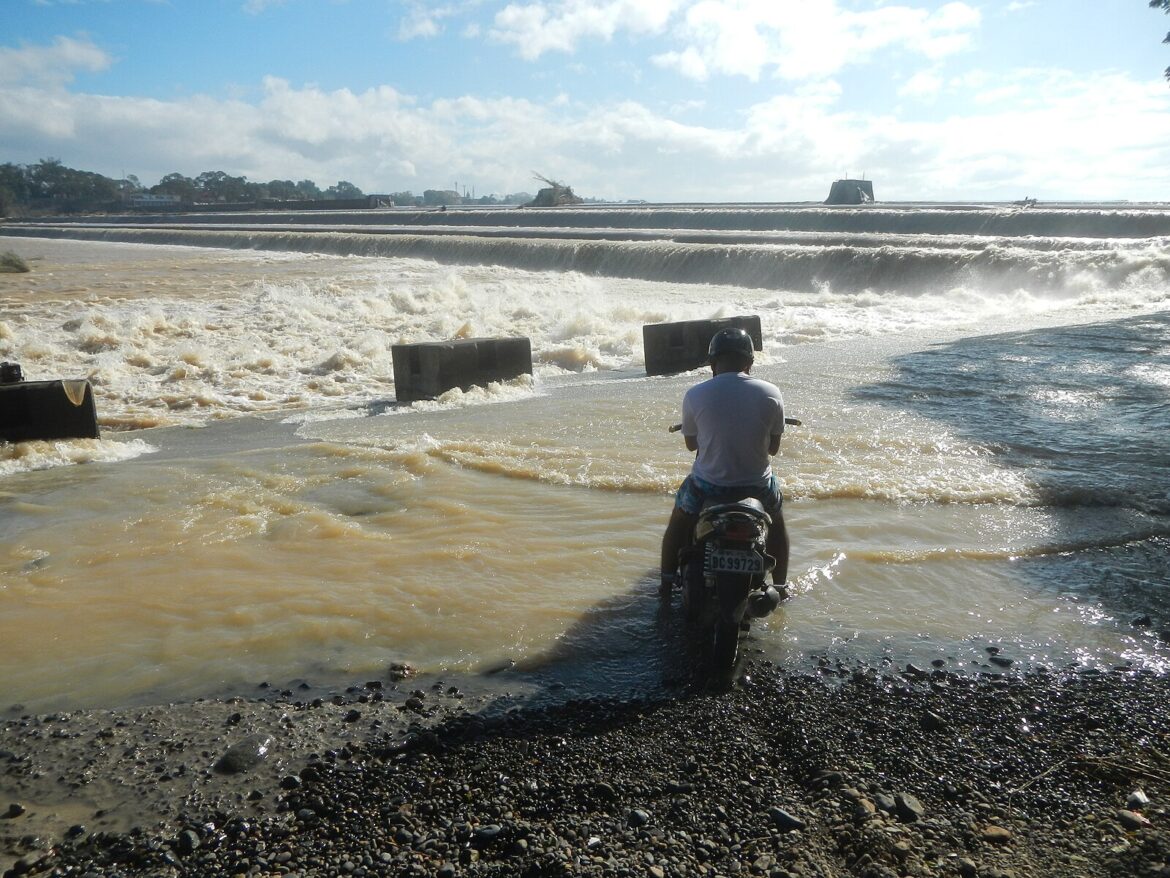
In 2024, the Philippines experienced a painful drought. Water reserves in Angat dam –the main source for Manila’s 14 million residents– fell below minimum operating levels, prompting the city of Manila to request people to conserve water. Fueled by climate change, this latest drought is another chapter in Manila’s long history of fraught water politics.
In the mid 1990s, the World Bank and International Monetary Fund (IMF) pushed a neoliberal water privatisation agenda onto developing countries in Asia, Africa, and Latin America, promising that privatisation would bring a cleaner, consistent, and wide-reaching supply of the vital resource. The World Bank Institute trained more than 9,000 professionals from 90 countries on the topic of water privatisation. One study surveying privatisation contracts found that over 260 water and sanitation privatization contracts were awarded across the developing world, covering the period from 1990 to 2007.
One recipient of these contracts is the Philippines. After decades of mismanagement and corruption of state owned enterprises like water, the Philippines faced infrastructural decay and immense debt. As a result, it accepted structural adjustment loans from the IMF and World Bank, which required the country to pursue privatisation. In 1997, the capital city of Manila introduced the Metropolitan Waterworks and Sewerage System (MWSS) privatisation program to address low service coverage, low water pressure, and high losses due to leaks and insufficient water supply.
According to the MWSS, two concessionaires, Manila Water Company, Inc. and Maynilad Water Services, Inc. retain the exclusive right to manage and repair water infrastructure. Accordingly, they are allowed to directly bill consumers and collect payments from consumers with limited state oversight. The MWSS contract is split into two concessions, the business East zone and the older residential West zone. The East concession was given to Manila Water Corporation, Inc. (MWCI), while the West was given to Maynilad Water Service, Inc. (MWSI); both companies were awarded the concessions because they promised low water tariffs. North West Water, a UK based water and sewage company, and Lyonnaise Des Eaux, a French firm specialising in environmental service, were the international partners for the East and West zone respectively.
Before privatisation, only 67.5% of the city’s 10 million residents in the MWSS service area were connected to the water supply. By 2006, after nine years of operation, results seemed promising. Around 1,877 km of new pipes were laid, which more than doubled service connections to 909,000 households, and raised billed water volume to 992 million litres per day. On top of that, 98% of served households gained 24-hour water access; while non-revenue water from leakage dropped to just 30%, additionally water quality surpassed the 95% compliance target set by Philippine drinking water standards.
What’s obscured by the apparent successes of privatisation –increased supply, greater connection, and better quality– is the inequality of access. Roughly 2.3 million people were still not connected to the network by 2015, and prices for those connected are exorbitantly high: with the nominal value of water tariffs increasing by more than 500 percent.
According to a 2015 survey of over three million customers in all cities and municipalities in the MWSS service area, all households spend more or around five percent of their monthly income on water. For those unconnected, this is usually from informal vendors who sell at a high cost. To offset this, on average, unconnected families use only half the water of connected households. Connected extremely low income households often spend over 10% of their monthly income on water, and have to severely restrict use or turn to other water providers when their service is poor.
Because water is a private service, avenues for the public to hold concessionaires accountable are slim. According to the water code of the Philippines, all waters belong to the state and all waters are under control of this state. The private companies therefore are being leased control of water supply and infrastructure. Crucially, the country’s Water Code does not recognize an individual right to water; despite the principle being enshrined in the Universal Declaration of Human Rights. Only municipalities can apply for water rights: individuals cannot. This means there is no legal mechanism for people to sue for access or challenge unaffordable pricing. Manila residents are forced to continue paying ridiculous rates for a basic necessity. The MWSS case shows that privatization serves those who can pay, leaving low-income and unconnected households to shoulder the cost of a system built around profit, not need.
In our changing climate, increased water scarcity makes water management difficult and expensive. For public utilities facing these costs, privatisation can seem a viable solution to attract key funding for provisional and operational improvements. Manila’s experience with the MWSS is a cautionary tale showing that water privatisation is not the silver bullet it is promised to be. Without mechanisms for accountability or universal access, water privatisation risks reproducing or deepening the problems of poor access and limited access that it claims to fix. Even if the MWSS delivered these benefits for some residents of Manila, the results of privatisation programs should be interrogated. Improved service is not meaningful without equality, accountability, and universal access. For universal, affordable and sustainable access to water, solutions must go beyond privatisation. Strengthening public institutions, embedding the right to water in national law, and ensuring community oversight offers more equitable paths forward: especially in a future marked by scarcity. The question should not only be whether water will be efficiently delivered, but whether it will be justly shared.
This is an article written by a Staff Writer. Catalyst is a student-led platform that fosters engagement with global issues from a learning perspective. The opinions expressed above do not necessarily reflect the views of the publication.
Edited by Alex Ritch

I’m a writer for Catalyst and the McGill Journal of Political Science. I am passionate about topics such as politics, sustainability and geography!