
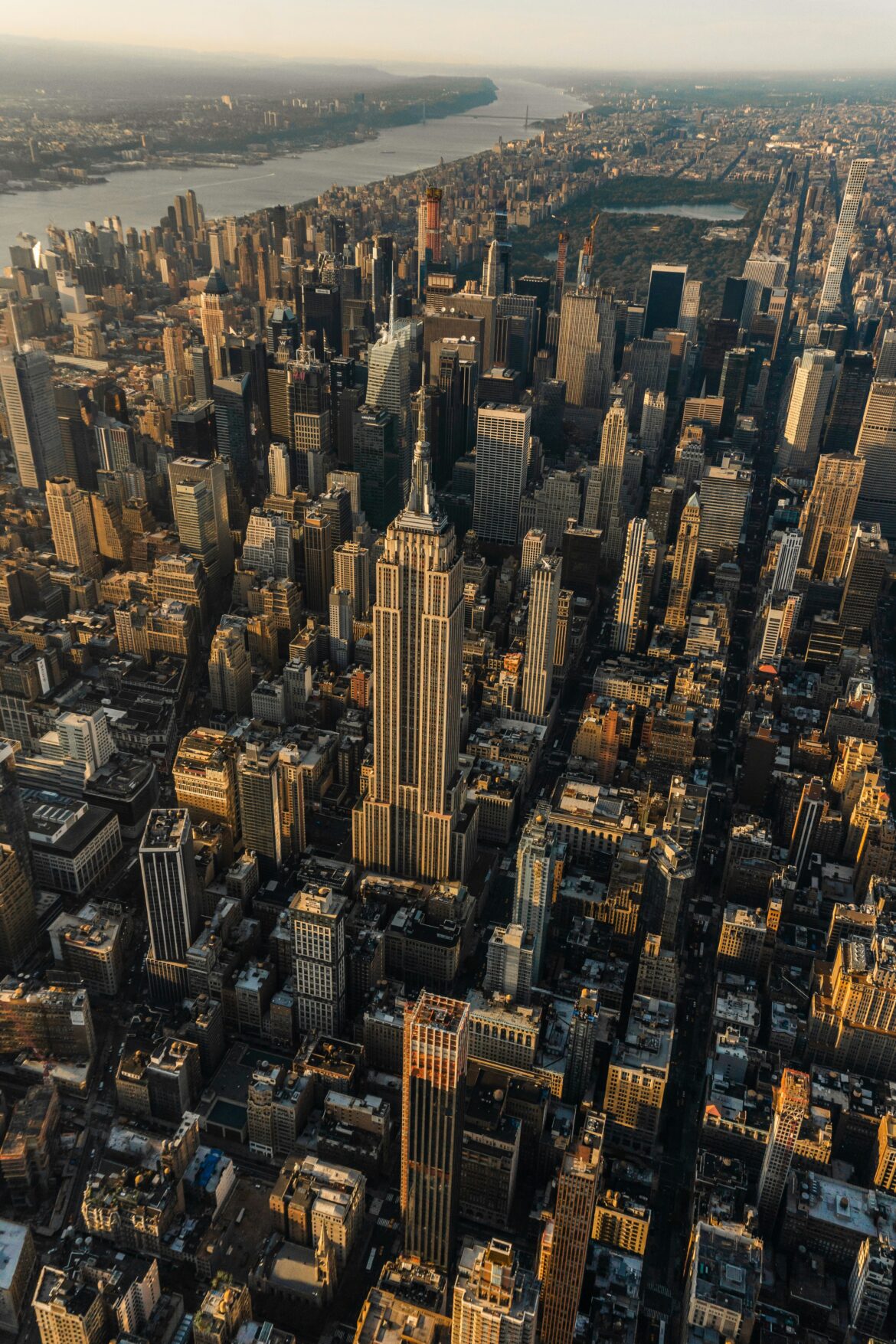
With the upcoming New York City mayoral elections, Democrat candidate Zohran Mamdani has taken center stage with his bold ideas. However, are his policies feasible or are they too unrealistic?
In 1624, Dutch colonists founded New Amsterdam as a trading outpost in North America. Goods flowed through this outpost, and commerce thrived. Over the following centuries, New York City has evolved into the epicenter of trade and commerce; the beating heart of the capitalist world. For years, immigrants flowed through the gates of Ellis Island, hoping to make a brand new start in New York. The city became more than just a place to live. It represented the ambition of millions to leave their past lives behind and make something successful of themselves. For four hundred years, this “New York State of Mind” invited ideas and competition that led to New York City having a GDP of $1.28 trillion in 2023.
Engraved under the Statue of Liberty, the “New Colossus,” written by Emma Lazarus, captures the city’s ethos, “… Give me your tired, your poor, your huddled masses yearning to breathe free…” As a reflection of this poem, New York City has become a place teeming with life and vibrant cultures coming together to create a global center of industry. For many, the center of the world.
Yet today, four hundred and one years after that small trading outpost was established, it’s become harder to “breathe free.”
Over the last few decades, prices have gone up in the city. Everything from groceries to rent is now borderline unaffordable for the average New Yorker, with prices rising by 37 percent since 2015. With the city’s mayoral elections in November, millions of New Yorkers will be taking to the polls to fight against rising prices, in addition to other issues such as the age-old debate over crime.
While there are a multitude of candidates, the race has essentially been narrowed down to two democrats: Andrew Cuomo, the controversial former governor of the state, now running as an independent, and Zohran Mamdani, a young “democratic socialist.” Mamdani’s self-description has caused a small scale red-scare among some New Yorkers, while creating excitement among the younger, more progressive crowd.
This begs the question: Are Mamdani’s ultra-progressive economic and social ideologies the answer to New York City’s problems, or will they set the city back even further? Mamdani’s main competition, Andrew Cuomo, on the other hand, offers no concrete policies.
Mamdani’s proposed economic reforms are quite groundbreaking for New York City in 2025. Arguably, his most controversial idea is rent freezes, which means halting the increase of monthly rent prices. In theory, this practice could help the average New Yorker afford a place to live, however a closer look reveals flaws. Based on studies on rent freezing, most likely, this plan will work in the short term. However, the long term consequences are potentially disastrous. The proposed rent freezes make it harder for independent landlords to maintain their properties. Insurance costs and property taxes will inevitably rise, but with the rent cost frozen, independent landlords will not be able to cover the costs of maintaining a building.
Furthermore, this could exacerbate the already stark differences between luxury and middle class apartments. The major development firms will have no issue in maintaining their properties despite rent freezes, creating a clear housing inequality as smaller, working class buildings will deal with worsening conditions while wealthier tenants will enjoy their well-maintained apartments. Additionally, rent freezes historically benefit long-term tenants, making it harder for individuals who are new to the housing market to find a place to live. Existing tenants will end up paying below-market rents, which is ideal for them, giving them no incentive to move, however this lessens the amount of housing available for others, making it near impossible to find an apartment. This can create a waiting list for apartments, as seen in Stockholm, Sweden, where the average wait for “rent frozen” apartments is 9.2 years. A waiting list for apartments in New York City could force potential renters to look into the suburbs, causing an increase in cost of living in those surrounding areas, which are already on their way to becoming unaffordable. While Mamdani’s rent freezes has been his most debated policy, another one that has flown under the radar is his plan for policing in New York City.
Among the multitude of social questions posed in this election, the controversy surrounding the NYPD has been paramount. In 2024, the NYPD’s budget was $5.3 billion USD, a budget similar to that of the Austrian military. Critics of the large budget, including Mamdani, have argued that this money could be more useful elsewhere, such as creating a “Department of Community Safety.” Per Mamdani, this department would be dedicated to responding to 911 calls pertaining to certain emergencies like a psychiatric crisis. Once again, this plan doesn’t sound so awful. In fact, the Department of Community Safety would most likely be beneficial, as having trained professionals responding to mental health issues would no doubt help. However, slashing the NYPD’s funding would not be as beneficial as it seems.
In a city with a population of 8.4 million, crime is bound to happen. In 2021, violent crime in urban areas was reported to be 24.5 per 1,000 people, with the statistic in rural areas being around half of that. Consequently, a large police force is needed. London, a city with around the same population as NYC, has a police force of 33,201 officers, which is close behind New York City’s 34,455 officers. While Mamdani would likely argue that crime in the city has gone down recently, correlation is not causation. Continuing to lessen the amount of officers would not help that positive statistic.
Furthermore, cutting the budget of the NYPD also means that individuals who are employed by the department would lose their jobs. These individuals are citizens of the city, and laying them off would exponentially increase the unemployment rate. Mamdani claims to want to make the city affordable for everyone, but how would firing thousands of people make it affordable? No matter how controversial, employees of the NYPD are still a part of that 8.4 million and deserve to afford their lives, just like every other New Yorker.
New York City has long been a symbol of opportunity, not just to Americans, but to the whole world. However, today, rising prices and social issues challenge that narrative. While Zohran Mamdani’s proposals are bold, they risk causing more problems than they solve, from housing shortages to public safety concerns, reminding voters that good intentions mixed with a subpar understanding of economics aren’t always enough. Ultimately, the future of New York City will depend on finding solutions that keep its unique spirit alive, a city that is welcoming and livable for all.
Edited by Lindsay Hayes
Disclaimer: This is an article written by a Staff Writer. Catalyst is a student-led platform that fosters engagement with global issues from a learning perspective. The opinions expressed above do not necessarily reflect the views of the publication.

Judah Meltzner is in his first year at McGill University, hoping to pursue a B.A. in International Development Studies. Originally from Boston, Massachusetts, he is particularly interested in American politics in addition to the happenings of the United Nations.