
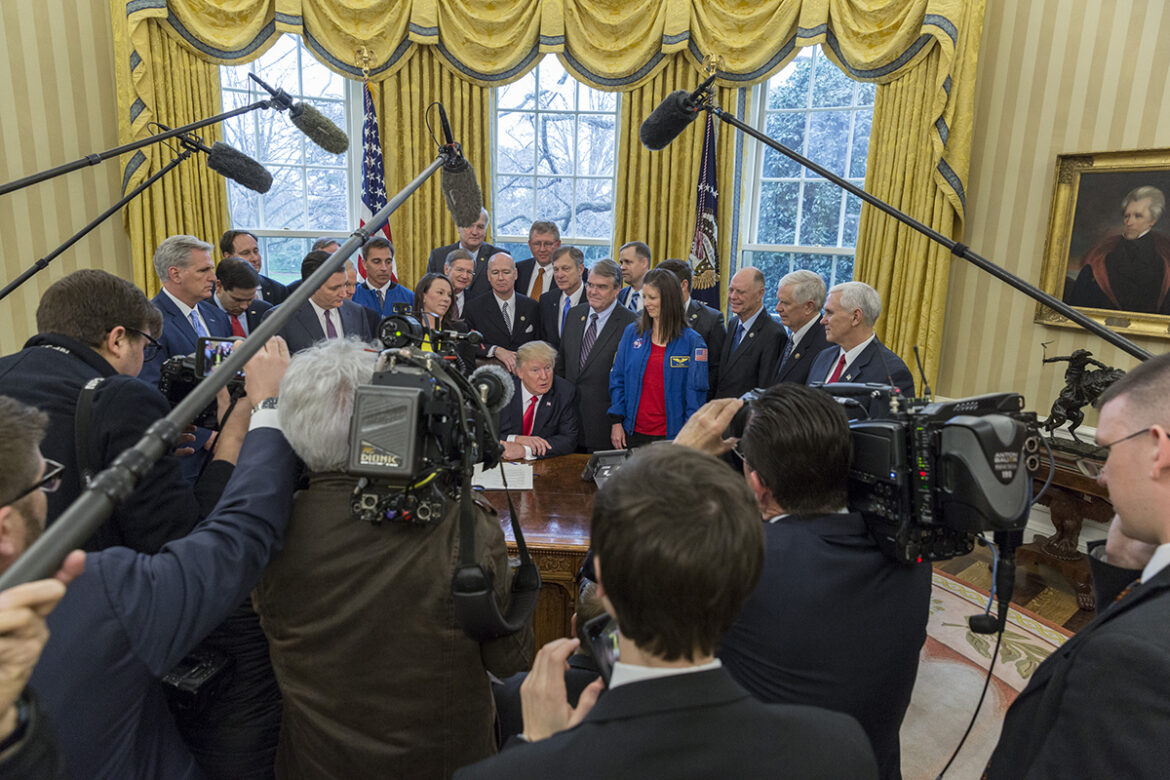
A defining feature of Donald Trump’s approach to governance is the suppression of dissent and the intimidation of opponents, whether directly through his administration, indirectly through institutional pressure, or by inciting hostility among his supporters.
Since returning to power earlier this year, Donald Trump’s administration has accelerated a troubling pattern of democratic backsliding, characterized by selective censorship. Ironically, much of his presidential campaign focused on defending freedom of speech, accusing the so-called “woke” liberal agenda of suppressing open expression. However, under his leadership, hate speech has thrived while government criticism and opposition have been silenced through punitive measures. The administration has embraced a repressive approach, targeting journalists, researchers, and activists through censorship, intimidation, and even deportation. Now, seven months into his presidency, the scale and intensity of these crackdowns raise serious concerns about the rise of authoritarianism in the United States.
While Donald Trump and his allies claim that these efforts stem from growing public distrust of the press, this skepticism is largely a result of their own deliberate actions to undermine press credibility. Over the past decade, Trump has cultivated this sentiment, routinely labelling journalists as the “enemy of the people” and using catchphrases like “fake news” to dismiss criticism from the press. He has repeatedly spread misinformation and disregarded attempts to fact-check him as biased, training his followers to be suspicious of media platforms. As a result, political journalists have reported increased harassment and threats from MAGA supporters fuelled by this hostile narrative.
The president has openly leveraged regulatory bodies like the Federal Trade Commission (FTC) and the Federal Communications Commission (FCC) as political tools, appointing party loyalists to run these groups. Critics argue that these moves are not only unprecedented but also fall outside the proper role of a national leader. These agencies were intended to operate independently, regulating and protecting the media from government interference. They now risk losing their neutrality when strategic appointments undermine their core values.
One controversial hire was Republican Brendan Carr, who was nominated by President Trump and confirmed by the Senate to be the FCC Chairman. Carr has been outspokenly against social media platforms’ ability to moderate content, arguing they should be restricted from removing posts that express political viewpoints. Moreover, the FCC Chairman condemned fact-checking measures as part of a “censorship cartel” and warned social media companies that their moderation practices would be reviewed by the administration. His plans to use the FCC as a tool to police ‘Big Tech censorship’ will include targeting organizations that, in his view, do not sufficiently accommodate right-wing viewpoints.
Under the guise of restoring freedom of speech, Trump and his allies are weakening the quality of media by removing fact-checking mechanisms and amplifying misinformation. They have pressured tech leaders to align with Trump’s demands to reduce content moderation, and the most opportunistic have complied. Elon Musk, CEO of Twitter (now X), and Mark Zuckerberg, CEO of Meta, have both been criticized for eliminating essential safety standards, with critics accusing them of enabling the spread of harmful and hateful content. Users of these platforms, especially people of colour and LGBTQ+ individuals, have reported a sharp increase in targeted hate speech. These communities have faced consistent hostility, as right-wing supporters feel emboldened to express their hatred without fear of retaliation. Trump has repeatedly shown the lengths he will go to protect his base at all costs. For instance, he pardoned January 6 rioters who violently attacked press members. Rather than siding with these journalists, he celebrated many of these individuals as “patriots”, proudly displaying his deeply biased governing approach.
News outlets and media institutions have also been subject to intimidation from the right-wing administration for not aligning with their preferred narratives. A notable example is the Associated Press being excluded from legacy White House press pool rotations — a tradition designed to ensure balanced coverage — because they refused to use terminology such as referring to the Gulf of Mexico as the Gulf of America. The White House justified this move by stating that media access was a privilege, not a right, despite First Amendment protections. This discourages others in the industry from speaking out against Trump and increases the likelihood of self-censorship or producing biased reporting driven by the fear of exclusion.
Several organizations have also received warnings through mechanisms like tax audits and retaliatory investigations. Many nonprofits have faced threats to their tax-exempt status and intimidation from government agencies, undermining their ability to provide essential community services. Trump strategically weaponizes bureaucratic power, reflecting a deeply inappropriate use of presidential power and echoing tactics employed by authoritarian regimes. Trump has also launched lawsuits against various organizations, including the Pulitzer Center, which he attacked for awarding investigative journalism on alleged ties between his 2016 campaign and Russia. These actions function as tools of harassment, draining time and resources from institutions that hold power accountable.
Furthermore, the president’s control over regulatory agencies has enabled him to exert coercive influence over editorial decisions. A recent example is the FCC’s role during the $8 billion merger between CBS’s parent company Paramount and Skydance Media. Longtime Trump critic Stephen Colbert, the number-one-rated late-night talk show host, had his show cancelled amidst this deal. While CBS cited financial reasons — the show operates at an annual loss — the timing raised suspicions of political pressure, especially after Trump publicly celebrated the cancellation. Considering previous attempts at censorship, this high-profile case is further evidence of how Trump’s administration uses institutional power to steer media content in its favour.
There has also been a widespread and aggressive crackdown on academic research, particularly in the fields of public health. Earlier this year, the government ordered the removal of all diversity, equity, and inclusion (DEI) language and gender-related terminology from CDC and NIH websites. Additionally, researchers were forced to pause or revise any in-progress publications containing banned terms such as “transgender,” “non-binary,” and “pregnant person.” All papers must be cleared by the administration before release, with censors ensuring that the banned language has been removed. Experts condemn these actions as a serious misuse of federal power, wasting valuable research time and jeopardizing patient care. This will only undermine public trust by over-filtering critical health information and eroding its overall quality.
Academic institutions have also faced threats, including the potential withdrawal of funding for allowing pro-Palestine protests and supporting DEI initiatives. Harvard University has been one of the most high-profile targets, reportedly coerced into altering its policies to retain critical research funding. These actions showcase an alarming attempt to suppress academic freedom and silence discourse that challenges the government’s agenda.
The most egregious form of censorship under the Trump administration has been the detention and deportation of student activists. Amid widespread protests on U.S campuses, the government has utilized immigration enforcement as a weapon to curb dissent, targeting foreign-born students and scholars. A notable example is the arrest and detention of Mahmoud Khalil, a Palestinian Columbia University graduate. In March 2025, Khalil was arrested by ICE under the pretext of providing false information on his green card application — he has denied this accusation. Labelled as a foreign policy threat, he was unlawfully detained for 104 days.
Khalil’s case is part of a broader strategy. Other academics—including Rümeysa Öztürk (Tufts University), Mohsen Mahdawi (Columbia University), and Badar Khan Suri (Georgetown University)—were also detained or threatened with deportation for their political activism. Many have condemned these actions and compared them to Red Scare-style suppression of dissent seen during the McCarthy era.
Together, these incidents reveal a deliberate agenda to discredit, disempower, and control the American public. Challenging the state has become increasingly costly, risky, and legally precarious. This campaign of retaliation not only violates core democratic principles but also endangers press freedom in the United States. Donald Trump’s actions reflect those of a petulant leader more concerned with silencing opposition than upholding civil liberties.
Edited by Hannah Byrne
Disclaimer: This is an article written by a Staff Writer. Catalyst is a student-led platform that fosters engagement with global issues from a learning perspective. The opinions expressed above do not necessarily reflect the views of the publication.

Gabriela Flaschberger is in her fourth year at McGill University, pursuing a B.A. Honours in International Development Studies with minors in Environment and Urban Studies. She currently serves as the Vice-President Events for the International Development Studies Students’ Association (IDSSA) and contributes as a writer for both The Catalyst and the McGill International Review. Her academic interests include Latin American politics, urban development, and environmental policy.