
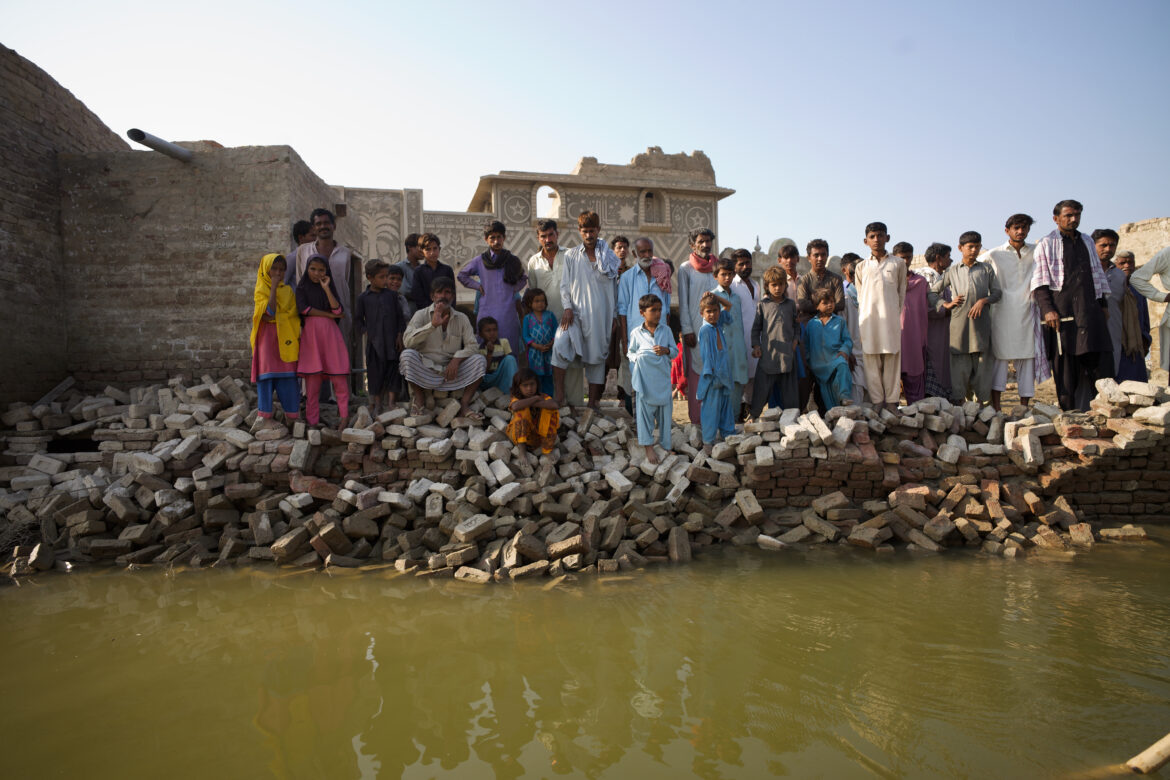
Amid a growing inflation rate and an increased frequency of climate disasters, Pakistan faces a worsening poverty crisis.
Nearly one in four Pakistanis currently live below the poverty line, indicating a sharp reversal from earlier economic progress. With a population of over 240 million people, the number of people living with an inability to meet the necessities of life equates to roughly 60 million individuals. Starvation and economic insecurity are a daily reality for millions, while reports indicate that a large portion of Pakistan’s wealth is concentrated among a select segment of the population, indicating the severe economic disparity across the nation.
In recent years, Pakistan has encountered record-breaking flooding and rising inflation, both of which have contributed to the current state of affairs of the nation. There’s a lack of access to proper sanitation and drinking water: 40% of children experience malnutrition, 37% of youth are neither employed nor receiving an education, and the country’s debt is higher than ever before at $270 billion, almost doubling in the past four years.
It’s important to note, however, that Pakistan wasn’t always like this. From 2001 to 2018, the country’s poverty rate experienced a sharp decline. A wave of urbanization had resulted in an increase in jobs in the transportation and construction sectors, causing the national poverty rate to drop from 64% to 22% by 2019, promising an era of economic prosperity.
A recent study by the World Bank on the growth model employed by Pakistan for resolving economic hardship stated, “The growth model that supported initial poverty reduction has proven insufficient…Pakistan’s once-promising poverty reduction trajectory has come to a troubling halt.” Even those who are not technically living below the poverty line live in difficult conditions. Over 40% of the population resides in the lower-middle-income threshold, making an average of $3.21 each day.
Many factors can be attributed to the reversal in the country’s economic progress. The COVID-19 pandemic and the Russian invasion of Ukraine are both contributing causes to the steep incline in global inflation. Labour jobs have decreased while the cost of food and housing have grown exponentially. Consequently, families have had to cut back on healthcare and education, worsening the overall standard of living among the general population.
Another leading cause in the rising rate of economic instability is devastating flooding across the nation. Intensifying monsoon seasons in the past few years have resulted in millions being displaced due to homes being destroyed by overwhelming rainfall. Entire towns have been submerged, costing the nation billions in structural damage, a number that continues to grow with each flood.
The worst of the flooding occurred in 2022, with more than 1700 people losing their lives and a third of the country being submerged under water. Several parts of the country are still yet to recover from the catastrophe. The agriculture industry, in particular, was hit the hardest. Farmers throughout the nation have lost their land and livestock as a consequence of the flooding, severely diminishing their income.
In the past year, Pakistan’s agriculture industry grew just 0.6%, far short of the 2% target, further emphasizing the economic crisis in the country. With the cost of living continuously increasing, more and more farmers are finding themselves in a state of poverty.
In spite of the declining quality of life many Pakistanis are experiencing, the defense budget remains incredibly high. The nation’s 2024-2025 defense budget was over $7 billion, consisting of nearly 15% of the federal budget. Companies such as the Fauji Foundation and Army Welfare Trust are part of the military’s commercial empire and are worth billions of dollars. Senior military officers are granted specialized privileges such as agricultural land while retired officers often hold executive roles in these multi-billion dollar companies.
There is a distinct inequality between the lives of high-ranking Pakistani military officials and the lives of the majority of the Pakistani population. Military-exclusive hospitals and schools exist for the benefit of military families while the public health sector struggles with insufficient funding. Rolling blackouts due to the cost of electricity are common for the general public while military zones have access to uninterrupted power.
Unless a change is made, this disparity will only continue to widen as both inflation and climate disasters are expected to continue to be prevalent throughout Pakistan. More and more families will find themselves falling below the poverty line as they struggle to meet their daily needs, while those in positions of power will continue to benefit. As Pakistan’s quality of life threatens to continue to decline, the country is faced with the decision of whether to continue to profit at the expense of its people, or to invest into prosperity for all.
Edited by Gita Kerwin
This is an article written by a Staff Writer. Catalyst is a student-led platform that fosters engagement with global issues from a learning perspective. The opinions expressed above do not necessarily reflect the views of the publication.
