
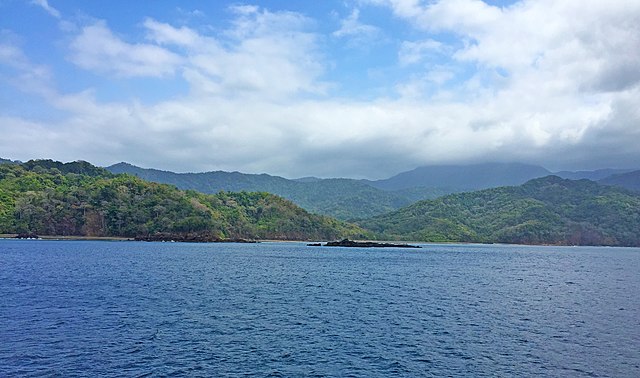
At around 100 kilometers long, the Darién Gap is a large stretch of treacherous terrain and the only interruption in the Pan-American Highway, which otherwise runs from the top of Alaska to the Southern tip of Argentina. Tall mountains, deep and unpredictable rivers, and dense forest make the journey all the more difficult as hopeful migrants attempt to escape persecution, corruption, and economic disparity in their home countries. A majority of these migrants come from Venezuela and Haiti, looking for better opportunities and lives for their families – escaping governments that have failed to provide safe living conditions and economic stability. Yet, upon arrival, they face discrimination and financial hardships.
Traversing the Darién Gap is not only physically exhausting, but comes with a plethora of other hazards. Disease-carrying insects, venomous wildlife, and extreme weather contribute to high risks of infection, hypothermia, and injury. Without the proper infrastructure to safely travel through these jungles, the journey can take many days or even weeks – with no roads, reliable maps, or consistent access to food and clean water.
Even if one is able to avoid the health risks and natural dangers of this area, the Darién Gap is rampant with crime. Migrants are frequently targeted by smugglers, armed gangs, and traffickers who extort, rob, assault, or even kill those passing through. Women and children are especially vulnerable to sexual violence. Human Rights Watch has documented widespread abuses in the area, exacerbated by the lack of legal migration pathways and the increasing militarization of borders elsewhere in the Americas.
Despite these dangers, hundreds of thousands of people continue to risk their lives on the journey. In just 2023, over 520,000 migrants crossed the Darién Gap — more than 40 times the annual average from a decade earlier. Most are fleeing dire conditions in their home countries, including economic collapse, political instability, and violence. For many, the decision to cross the Gap is not taken lightly — it is a last resort, a desperate gamble for a chance at safety, stability, or opportunity.
After completing the journey and arriving in Panama, migrants are usually in extremely poor health. With established medical facilities and reception centers at the mouth of the jungle, they are able to provide basic care, but are frequently overwhelmed by demand and ill-equipped to handle the scale of humanitarian need necessary in this area. They are able to provide shelter, first-aid, and hydration, but lack key resources to provide adequate care for this vulnerable population.
Venezuela’s ongoing political and humanitarian crisis has become one of the most significant drivers of mass migration from the country. In the 2024 elections, Venezuela’s deeply entrenched system of political repression and corruption was evident. Nicolás Maduro claimed victory amid widespread allegations of fraud and suppression of opposition voices. Key figures such as Edmundo González, an opposition candidate, were either disqualified or forced into exile with threats of arrest and falsified charges. Venezuela has long struggled with political repression, but in recent years, the system has fallen deeper into corruption and human rights issues. Protesters and critics of election results were prosecuted and met with violence leaving the people without a voice; while human rights defenders, journalists, and civil society organizations are targeted to silence dissent and extinguish criticism.
In a BBC interview with reporter Mimi Swaby, Swaby recounts the story of a 19 year old girl who undertook the arduous journey to escape the economic turmoil under President Maduro. After facing sexual assault, kidnapping, and human trafficking, she managed to make it to Panama. However, like most others who make this journey, her ultimate goal is to settle in the U.S. — though she still has thousands of kilometers to go.
Aside from the extensive political persecution many face in Venezuela, standards of living amid a rapidly deteriorating economy are low. More than two-thirds of the population live in poverty, lacking necessities such as food, clean water, and adequate healthcare. Hospitals face chronic shortages of supplies and staff. Inflation is also among the highest in the world, with the Venezuelan Bolivar having lost almost all of its value, making living wages difficult to come by. These conditions have pushed millions of Venezuelans to take extreme measures such as turning to going hungry, resorting to sex work, or fleeing the country all together.
Since 2014, almost 8 million Venezuelans have left the country in search of safety and refuge, relocating to various Latin American and Caribbean states. However, even these countries have limitations to the protection they can provide. Sometimes unable to gain adequate status in their host countries, migrants face violence and injustice due to a lack of legal rights and protections. Those who choose to make the treacherous journey north, experiencing the extreme dangers of the Darién Gap, then risk discrimination and prosecution in Canada and the U.S.
Following the assassination of President Jovenel Moïse in 2021 in Haiti, governmental collapse gave way to intensified gang violence, leaving the population vulnerable to large-scale, organized attacks. More recently, in 2024, the Viv Ansanm coalition, a group of the largest gangs in Haiti, executed organized attacks on key societal institutions. Port-Au-Prince, Haiti’s capital, saw extensive attacks on hospitals, educational buildings, government offices, and major prisons causing the country to come to a complete stand still and restricting humanitarian aid for several months. Almost 6,000 people were killed and many abducted.
Abduction, lack of food, and resources leave children especially vulnerable to recruitment with promise of reduced struggle and positions of status. They participate in looting, kidnapping, and even murder, but have limited options to escape without governmental support, which is scarce. The coalition of gangs has also managed to spread their influence beyond the capital city as a result of their unified objectives and resistance to external destabilization efforts. The areas under their control face physical and financial extortion, resulting in an economy centered around racketeering.
As of 2024, more than a million people were internally displaced, forced out of their homes and into overwhelmed displacement sites, with limited access to food and water. Many travel by boat to South and Central America, attempting the trek through the Darién Gap to the United States. José Espinosa Bilgray, a journalist for the IOM (International Organization for Migration) writes a story about one young couple and their experience crossing the Gap. Jean Horima and his pregnant wife, Rose, began the journey through the Darién Gap with a group of 50 others. As the journey grew more difficult, the group eventually left Jean and Rose behind, forcing the couple to navigate the treacherous terrain alone. Then, in the middle of the jungle, Rose went into labor. With only her husband by her side and no medical assistance, she gave birth surrounded by dense thickets. Using what they had, they successfully delivered their baby boy — but still had to walk three more days before reaching a reception center. Although they arrived safely, this is the harrowing reality of so many families traveling through the Darién Gap. Many lives are lost and families torn apart.
Despite settling in various South and Central American countries, migrants face a lack of legal protections and opportunities, meaning they must eventually continue moving. One of the most popular destinations for most Haitians and Venezuelans is the United States, a place with seemingly unlimited opportunities. However, upon arrival and integration into new communities, many continue to encounter discrimination and financial hardship. Mounting expenses and inflation make saving or retiring virtually impossible.
The journey through the Darién Gap is not just a route—it is a reflection of regional collapse, institutional neglect, and policy paralysis. Addressing this crisis requires a coordinated, humane response: expanding legal migration pathways, building safer migration routes, improving humanitarian infrastructure at key transit points like Panama, and shifting the focus from border militarization to protection and resettlement are just a few of the changes that must be made. Without change, the suffering will persist — and so will the cycle of danger and displacement. The people crossing the Darién Gap deserve adequate recognition and acknowledgement of the circumstances they have endured without being villainized and discriminated against.
Edited by Hannah Byrne
Disclaimer: This is an article written by a Staff Writer. Catalyst is a student-led platform that fosters engagement with global issues from a learning perspective. The opinions expressed above do not necessarily reflect the views of the publication.

Suhani is in her fourth and final year at McGill University as an International Development student, with minors in Environmental Studies and Psychology. She is originally from New York City and is especially passionate about environmental issues and policy making that can have critical impacts on global communities.