
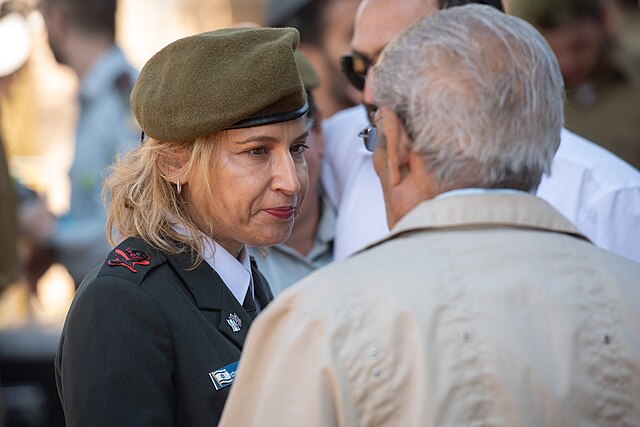
In 2024, Major General Yifat Tomer-Yerushalmi, one of Israel’s top military lawyers, released footage of an alleged gang rape from the Sde Teiman detention center in August. The footage shows five soldiers using their shields to block their actions from the cameras. The soldiers’ cases have been dropped, a gag order has been placed on their names, and they have been released from custody. Outside the Supreme Court, one soldier stated, “I stand here today because I am tired of silence. Instead of appreciation, we received accusations — instead of thanks, there was silence”. Further, the soldiers’ legal team has stated, “We came to serve the people and the state with dedication, and now, in these crazy days, we find ourselves defamed by those who were supposed to protect us”. Perhaps contrary to expectations, the public has largely supported the five soldiers and condemned Tomer-Yerushalami. In light of these events, the public’s reaction and the rhetoric surrounding the situation provide insight into the social aspects of Israel’s international image, as well as the systematic, produced side.
The belief that the image of Israel has been put at risk is at the core of this crisis, not the crime itself. Prime Minister Netanyahu has echoed the public’s claims, stating Tomer-Yerushalmi’s leak is “perhaps the most severe public relations attack that the State of Israel has experienced.” Another member of the government stated that she was “supposed to be the bulletproof vest, the protector” of Israeli soldiers. By exposing their crime, she has not only betrayed her post she has also betrayed her country. Some have even claimed her actions were “treason”. As such, Tomer-Yerushalmi has been charged with fraud, breach of trust, obstruction of justice, and abuse of office. It becomes evident then that the Israeli public espouses criticism of the military to being unpatriotic, even with substantial evidence of a crime. However, the narrative goes beyond that. The finance minister went so far as to call her actions “anti-Semitic blood libel”. This quote provides insight into how deeply this issue has penetrated the social consciousness. The leak has been transformed from accusations of treason to accusations of anti-semitism. Because anti-semitism is intimately tied with Israeli security discourse, once transformed into an anti-semitic issue, this leak has received overwhelming outrage.
However, what these eminent government voices have aptly identified is that this leak is a critical threat to Israel’s reputation. After years of war, genocide, and democratic backsliding, Israel’s image on the international stage is particularly precarious. A study on Anglo countries, which we can put Israel into, given their intimate history with the US, determined that the role of public relations in these contexts is to “ shape and constrain the mission of the organization”. When dealing with the international arena, policymakers implement “distinctive programs in multiple markets… tailored to meet the often acute distinctions of the individual geographic market”. Often, the publicity characteristic of public relations seeks to disseminate accurate information with the erasure of the negative as a counterpart and product of that process. This reputation-management process is integral to “nation branding”. Essentially, the informal and formal media are tools to tailor, build, and demonstrate a nation’s values to the world. Nation branding is a core component of foreign policy worldwide, and every country on earth with the means to do so does.
Public relations concepts help to explain part of the rhetoric surrounding the soldiers’ case. If Israel’s goal has been to tailor its image as one of unity, democracy, and a safe haven, then news coverage of a general who broke rank harms that image. The same goes for the alleged crime itself. If Israel’s goal has been to appear the victim, then news coverage of soldiers abusing Palestinians harms that image. They no longer seem democratic or victims; therefore, Israel’s nation branding has been inverted, and its prestige in the international domain has been damaged. This ultimately serves to explain the presence of words such as “treason” and “betrayal” because Tomer-Yerushalmi inverted the nation branding Israel has been working on for decades. That is not to say that individual Israelis do not condemn sexual violence. Israeli individuals in their personal lives would react to sexual violence the same as any other group. However, because this particular case of sexual violence relates to the success of their state, there is a social phenomenon occurring that reframes this issue as one of loyalty rather than right versus wrong.
In recent years, even before October 7, Israel has been carefully curating its media presence, especially through informal means. On the other hand, similar to Facebook’s role in the Arab Spring, media platforms such as TikTok allow Palestinians to show the world the exact forms of violence they are experiencing in raw optics that leave little space for state-sponsored narrative crafting. As a result, the victim and benevolent narrative Israel pushes has been taking damage. One survey found that 59% of Israeli respondents think that posts that express sympathy for Gaza should be censored, and half of the respondents think that posts criticizing the Israeli government’s actions in Gaza should be censored. These reactions come in response to international support shifting towards the Palestinians in light of these Palestinian posts. Naturally, the government will seek measures to counter these shifting narratives. Reports of an “Esther Project”, created by Israel and implemented through a PR firm in the US, reveal an effort to organize an influencer network. The campaign seeks to recruit American influencers across social media platforms to push Israel’s chosen narratives. Another report under the Foreign Agents Registration Act (FARA) details Israel’s Minister of Foreign Affairs collaborating with US-based PR agencies to drum up support among Americans through online branding tools. For example, one company was paid 3.2 million to run an outreach program in American Evangelical churches to promote “positive associations with the Nation of Israel” while portraying Palestinians as “extremists”. It becomes clear, then, why the finance minister called Tomer-Yerushalmi’s actions “anti-Semitic blood libel”. In response to the overwhelming number of Gaza footage, Israel has had few other options than to expend money and energy into re-nation branding while suppressing dissent through anti-semitic labelling, even against its own Jewish general.
Israel’s PR crisis has real consequences. The public’s support in the US, Israel’s largest benefactor and ally, has been rapidly shifting towards Palestine. In addition, several large international actors (France, Canada, the UK, and Australia) have been throwing their weight behind Palestinian state recognition. Losing this PR war could completely delegitimize Israel’s actions in Gaza and its claim to the land. This crisis serves to explain the counterintuitive response to the leak and the use of influencers. Indeed, it is imperative for Israel to maintain an untarnished reputation according to its nation branding goals.
Edited by Elizabeth Kiff
Disclaimer: This is an article written by a Staff Writer. Catalyst is a student-led platform that fosters engagement with global issues from a learning perspective. The opinions expressed above do not necessarily reflect the views of the publication.

Sonia Oulamine is a second-year student at McGill University, currently pursuing a B.A. in International Development Studies with minors in Political Science and Arabic Language. She serves as a writer for Catalyst and has a particular interest in international relations, law, and human rights.