
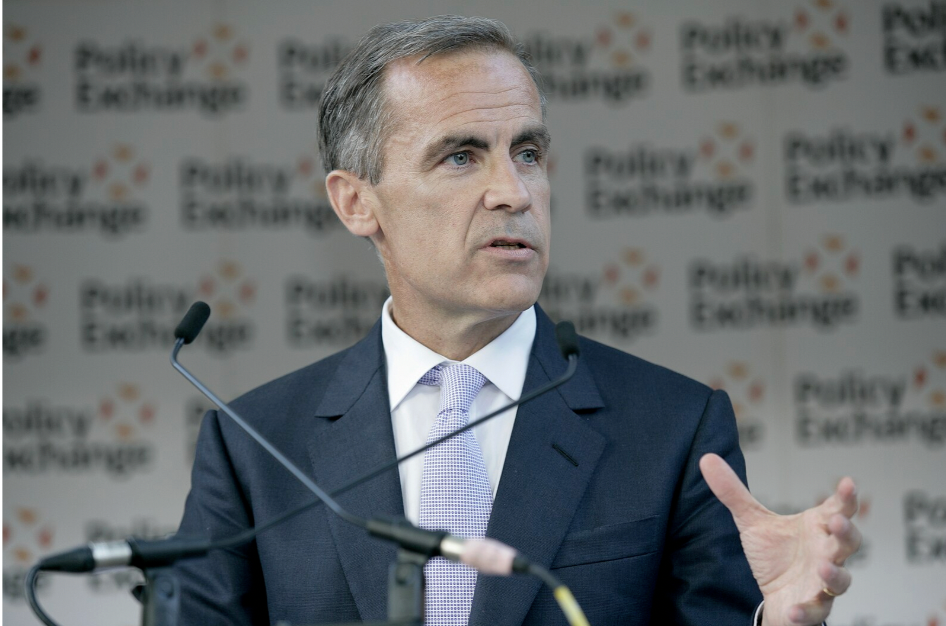
In his role as UN Special Envoy for Climate Action and Finance, Mark Carney established the Net Zero Banking Alliance before the 2021 UN Climate Change Conference (COP26) in Glasgow, Scotland. The alliance was established to help facilitate the transition to a net-zero economy and was a foundational part of the extensive Glasgow Financial Alliance for Net Zero. At its peak, the alliance included 140 banks, and was the main body leading the banking industry’s global effort to cut carbon emissions.
The alliance had the potential to be transformative. Any bank that joined the alliance committed to reducing the greenhouse gas emissions from both its operations and its lending portfolios to net-zero by 2050. Those that joined the alliance included some of the principal financial service providers to the world’s largest fossil fuel companies. Therefore, the alliance held not only the world’s largest banks, but also many fossil fuel companies, accountable. In practice, this would mean both reallocating capital away from carbon-intensive industries, and collaborating with companies to develop emission reduction plans.
In January 2025, major U.S. banks left the alliance in the face of sustained criticism from Republicans in the weeks leading up to Trump’s presidential inauguration. Analysts saw the withdrawals as an attempt to avoid “anti-woke” attacks from rightwing U.S. politicians. Given that Trump’s vows to “drill, baby, drill” and dismantle environmental rules were a large part of his campaign platform, these attacks on climate policy were expected to escalate when he was sworn in. According to Paddy McCully, senior analyst at campaign group Reclaim Finance, “now that the political pendulum has swung in the other direction, suddenly acting on climate does not seem so important for the Wall Street lenders”.
In the context of this mounting political pressure, four of Canada’s biggest banks, BMO, National Bank, TD Bank Group, and CIBC, withdrew from the alliance only a few weeks after the major U.S. banks. Although the Canadian banks claim that their climate goals and programs remain in place, many activists believe that Canadian banks entered the alliance in order to greenwash their operations and shield themselves from public pressure, rather than out of genuine interest in attaining climate goals.
Amidst this global trend of wavering on climate commitments, the alliance suspended all activities on August 27, 2025, and proposed a vote on whether it should continue operations. On October 3, 2025, a spokesperson announced that the alliance voted to cease operating completely. The news of the shutdown came a few days after the tenth anniversary of Carney’s speech, “Breaking the Tragedy of the Horizon – climate change and financial stability”, which he gave at Lloyd’s of London in September 2015, as Head of the Bank of England. In this speech, he warned financial sector leaders that unless they took immediate action, climate change would seriously damage the financial world. He warned that “once climate change becomes a defining issue for financial stability, it may already be too late”.
Jeanne Martin, co-Director of Corporate Engagement at non-profit ShareAction, said: “it’s bitterly disappointing to see the biggest banks in the world vote to step away from accountability”. Climate groups are urging governments and senior bankers to use their influence to continue to push for accountability.
Climate organizations and the public had hoped that, given his past recognition of climate change and its impact on the economy, Carney would continue to commit to climate-aligned policy. However, as Canadian prime minister, he has put these goals on the back burner. The breakdown of the alliance, one of his most significant projects in promoting climate-friendly financial policy, prompts questions about both Carney’s commitment to climate protection as prime minister, and the banking industry’s commitment to carbon reduction in general.
Edited by Jamie Silverman
Disclaimer: This is an article written by a Staff Writer. Catalyst is a student-led platform that fosters engagement with global issues from a learning perspective. The opinions expressed above do not necessarily reflect the views of the publication.
