
The Urban Street
Since the beginning of the urban movement, many have argued about the purpose of the street. On the one hand, the realists are aware of the city’s need for efficient transportation of goods and people by automobile, whereas the “dreamers” of urban planning are more focused on the community and safety aspects of the street. Two cities have tackled the latter and begun to shift away from once-car-dominated streets, changing the urban morphology to accommodate the pedestrian.
The Parisian 15 Minute City
In 2016, the urban planner Carlos Moreno coined the term “15-minute city.” It was based on the concept of “chrono-urbanism,” which emphasized proximity, rapid transportation, and mixed-use neighbourhoods. In theory, residents should be able to access whatever they need (commercial shopping, recreational activities, living space, work, etc.) within 15 minutes’ walk. This was to create a greater sense of connectivity, increase the standard of living, eliminate dependency on automobiles, limit air pollution, and reduce the release of fossil fuels into the atmosphere. Upon hearing this, Anne Hidalgo, the elected mayor of Paris in 2020, centred her campaign around the implementation of this 15-minute city.
For both the upkeep of public spaces and the transformation of other parts of the city, initiatives and organizations spearheaded numerous projects to implement the four aspects of the 15-minute city: proximity, diversity, density, and digitalization. Most notably, the Reux aux Écoles campaign has worked to permanently close the streets surrounding primary and secondary schools to encourage socialization among parents and students, giving them the ability to linger in the streets rather than be on the lookout for speeding cars. Once these streets are closed, additional greenery, furniture, and simple street games are added, fostering a stronger sense of community, safety and belonging. Since making these changes, the city has seen increased foot traffic with parents walking instead of driving to pick up their kids from school. According to the FIA Foundation, only one year after Hidalgo was elected, “11 streets outside schools were permanently pedestrianized, with 3400m² of planting and 64 new trees added.” These streets were named “school streets.”
These changes not only encourage socialization but also work to mitigate the effects of climate change, specifically the heat island effect — a phenomenon in which urban cities experience much higher temperatures than their surrounding rural areas. This is largely due to the difference in surfaces, as cities are predominantly covered with concrete, or other darkly covered materials (asphalt, brick, etc.) that absorb sunlight instead of reflecting it like grass and other lighter colored materials do. Secondly, due to the impervious nature of man-made surfaces, water cannot flow through them and act as a cooling mechanism (as it does in forests and other green spaces). For this reason, the Reux aux Écoles movement specifically planned to change the pavement of their “school streets” from a dark black to a light tan that would reflect light rather than absorb it. Further, the addition of many green spaces and plants also works to cool the city through the transpiration process (the release of stored water vapour into the air). Campaigns such as the Urban Innovative Actions, or UIA, have worked at building additional “schoolyards” in Paris, with permeable surfaces, greenery, and easy, free access for all residents.
Bringing inspiration from Jane Jacobs, these movements are not completely top-down approaches. The “Beautify Your Neighbourhood” movement works to incorporate residents’ voices in what they want changed in their respective neighbourhoods. Online public consultations are held, with open comment rooms for citizens to input their opinions on what public works they want. Examples of changes made include adding trees along certain streets, removing unnecessary trash storage, and building planter boxes.
A McGill student who lives in Paris each summer saw the development of the Reux aux Écoles movement with her own eyes. She noted, “the city greatly changed from the one I saw five years ago. Parents walked their kids to school without constantly looking over their shoulder in fear of speeding cars. Overall, everyone looked more social and at ease.”
Barcelona’s Superblocks
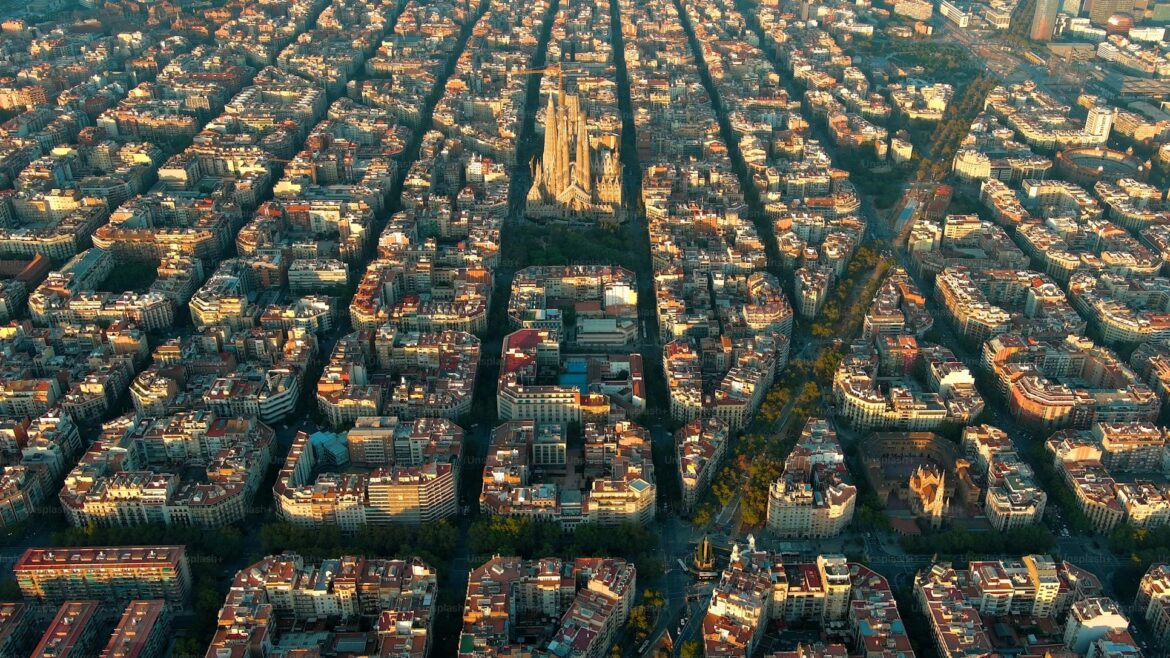
Similarly, Barcelona has also embraced the “green city,” with the creation of many urban campaigns focused on sustainability, and the reclaiming of streets for pedestrians. Most famously, Salvador Rueda (Director of Barcelona’s Urban Ecology Agency for the past 20 years) has spearheaded the “Omplim de vida els carrers” (Let’s fill the streets with life) campaign and, within, the superblock project. The superblock is a new urban model in which any grid-like urban city with sufficient population density can follow. The superblock consists of closing 4 streets, around 400 x 400 m, being smaller than a neighbourhood but bigger than one block. Imagine “pedestrian-friendly islands,” shaped as plazas filled with greenery, benches, play areas, and cafes, all safe for kids and residents to socialize in. Even bicycles and hand scooters have a strict speed limit. To increase accessibility, curbless paving was implemented, and rigid and tenji blocks were created for those with visual impairments.
At the beginning of the superblock project, there was considerable citizen pushback, with concerns of gentrification. Citizens were concerned about rent prices going up and losing business due to restricting car use. However, after more research about the demographics of transportation of customers (discoveries that most were pedestrians) and an addendum to increase citizen participation, Spanish residents soon embraced the project. Now, the platform “decidim. Barcelona” exists, where anyone can suggest or propose new projects, or leave feedback on current ones.
The superblock program is part of Barcelona’s larger initiative, called the Natura Program. This program aims to increase the amount of green space per citizen by 1 m² per inhabitant by 2030, and they have remained on track to achieve this. Within this project, there are subsectors aimed at promoting and protecting biodiversity through the creation of shelters, maximizing environmental services and implementing ecological urban practices. Within existing infrastructure, there is also work to change surfaces to become permeable and lighten street colours, both of which help reduce the impacts of climate change and the heat island effect. Guidelines for street design now require 20% of surfaces to be permeable, with 80% forced to have tree cover to provide shade in the summer.
What Barcelona has seen as a result of the superblock program is, in some neighbourhoods, a 25% reduction in NO₂ levels, a 17% reduction in PM10 levels, and a decrease in noise. Citizens were able to perceive this decrease in pollution (both noise and air pollution) and reported overall a better well-being and emotional health, as qualitative research shows. Furthermore, a health impact assessment indicates that 667 premature deaths could be prevented by implementing 503 Superblocks. The largest number is most likely attributed to the reduction in NO₂ . As one of the main aims of the Superblock project was to have 81.54% of all journeys be on foot, by bicycle, or by public transportation, the health assessment estimates an additional 36 preventable deaths from the reduction in private automobile use. The Superblocks are also estimated to increase life expectancy by almost 200 days, with an economic impact of 1.7 billion Euros. This is due to the increased exposure to green spaces, providing both benefits for physical and mental health.
Both Paris and Barcelona have successfully begun or already implemented changes to their city design, increasing green spaces and safety. These two models have begun to serve as an exemplar for the rest of the world, showcasing the potential to transform the city into one that is more conscious of its people.
Edited by Olivia Moore
Disclaimer: This is an article written by a Staff Writer. Catalyst is a student-led platform that fosters engagement with global issues from a learning perspective. The opinions expressed above do not necessarily reflect the views of the publication.
