
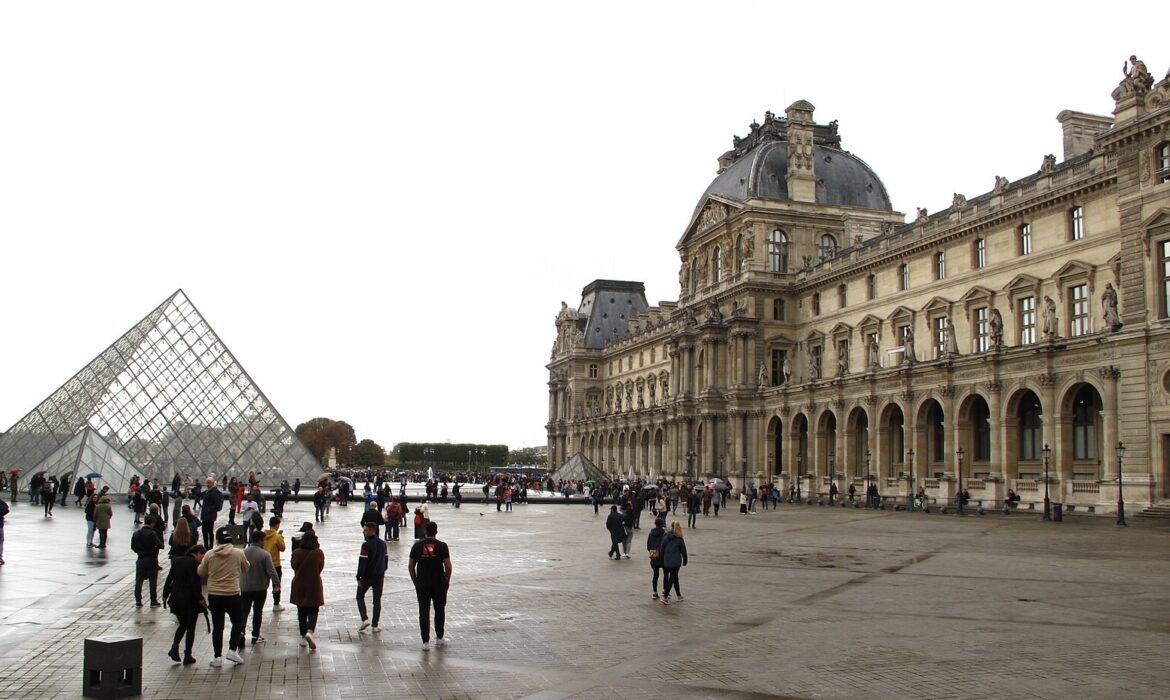
On October 19, 2025, a team of thieves broke into a second-floor window of the Louvre Museum in Paris and left with eight pieces of 19th-century French crown jewels. The robbery, which was caught on film by security cameras and museum visitors, quickly made international headlines. The boldness of the broad daylight heist, as well as the sheer value of the stolen jewels (estimated to be over $102 million), captured the world’s fascination. French authorities expressed shock, outrage, and general confusion as to how thieves managed to breach the security of such a prominent museum. President Macron described the robbery as an “attack on a heritage that we cherish because it is our history.” Other politicians condemned the insufficient protection of French artifacts, such as right-wing French European Parliament member Jordan Bardella, who called the robbery an “unbearable humiliation for our country.” It quickly became clear that the thieves didn’t steal from the Louvre; they stole from France itself. As officers raced to find the thieves, there was nationwide panic over whether the jewels would be intact or if they’d be melted down and illegally sold. By the end of October, four suspects had been arrested in connection with the robbery, yet the jewels had not been recovered.
The Louvre robbery in October joins a long list of French art heists throughout history, as well as in recent years. In fact, museums across the country, including the Adrien Duboche Museum, the Cognacq-Jay Museum, and the Hieron Museum, have also been robbed this past year. The Louvre, specifically, has been historically targeted. In 1911, Vincenzo Peruggia famously stole the Mona Lisa after hiding overnight in a broom closet, an act that helped make the painting as legendary as it is today. In January 1998, a Greek artifact was stolen from the Louvre, and in May of the same year, a thief stole Le Chemin de Sèvres, a small painting estimated to be worth $1.3 million.
Over time, these real-life thefts helped construct a distinctly French mythology around art heists that has been continuously reimagined in pop culture. The romantic image of the “gentleman thief”, a figure who is suave, clever, and guided by his own moral code, became central to shaping France’s relationship with art theft. Maurice Leblanc’s 1905 character, Arsène Lupin, remains a significant French cultural symbol. Lupin wasn’t a brutish criminal; he was a witty, sophisticated rebel who stole from the rich and outsmarted the authorities with flair. Against the elegant Parisian backdrop, Lupin’s adventures helped aestheticize art theft. Over a century later, Lupin’s legacy is reimagined in Netflix’s hit series Lupin, where a contemporary interpretation of Leblanc’s character continues to entertain audiences. The persistence of this archetype reveals how France’s imagination has historically blurred the line between crime and art, making theft seem less like an act of greed and more like a performance. This trope has spread beyond France, with Hollywood movies such as Ocean’s Twelve portraying elaborate robberies of French museums as spectacle.
The idea of the “French art heist” has become a pop culture cliché that reflects how the world understands France’s national identity. It also helps explain why the public reaction to the recent Louvre robbery is tinged with awe. Across social media, internet sleuths broke down the thieves’ methods, admiring their audacity and skill. Others dressed as the robbers for Halloween, much like how one would dress as a movie character. Meanwhile, mugshots of the arrested suspects quickly generated fandoms, with people commenting on the robbers’ appearances. Ultimately, the robbery was framed within the pop culture aestheticized trope of French art heists, a dazzling narrative with revered characters that showcases how, in France, even stealing can be seen as an expression of beauty, intellect, and rebellion.
However, in cinema and news media alike, France is often portrayed as the victim of art theft, despite its history as a perpetrator. During the Napoleonic era, French forces seized artwork and artifacts from across Europe and Africa and brought them back to Paris to showcase France’s cultural supremacy. Much of the Louvre’s collection originates from this looting, raising questions about whether culture can be owned. For example, over 6,000 Egyptian pieces are currently housed in an exhibit ironically titled Guardian of Egypt. In recent years, France has faced growing pressure to return artifacts stolen during the colonial era to their countries of origin. However, these demands have resulted in debates over which pieces rightfully belong to France, demonstrating how closely tied art is to the nation’s politics, power, and identity.
In fact, the Louvre itself symbolizes the power of France. Before it became an art museum, the Louvre was commissioned by King Philippe Auguste in the 12th century to serve as a fortress to protect Paris from English invasion. Though the medieval fortress was eventually replaced by a palace, the building still holds the symbolic role of the nation’s protector. By housing the prized artifacts of France, the Louvre upholds the nation’s identity as a guardian of culture. Thus, when the Louvre is robbed, France’s capacity to guard its heritage is challenged, demonstrating the interconnectedness of art, history, and patriotism. In this context, stealing jewelry from a museum becomes tantamount to stealing culture from a nation. Yet at the same time, the mythos of the Louvre is strengthened. Theft dramatizes the museum’s symbolic role by proving that the objects inside are still charged with meaning, status, and national pride. The Louvre, in addition to being a museum, is a stage for the performance of both French identity and the art of theft.
Edited by Jamie Silverman
Disclaimer: This is an article written by a Staff Writer. Catalyst is a student-led platform that fosters engagement with global issues from a learning perspective. The opinions expressed above do not necessarily reflect the views of the publication.
