
Since coming into office, President Trump has utilized Immigration and Customs Enforcement (ICE) unlike any previous President. As a result, his political rivals have failed to respond adequately. What went wrong, and what could they have done better?
Since Donald Trump descended the escalators of Trump Tower in June 2015 and announced his presidential campaign, illegal immigration has dominated American political discourse. What was once a bullet point of policy detail became the defining issue that millions of Americans base their votes on. The 2024 presidential election saw both parties making immigration central to their platforms in unprecedented ways. Using the language of Reagan’s War on Drugs, Trump has successfully changed the way Americans think and talk about immigration. This transformation reflects genuine concern, but it has also created political incentives, on both sides, that reward dramatic action over effective policy. When immigration becomes the ultimate test of leadership, politicians prioritize appearing tough rather than creating an actual strategy, as seen with the Trump Administration’s favourite phrase: “F around, find out”.
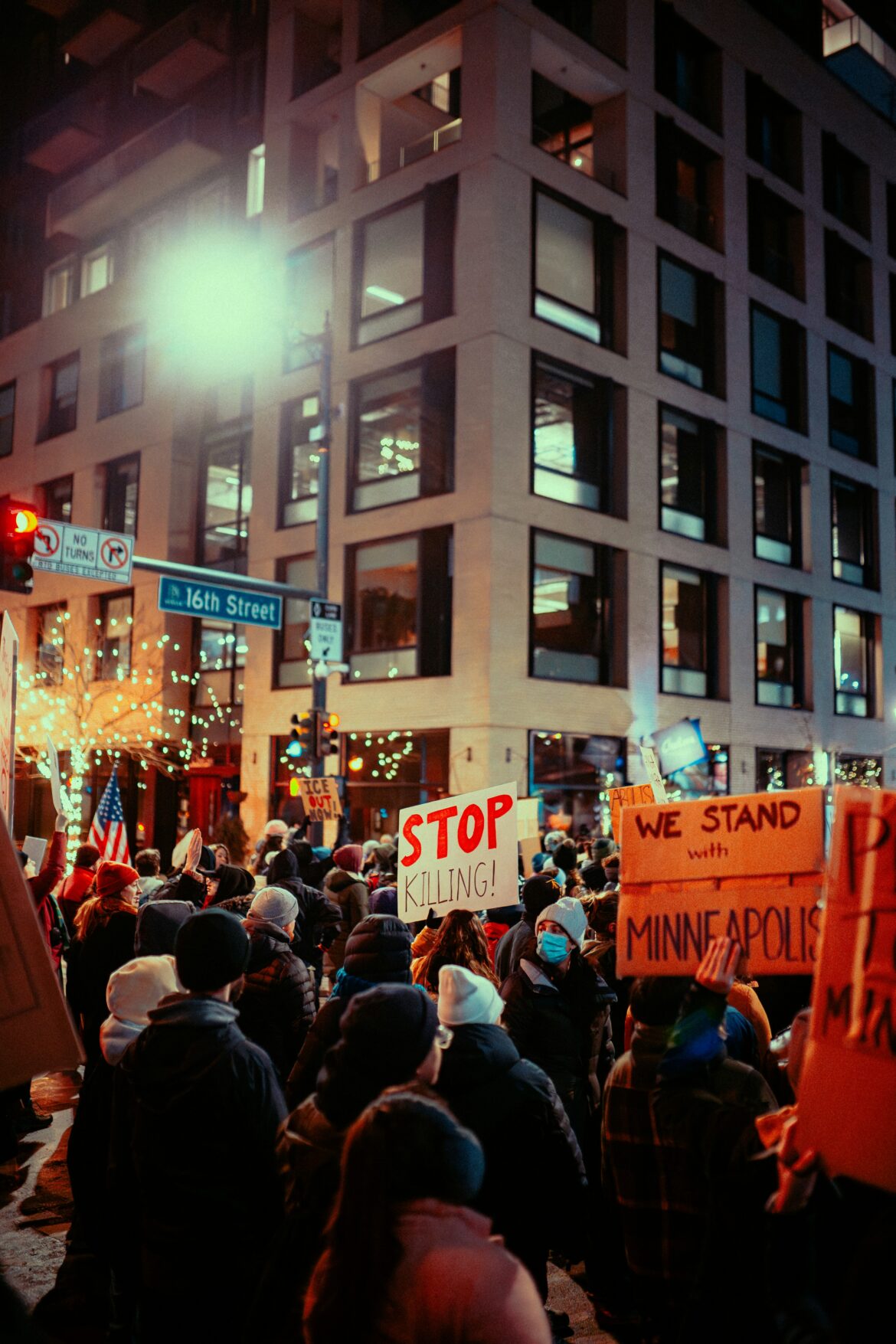
The biggest losers in this scenario, as always, are the American people. On January 7, 2026, Renee Good, a 37-year-old, was fatally shot in Minneapolis by ICE agents after allegedly attempting to interfere with an operation. The video of Good’s death shows her in a car, attempting to drive away from ICE agents, before being fatally shot. On January 24, 2026, Alex Pretti, an anti-ICE protester, brought a loaded gun to an ICE operation and was killed. These deaths highlight an upsetting reality that goes deeper than partisan talking points. The current administration’s enforcement approach, combined with Democratic leaders’ initial performative opposition, followed by belated legal action, has created a dangerous situation in which no one’s interests are served.
Many Democrats will read about these deaths and immediately blame Trump. They are not entirely wrong, as his administration created these conditions. However, that is why the failure of Democratic leadership is a major problem. When your opponent is dangerous, performative resistance is deadly, and reactive legal challenges that come too late are ineffective.
Democratic Leadership Vacuum and Belated Response
Democratic governors and politicians, specifically Minnesota’s Tim Walz and Minneapolis mayor Jacob Frey, have positioned themselves as the so-called leaders against Trump’s immigration policies. They have made bold public statements condemning ICE operations, demanded that agents leave their states, and refused to provide state resources to assist ICE. After Renee Good’s death, Governor Walz said it was “the consequences of governance designed to generate fear, headlines, and conflict,” adding, “we do not need any further help from the federal government.” Furthermore, he ordered the Minnesota National Guard into a “state of preparedness”.
However, when it came to actually using institutional power early enough to prevent tragedy, these Democratic leaders held back. For five critical days after Renee Good’s death, from January 7 to January 12, Walz could have immediately issued executive orders instructing state agencies to refuse cooperation with ICE, similar to policies in California. Furthermore, Minneapolis as a city could have removed ICE’s access to municipal databases and denied use of city facilities. Most importantly, the state could have filed emergency injunctions immediately. There were many things that Walz and Frey could have done right away, but he and his administration chose to wait. This is where their performative activism becomes more than ineffective; it becomes dangerous.
If Governor Walz truly believed ICE operations in his state were unconstitutional or in violation of civil rights, why did he only order the National Guard to “adopt a state of preparedness” rather than actually deploy them in those important days? Why not deploy state police to monitor operations and document violations immediately? Why leave it to ordinary citizens to physically stand between ICE agents and their alleged unlawful actions? Walz telling Minnesotans to “Help us create a database of atrocities against Minnesotans” is encouraging civilians to interfere in law enforcement operations.
The answer seems to be strategic calculation. Public statements against the Trump administration, which the Democratic Party loves, carry no political risk and work well within the Democratic base. Actually using state resources to intervene in federal operations would cause legal challenges, risk federal funding cuts, and also invoke the age-old argument over state rights versus federal interference. It’s easier to criticize from the safety of a press conference than to force a confrontation when it matters most.
Unfortunately, this decision has deadly consequences. By withdrawing cooperation and condemning federal tactics without providing actual leadership or alternatives, Democratic leaders created a dangerous vacuum. Civilians felt the need to organize their own “resistance” networks. People with no training in law enforcement procedures, de-escalation tactics, or legal intervention put themselves between poorly trained and armed federal agents and immigration targets, which is a federal crime.
The predictable result has been escalating violence and now, death. Democratic leaders encouraged civilian resistance through their words while refusing to provide actual support in the moment when it mattered. They wanted the political benefits of loud opposition without accepting the costs or risks of immediate confrontation.
Too Little, Too Late
Minnesota did eventually take some of the institutional action that competent leadership requires. On January 12, 2026, five days after Renee Good’s death, Attorney General Keith Ellison filed a federal lawsuit trying to stop Operation Metro Surge as unconstitutional. Walz mobilized the Minnesota National Guard and sent letters demanding DHS accountability.
These are the kinds of responses that could have protected Minnesotans if they had come immediately. But when Walz and his administration wait five days to file emergency injunctions after making sweeping comments and accusations, they are admitting that those operations were not urgent enough to actually act on, they are just responding to political pressure.
On January 31, 2026, a federal judge rejected Minnesota’s request for a temporary restraining order, finding that the state did not have the legal capacity to stop federal operations. This raises uncomfortable questions: Were they filing lawsuits for political cover rather than a belief they would succeed?
The failure reveals how Democratic leaders prefer dramatic gestures to effective strategy. They encouraged civilians to go into the streets and interfere with operations, waited for a tragedy, and then filed legal challenges that were not strong enough. Minnesota is now facing a DOJ investigation for conspiring to interfere with federal agents, the worst possible outcome. Their state took legal and political risks, ordinary citizens died, and they have nothing to show for it.
What Democrats Could Do
Democratic governors and leaders have constitutional options that they are only now beginning to use. State attorneys general could have filed emergency injunctions against certain operations before deaths occurred, forcing federal courts to review the legality. States could have deployed legal observers, such as the National Guard, to document alleged violations from day one. They could have built legal cases over time through proper evidence gathering, rather than filing a reactive lawsuit after a tragedy.
These solutions are slow and technical and do not generate viral moments. However, they are the real “resistance” that could work. Legal challenges create precedent and protect people through the judicial process. Instead, Walz asked untrained civilians to “create a database.” When Renee Good died, Minnesota’s preparation consisted of press conferences rather than legal cases or official evidence.
Some may argue that they lack the authority to interfere with federal operations. And at the moment, that’s true. However, leaders are calling these operations unconstitutional. If these events truly violate the Constitution, state governments have a responsibility to protect their residents through legal channels. If the operations are legal, governors should stop encouraging civilian interference.
The reality seems to be that Democrats want it both ways. They want credit for resisting Trump’s administration without the political risk of actually resisting in court. This begs the question: do these politicians think that ICE’s actions are unconstitutional? Or do they know that the resistance theatre gets a rise out of their emotional voter base while avoiding judicial actions? When civilians step in and lose their lives, and when lawsuits filed after the fact get rejected by judges, these leaders share responsibility with the other side for creating these situations.
The Shared Incentives
Both parties benefit from the current chaos. For Trump, aggressive enforcement signals to his voter base and generates headlines that reinforce his Nixonian law-and-order brand. For Democratic governors, speeches of resistance without action allow them to position themselves as defenders of communities while avoiding any actual legal confrontation. Resistance on the streets lets them “fight” without ever winning or losing in court, and when they finally do go to court, they lose because they were not prepared.
Legal challenges would either constrain Trump through legal precedent or result in the Democrats’ case falling short, revealing that they have no constitutional case. Unfortunately, performance is safer than investing in the process. Both sides can blame the other when negative outcomes occur. Neither group has a strong incentive to create quieter, more effective solutions. They both benefit from the drama and conflict occurring across the United States. As a result, there is a cycle that plays to emotions and creates frightening headlines, one that creates questionable results.
Looking Forward
The deaths and violence around ICE operations represent leadership failure at multiple levels. Federal enforcement prioritizes quotas over strategy, a recurring theme throughout American history. State governors prioritize performance over protection. Ordinary citizens are left in the middle of a political standoff that no side wants to resolve.
A better solution is possible. The United States can pursue serious immigration enforcement that focuses on actual threats rather than numerical targets. State leaders can use their institutional power rather than their social media accounts. Further, the United States can invest strategically in addressing why people flee their homes in South America instead of pursuing the “Donroe Doctrine”.
This requires accountability from across the American political spectrum. The GOP has to acknowledge that militarized enforcement operations in American communities create risks. At the same time, Democrats must realize that encouraging resistance while providing no institutional support until it is too late is dangerous and naive.
Instead of performative politics, the leaders of the United States must pursue actual solutions. Right now, neither side seems invested in solving the issue as they are too busy benefiting from the conflict. The American people deserve better than politicians who use their safety as a storyline and better than legal strategies that fail in court after the tragedy has already happened.
Edited by Olivia Moore
Disclaimer: This is an article written by a Staff Writer. Catalyst is a student-led platform that fosters engagement with global issues from a learning perspective. The opinions expressed above do not necessarily reflect the views of the publication.

Judah Meltzner is in his first year at McGill University, hoping to pursue a B.A. in International Development Studies. Originally from Boston, Massachusetts, he is particularly interested in American politics in addition to the happenings of the United Nations.