
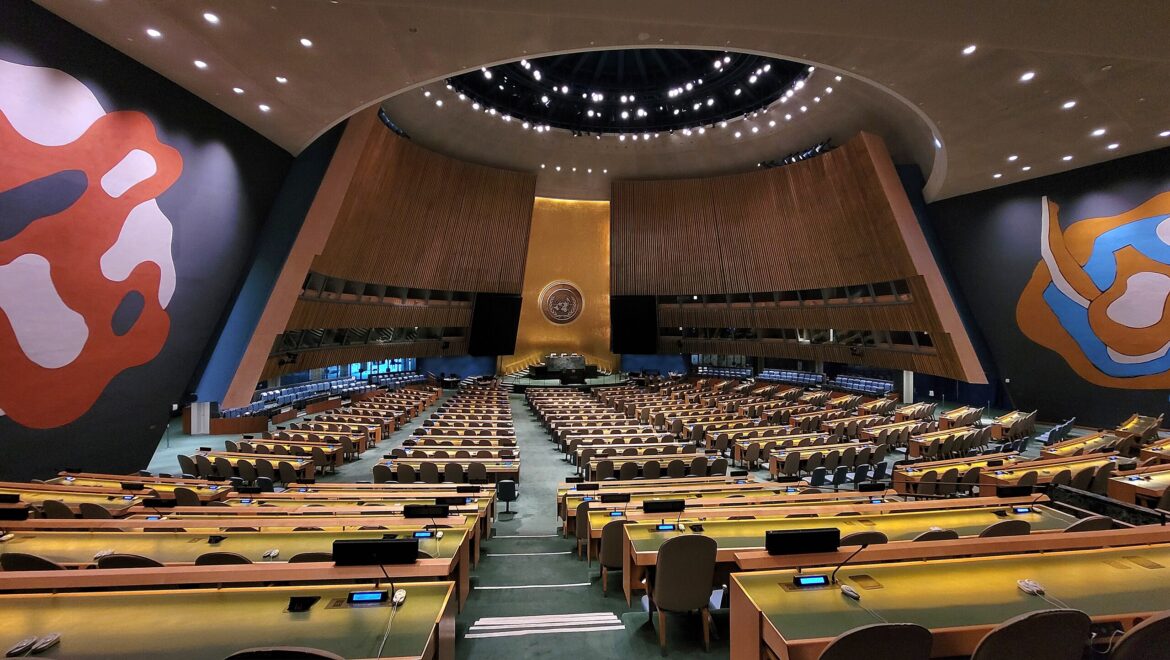
As global temperatures rise at an unprecedented rate, world leaders gather at the 80th UN General Assembly to confront the deepening climate crisis. With the EU pushing ambitious emissions cuts, China taking cautious steps toward reform, and the U.S. reducing climate action, the path to a unified global climate response grows increasingly uncertain ahead of COP30.
Global temperatures are rising faster than ever before, pushing the world closer to irreversible tipping points and testing the resolve of nations to confront the escalating climate crisis. Temperatures have risen 2℉ since 1850, with the rate of increase tripling in the last few decades. This drastic worldwide change has impacted every corner of the Earth and caused irreversible damage to various habitats and livelihoods. Human activities and constant growth play a major role in the emissions of greenhouse gases, trapping heat in our atmosphere, and causing consistent warming
This past week was the 80th United Nations General Assembly (UNGA), bringing leaders from around the world to engage in meaningful discussions. Held annually in New York City, this year’s theme was “Better together: 80 years and more for peace, development and human rights,” touching on some of the most urgent issues we face today, but with less of a focus on climate issues than last year, when the title specified sustainable development: “Leaving no one behind: acting together for the advancement of peace, sustainable development, and human dignity for present and future generations.” Despite this, climate change continues to be an impending issue faced by the global population. Many countries convene under the idea of reaching net zero emissions by 2050, but Professor Bill McGuire, at University College London, explains that this may also be too late. As climate tipping points are met, environments are no longer able to maintain their stable states and progress into a positive feedback loop, perpetuating a harmful cycle. The impacts of crossing these thresholds may not have immediate consequences, but will slowly reveal the devastating consequences.
Ahead of COP30, the 2025 United Nations Climate Change Conference, the annual Climate Summit held on 24th September this year brought together about 100 countries to speak about climate issues, and their Nationally Determined Contribution (NDC) targets. NDCs are mandatory for all those involved in the Paris Agreement, outlining updated climate plans for the next decade. Led by the UN Secretary-General, António Guteres, heads of state detailed their renewable energy goals and emission reduction targets. The most notable statements came from China, the European Union, and the United States.
China
Since 2006, China has been the world’s largest contributor of greenhouse gases, surpassing the United States. Their largest percentage of emissions comes from electricity and heat related uses, making up 11.67% of global greenhouse gas emissions, followed by manufacturing and construction. Home to half of the world’s coal power plants, China made up roughly 54% of the global coal consumption in 2021. This coal usage emits exorbitant quantities of greenhouse gases into the atmosphere, but it is vital to China’s current economy. China’s rapid urbanisation and economic growth also means higher electricity demands, even as renewable energy gains popularity, but because it lacks domestic natural gas, it uses coal to balance its renewable power.
At the Climate Summit, President Xi Jinping pledged to reduce emissions for the first time in history since China became the world’s largest emitter. However, their plan to cut emissions by 7%-10% from peak levels by 2035 is minimal, considering their majority contribution to global fossil fuel emissions. Xi also committed to increasing non-fossil fuel energy consumption by 30%, expanding the capacity of wind and solar power by 6 times that of 2020, and encouraging alternative energy vehicles to become mainstream in sales of new vehicles. China’s energy trends seemingly follow opposing growth curves, with renewables being rapidly deployed, but also exhibiting surges in coal power construction. His speech pushed for the international community to “stay on the right track, maintain unwavering confidence, unwavering action, and undiminished efforts,” but the true commitment to emissions reductions and renewable energy development remains to be seen.
The EU
As of 2022, the European Union accounted for 10.5% of global CO2 emissions and has continued to decline. By this time, their GHG emissions had decreased by 31% from 1990, as they made conscious efforts to shift their energy production methods from coal to renewable sources, and by 2030, they aim to reduce emissions by a total of 55%. The EU has committed to binding, clear targets for emission reduction and presents a unified front when faced with greenhouse gas emission reduction and climate change.
The EU Emission Trading System (EU ETS) and the Effort Sharing Regulation (ESR) are complementary policies that have significantly contributed to their rapid reduction in emissions. The EU ETS pertains to stationary industrial plants and facilities in the power sector. It sets an annually shrinking cap for all systems in this category and allows for trade of the allowances as needed. Companies emitting less carbon than the permit allows can sell their surplus, and those who emit more have to buy allowances, limiting the overall amount of carbon emitted by these facilities. These systems are heavily monitored and verified every year, and those who don’t comply are heavily fined. This sector covers 40% of the EU’s total emissions, and has seen a 48% decrease in total emissions since 2005. While the ESR covers the remaining 60% of emissions aimed toward specific countries and their emissions from more common sectors, such as transport, buildings, and agriculture. It binds each country to a specific target and has already produced an 18% decrease in emissions from 2005 to 2022, projecting to reach a 34% reduction by 2030.
The European Commission President, Ursula von der Leyen, pledges to stay on track as the global leaders in climate issues and to submit their NDC targets by COP30. Throughout UNGA week, the EU honed in on their commitment to multilateralism and reinforcing partnerships across regions. Their commitment to accelerating renewable energy and sustainable development persists and is observed through their immense existing progress. Following the EU-China Summit, they hold a joint commitment to drive global transition in sustainable development and reach their own respective climate targets, while encouraging effective multilateralism.
The United States
The United States has a long history with climate policy, beginning as early as 1992 with the U.N. Framework Convention on Climate Change (UNFCCC). George Bush committed to the U.S. being the world leader in “protecting the global environment.” Since then, the Paris Agreement, the Inflation Reduction Act, and various regulatory standards on everyday goods have been just a few of the many policies passed in the U.S. concerning the impacts of climate change. The U.S. is the biggest emitter of greenhouse gases in history, and accounted for 11% of global emissions in 2023, with 28% coming from transportation related emissions. Since 2005, they have managed to lower their emissions by almost 20%, with most changes coming from the power sector after moving away from coal-fired power to sources of renewable energy and natural gas.
“The greatest con job ever perpetrated on the world” were Donald Trump’s words on climate change at the UNGA this past week. After recently cancelling $13 billion that were allocated toward clean energy projects under the Biden administration, what Trump called the “Green New Scam agenda,” he completely denounced the existence of climate change at a time when its existence is evident. Despite a large global consensus regarding the impacts climate change has had and will continue to have, Trump continues to deny the issue altogether. He encouraged more fossil fuel utilisation and pushed for the UK to drill for more oil.
Throughout his current term, Trump has pushed for local production of goods and imposed heavy tariffs on imported products. In an attempt to push American corporations to focus on domestic production to avoid the costs that come with importing materials. If this surge in local production is not regulated to meet climate needs, the U.S. will only continue to grow as the world’s largest greenhouse gas emitter, and eventually regain its position in front of China. This anti-climate change sentiment perpetuated by the President, even when faced with hard facts, will serve to encourage climate change deniers in favour of economic development and fossil fuel usage. As the world’s largest economy, significant steps have to be taken in order to mitigate the toll fossil fuel emissions have already taken on natural resources and the degradation of the environment.
Conclusion
Referred to as “the most aggressive, comprehensive and consequential climate policy rollback the CAT (Climate Action Tracker) has ever analysed,” by Niklas Höhne, a New Climate Institute scientist, Donald Trump’s speech perpetuated several myths and false claims about the nature of climate change. His remarks stood in stark contrast to the growing global consensus that immediate, coordinated action is essential to prevent irreversible environmental collapse. While nations like the European Union continue to lead through ambitious, enforceable climate policies, and China begins to take tentative steps toward emissions reduction, the lack of unified global resolve threatens to undo decades of progress. As COP30 approaches, the effectiveness of nations’ NDCs will be measured not by their ambition, but by their capacity to produce unified and immediate action.
Edited by Zahra Ahmad
This is an article written by a Staff Writer. Catalyst is a student-led platform that fosters engagement with global issues from a learning perspective. The opinions expressed above do not necessarily reflect the views of the publication.

Suhani is in her fourth and final year at McGill University as an International Development student, with minors in Environmental Studies and Psychology. She is originally from New York City and is especially passionate about environmental issues and policy making that can have critical impacts on global communities.