
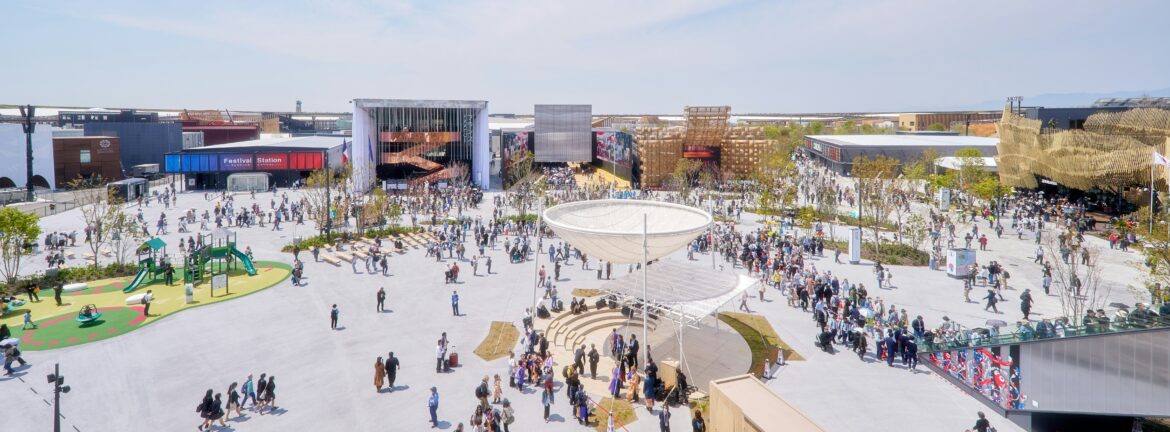
In a world increasingly fluent in the language of empowerment, few events embody the globalization of feminism like the Cartier Women’s Pavilion at Osaka Expo 2025. With 158 countries and 7 international organizations participating, this 2025 edition marks the most extensive international representation ever seen in Japan. Co-sponsored by UN Women, Cartier, and the Japanese government, the pavilion presents itself as both an immersive celebration of womanhood and a policy-adjacent forum for gender equity. But what kind of feminism is on display—and whose development agenda does it serve?
By staging women’s voices through architecture, art, and diplomacy, the pavilion becomes more than a cultural installation. It is a strategic apparatus of soft power, a case study in how feminist ideals are curated, exported, and performed on the world stage. This article examines how the pavilion functions as an instrument of cultural diplomacy and a mirror to the uneven terrain of gender and development.
Cultural Diplomacy in the Feminist Age
World Expos have long operated as stages for soft power, projecting national narratives through cultural exhibition. Expo 2025’s overarching theme—”Designing Future Society for Our Lives,” with pillars of “Saving Lives,” “Empowering Lives,” and “Connecting Lives,” explicitly aligns with the Sustainable Development Goals (SDGs) and Japanese cultural ambition. However, into this national branding enters a multinational intervention: the Women’s Pavilion. Its accompanying message: “When women thrive, humanity thrives”.
Designed by Yuko Nagayama, the pavilion reuses the kumiko lattice façade from Dubai’s Japan Pavilion—marking one of the few instances Expo authorities have recycled major architectural assets. This physical repurposing is rich in symbolism—it speaks to sustainability, continuity, and the positionality of Japan as a curator of global heritage—yet also raises questions about the exportation of gender norms through reused frameworks.
According to cultural diplomacy scholar Hafsa Nawaz, these interventions “tap into shared human values,” yet risk “appearing insincere or propagandistic” if wrongly calibrated. The Women’s Pavilion is emblematic of this balancing act: it reaches for genuine solidarity, but remains tethered to national branding and corporate identity.
Curated Womanhood: Memory Palaces and Soft Power Narratives
Inside, visitors travel through “memory palaces” crafted by Es Devlin. These immersive spaces recount intimate moments from three women: Banana Yoshimoto (Japan), Emi Mahmoud (Sudan), and Xiye Bastida (Mexico). The design—egg‑shaped thresholds, mirrored walls, the rhythmic play of light—melds traditional Kyoto machiya architecture with a mood of gentle introspection.
These personal narratives are powerful; they humanize development statistics and invite empathy. Yet, feminist development analysis tells us how easily empathy can be a stand‑in for structural change. As feminist scholar Chandra Mohanty warned, the problem isn’t just multicultural celebration, but celebration without material consequence. When stories stand in for redistributive justice—when narrative is prioritized over policy—the danger is that empowerment becomes a performance.
From Branding to Blueprint? The Gendered Development Dilemma
Both visible and performative, Cartier’s sponsorship introduces another layer. Its logos adorn walls, and its Impact Awards reward women entrepreneurs with seed funding and mentorship. Through its Women’s Initiative, the brand promotes female entrepreneurship globally, positioning itself as a vehicle for corporate social responsibility with feminist flair. At Expo 2025, the brand’s visibility is omnipresent—on walls, brochures, and awards ceremonies.
But when development is channeled through luxury branding, one question arises: who benefits, and who is excluded?
The SDG language is everywhere—gender equity, sustainable futures, innovation. But missing from this aesthetic of empowerment are the power dynamics that have long been central to Gender and Development analysis.
This echoes a broader critique: that empowerment is too often reduced to entrepreneurial narratives and micro‑funding, while systemic inequalities that marginalize women in the Global South—unpaid care work, reproductive rights, land ownership—remain sidelined. When feminist infrastructure leans on soft power gestures, it can obscure the structural supports and redistributive mechanisms that truly advance women’s agency.
Here lies the paradox of development-through-design: the very actors profiting from global inequality now brand themselves as part of the solution. This is nothing new—but it demands critical scrutiny. If feminist development is reduced to entrepreneurial success stories and Instagrammable pavilions, it loses its political force.
The Metrics of Inclusion: Diplomacy or Display?
The Women’s Pavilion operates not just as a development gesture, but as a diplomatic artifact. It signals to international donors, governments, and civil society that gender equality is not only desirable, but also performable. This is cultural diplomacy at its most refined: soft power draped in silk and lattice.
Yet cultural diplomacy can be double-edged. On one hand, the pavilion provides an opportunity to bring feminist issues into mainstream international discourse. On the other, it can sanitize and depoliticize those very issues, turning structural oppression into immersive art.
To assess whether the pavilion delivers more than symbolism, we might ask: Who selected these women? Were grassroots feminist groups involved, or is this a top-down narrative? Of the 180+ events hosted, how many feature Global South feminist NGOs or confront issues like reproductive justice and care systems? Do they lead to advocacy gains, policy change, or funding? Or do they remain inspiring talk shows in a sculptured garden?
The answer lies in cultural diplomacy theory: soft power can be transformative—but only when stories are matched with substance. Without transfer of resources or policy frameworks, storytelling easily becomes a diplomatic veneer.
Sustainability, Symbolism, and Feminist Reuse
Sustainability is central to the pavilion’s narrative. Its facade is repurposed, its materials are intended for reuse at Yokohama’s Green Expo 2027. This speaks to Expo 2025’s broader “People’s Living Lab” ethos—a testing ground for a ‘Society 5.0’ that blends culture, tech, and sustainability.
Framed through a feminist lens, sustainability becomes more than an environmental goal–it signals a commitment to justice and inclusion, acknowledging women’s central roles in climate-impacted areas. Still, without policies that address gendered climate vulnerability—such as support for women-dependent households or protection against climate-linked violence—symbolic reuse is not enough.
From Architecture to Activism: Between Spectacle and Substance
Osaka’s Women’s Pavilion is at once a triumph of design and a case study in the complexities of cultural diplomacy. Its immersive architecture and multilayered programming show care, skill, and intention. However, as feminist and development analysts, we must ask: does this exhibit function as a cultural spectacle or a cultural scaffold?
The pavilion stands at the crossroads of celebration and critique. It is soft power dressed in feminine motifs, a diplomatic gesture wrapped in sustainability. But unless its stories funnel into laws, resources, or reform, it risks fading into the archive of inspiring experiences that lacked structural bite.
The pavilion invites us to witness—but feminist cultural diplomacy requires us to act. The true question is: will anyone take the next step, beyond Osaka’s gardens and galleries, to bring us into a world of lasting change?
Edited by Minaal Mirza
Disclaimer: This is an article written by a Staff Writer. Catalyst is a student-led platform that fosters engagement with global issues from a learning perspective. The opinions expressed above do not necessarily reflect the views of the publication.

Élise Ramo-Mauceri is a third-year student at McGill University, double majoring in International Development and Psychology. As a staff writer for Catalyst, she explores the global intersections of social justice, conflict, gender, and cultural power. She is particularly interested in how development narratives are constructed, performed, and contested across political and aesthetic spaces.