
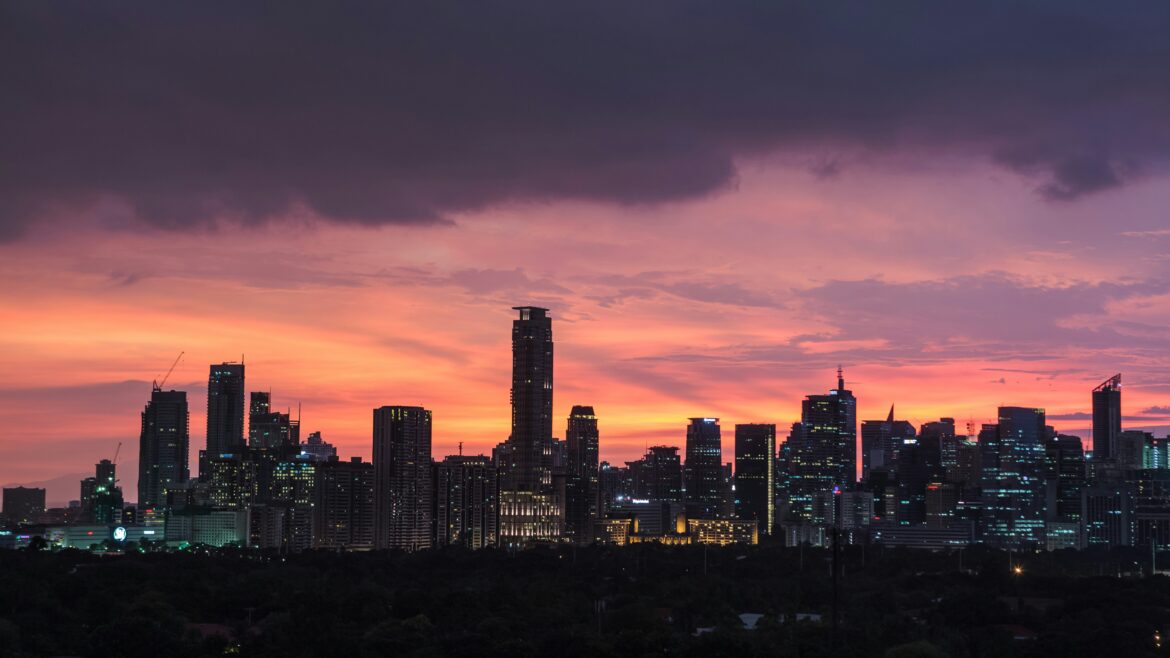
The Philippines’ drug trade is deeply intertwined with its political landscape, where powerful cartels and political dynasties like the Marcoses and Dutertes vie for control. While Duterte’s brutal “War on Drugs” led to a drop in crime, it also masked a complex web of corruption, extrajudicial killings, and alleged cartel protection. The ongoing rivalry between these families highlights how narcotics and politics are inseparable forces shaping the nation’s governance and future.
Introduction
In the Philippines, the drug trade is more than a criminal enterprise; it’s a political lifeline. Despite years of bloody merciless crackdowns, cartels remain embedded in local power structures, where illicit profits fuel campaigns, buy loyalty, and cement dynasties. Nowhere is this more visible than in the fierce rivalry between two of the country’s most powerful political families, whose battle for influence extends from city halls to the shadowy corridors of the narcotics underworld. This article examines how their clash over both political authority and control of the drug trade reveals the dangerous entanglement between crime and governance in the Philippines.
Background Information
The Marcos family first entered national politics in the 1920s with Mariano Marcos, who served as a congressman for Ilocos Norte. His son, Ferdinand Marcos Sr., rose to prominence and was elected president in 1965. He ruled until 1986, under martial law from 1972 to 1981, during which widespread human rights violations, suppression of dissent, and plundering of state funds occurred. After being ousted by the People Power Revolution in 1986, the Marcos family was exiled, only to return gradually to public life. In 2022, Ferdinand “Bongbong” Marcos Jr., the dictator’s son, won the presidency by rebranding his father’s era as one of stability and economic growth, especially through social media platforms such as TikTok.
On the other hand, the Duterte family hails from Davao City, in Mindanao, and rose to national prominence through Rodrigo Duterte’s long tenure as mayor and subsequent presidency between 2016 and 2022. His administration was defined by a populist, authoritarian style and a highly controversial drug war described by critics as involving extrajudicial killings. Sara Duterte, his daughter, similarly embraced a tough-on-crime image as mayor of Davao and was elected vice president in 2022. She aligned temporarily with Marcos Jr. as part of the UniTeam coalition, an electoral alliance, despite diverging political ideals and regional bases of support.
Marcos Jr. and Sara Duterte ran together in 2022 despite their families’ long-running political rivalry. That alliance was strategic: Marcos brought strong support from Luzon and older pro-Marcos voters, while Sara delivered the Duterte clan’s base in Mindanao. In the Philippines, presidents and vice presidents are elected separately, and therefore don’t need to share a party or ideology. Their ticket won decisively, but tensions emerged early over policy in areas such as foreign relations, the ICC probe of Duterte-era abuses, and internal power dynamics. Public clashes escalated until Sara resigned from her Cabinet posts as Secretary of Education and co-vice chair of the anti-insurgency task force in June 2024, formalizing the breakdown of their alliance.
In early 2025, Duterte loyalists held large rallies calling for Rodrigo Duterte’s release and accusing Marcos allies of political persecution. Marcos’s allies in the House of Representatives even impeached Sara in February 2025, leveling charges that included assassination threats and fund misuse. Marcos initially was dismissive, conducted a cabinet shakeup in May 2025 after his team performed poorly in midterm elections, which many see as a rise in anti‑administration sentiment.
What Does the Philippines Government Look Like?
Understanding the structure of the government is crucial in the comprehension of the ties between politics and drug cartels. The Philippine government follows a unitary presidential constitutional republic model with three branches: the executive, legislative, and judiciary. The president serves as both head of state and government for a single six‑year term. The vice president is elected separately and may belong to a different party. The bicameral Congress consists of the Senate (24 national members serving six years) and the House of Representatives (district and party-list representatives serving three-year terms). The judiciary is led by the Supreme Court, which operates independently.
Today, the rivalry between the Marcos and Duterte families reflects a deeper political divide in the Philippines between traditional elite power and populist strongman politics, between global cooperation versus nationalist isolationism, and between symbolic alliances and real political control. Their former alliance and subsequent fallouts illustrate how dynastic politics shapeshift around expedience rather than ideology.
The Filipino Shadowy Corridors of the Narcotics Underworld
If you believe a country’s drug issue is only coming from within, you’re wrong—drug cartels transcend borders. The same applies to the Philippines, with multiple international drug cartels from China to Mexico being caught in numerous busts. Ex-president Rodrigo Duterte claimed his own country as a “narco-state” and announced an iron-fisted — (or Duterte Fist —) “War-on-Drugs.”
Within the first 100 days of Duterte’s presidency, often referred to as the measurement of success of the regime, over 23,500 raids were conducted, 22,500 arrests made, and some 732,000 individuals — (both users and suspects) — surrendered. According to official figures, approximately 6,248 people were killed during anti-drug operations, though human rights groups estimate the toll could be as high as 30,000. The campaign drew widespread condemnation for the prevalence of extrajudicial killings, many of which targeted marginalized communities. Before Duterte’s ascendancy, anti-drug efforts faced steep legal and procedural challenges. From 2011 to 2015, over 63,000 arrests circled the issue, but conviction rates remained low—only about 630 convictions in 2015, out of over 30,000 cases filed. Despite the violence, the period saw declines in broader crime: between 2016 and 2021, overall crime incidents dropped from 2.67 million (2010–2015) to 1.36 million. Violent crime like murder also decreased by nearly 50%. Yet, critics argue the drop came at too high a moral cost.
Narco-Politics
The term “narco-politics” encapsulates the deeply rooted collusion between drug syndicates and political figures, where drug money shields criminal networks, eventually eroding democracy. Philippine politics is organized by patronage networks: political clans dominate access to public funds, contracts, and electoral power. Criminal actors exploit these systems, embedding themselves further into politics.
Perhaps the most alarming nexus comes from the ICC whistleblower testimony by Arturo Lascañas, a former member of Duterte’s infamous Death Squad. He detailed cartel ties to Chinese businessman Michael Yang, alleging that Yang operated meth labs across Mindanao with facilitation from Duterte allies—including government and customs officials.
Critics argue Duterte used his violent anti-drug campaign as a smokescreen to eliminate competitors in the local drug trade and protect his own networks. A former PNP official confirmed that police rewards were layered into state-sanctioned killings, funneling influence through both coercion and corruption.
The combination of weak rule of law, entrenched political dynasties, and extrajudicial violence created fertile ground for cartels to infiltrate state systems. The Duterte clan, already a powerful political force, has been accused of weaponizing violence and patronage, blurring lines between governance and criminal enterprise.
With whistleblowers and the PNP exposing incentivized killings, the ICC has now put him on trial, further shining light on the country’s shady businesses in Hades world.
On-Going ICC Investigation
In February 2025, the International Criminal Court issued an arrest warrant for Rodrigo Duterte, charging him with crimes against humanity. This included alleged systemic extrajudicial killings during his tenure as mayor and president between 2011 and 2019. The warrant accuses him of overseeing policies that allowed widespread state-backed killings of suspected drug offenders.
He was arrested at Manila’s Ninoy Aquino International Airport on March 11, 2025, under an Interpol red notice and flown to The Hague. Duterte is now in ICC custody awaiting the confirmation-of-charges hearing. Despite the Philippines withdrawing from the ICC in 2019, the court retains jurisdiction over crimes committed while the nation was a member.
Sara Duterte, the Upcoming Presidential Candidate
Aside from the on-going familial rivalry, Sara Duterte is speculated to be running for presidency in 2028. As the current Vice President of the Philippines, she is a political figure with deep roots in Davao City, where she previously served as mayor. Born in 1978, she is the daughter of former President Rodrigo Duterte and has built her own political identity, often seen as both an extension and evolution of her father’s hardline governance style. Trained as a lawyer, Sara entered politics in 2007 and quickly gained national prominence for her no-nonsense approach and leadership during crises. In 2022, she ran alongside Ferdinand “Bongbong” Marcos Jr. on the “UniTeam” ticket, winning the vice presidency by a wide margin, even though their families historically represented different and often conflicting—power blocs in Philippine politics.
Earlier this year, Marcos-aligned lawmakers attempted to impeach her, accusing her of misusing confidential funds and threatening members of the cabinet. Even with the overwhelming number of house votes for the impeachment (78%), the Supreme Court ultimately dismissed the case, strengthening her political standing and reinforcing the Duterte political dynasty. The Supreme Court ruled impeach attempt is unconstitutional and any attempt of impeachment will be suspended until February 2026. They further explained this is due to their law, as no impeachment proceedings shall be initiated against the same official more than once within a period of one year. However, it is also important to note 12 out of 15 justices were appointed by Rodrigo Duterte during his regime. With more than 4 separate cases of impeachment filed between December and February, it seems like the issue will be on-going till her official presidency campaign.
The Vice President claimed the impeachment cases against her are politically motivated, especially as she’s a rising dark horse for the 2028 presidency. Despite her father facing charges from ICC investigations, Sara maintains a loyal following, particularly in Mindanao, and is considered a strong contender for the presidency in 2028. Her leadership style blends the authoritarian legacy of her father with her own strategic pragmatism, making her both a polarizing and powerful figure in the current Philippine political landscape.
While Rodrigo is fighting for his dignity, Marcos has also been recently involved in a drug scandal. Rumors have circulated alleging a connection between Philippine First Lady Liza Araneta-Marcos and the death of businessman Paolo Tantoco in Los Angeles in March 2025. Tantoco, a vice president at Rustan’s, was found dead at the Beverly Hilton Hotel, with the Los Angeles County Coroner’s Office attributing his death to a cocaine overdose . Some social media posts and news outlets have speculated that Araneta-Marcos was involved, possibly detained by U.S. authorities in connection with the incident.
However, these claims have been categorically denied by the Philippines government. Malacañang dismissed the circulating police report as “fake” and “malicious,” stating that Araneta-Marcos was not present with Tantoco at the time of his death . Senator Imee Marcos also called on the palace to address the allegations . The U.S. Embassy and relevant law enforcement agencies have not issued any statements confirming the rumors.
Conclusion
The grip of drug cartels on the Philippines’ political landscape reveals a troubling reality where crime and governance are inseparable. The violent anti-drug campaigns under Marocs masked a complex system of corruption, while the rivalry between the Marcos and Duterte families underscores how political power struggles are deeply entangled with control over illicit networks. As Marcos faces international justice and Sara Duterte rises amid political attacks, the nation is standing towards a future where dynastic ambitions, narcotics influence, and fragile democratic institutions collide, highlighting the urgent need for transparent reform in the country’s fight against drugs and corruption.
Edited by Lara Cevasco
This is an article written by a Staff Writer. Catalyst is a student-led platform that fosters engagement with global issues from a learning perspective. The opinions expressed above do not necessarily reflect the views of the publication.

A double major student studying psychology and international development at McGill. Born and raised as a third-culture kid, I’m interested in the intersection of global politics and culture. Outside of politics, I also enjoy watching old movies and listening to classical music. Currently watching season 3 of “The Summer I Turned Pretty” and is repeatedly listening to Edward Elgar.