
On October 10th, María Corina Machado was awarded, amongst a group of 337 nominees, the 2025 Nobel Peace Prize “for her tireless work promoting democratic rights for the people of Venezuela and for her struggle to achieve a just and peaceful transition from dictatorship to democracy.”
It was two months later, during the Oslo Peace Days, that Machado was expected in Norway to receive her award, amid tensions with Nicolás Maduro’s government and rising threats of interventions by the United States. Between communal celebrations and controversy, the awarding of this year’s Nobel Peace Prize emerged as a key event for understanding popular discourses on democracy and resistance. The ceremony can also serve as a point of entry for understanding recent geopolitical developments, as Trump moved to fulfill his promises and Nicolás Maduro was brought to the United States under custody.
11:00 – Save the Children Peace Prize Celebration
The day began with vibrant energy: that of Oslo schoolchildren gathered for their Peace Prize Party, organized by Save the Children Norway.
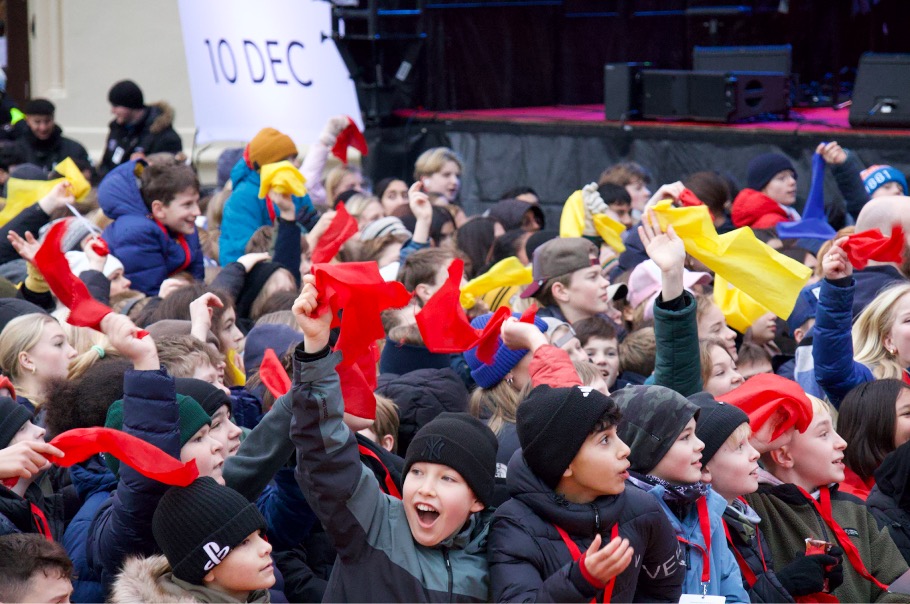
But as different performers took turns on stage, and as the children’s laughter and voices echoed across the square, the suspense surrounding the question remained and even grew: would María Corina Machado attend the children’s celebration? Last seen publicly on January 9th in Caracas, Machado has lived largely in hiding since the 2024 Venezuelan elections, during which she accused, alongside academics and media organizations, Nicolás Maduro of rigging the results. While she promised to do “everything in her power” to attend the ceremony, significant uncertainty surrounded whether she would be able to leave Venezuela without being intercepted by the authorities.
When a black car arrived behind the Nobel Peace Center, the question was finally answered. Only her daughter, Anna Corina Sosa, stepped out of the vehicle, under the flashes of journalists’ cameras.
13:30 – The Nobel Peace Prize Award Ceremony
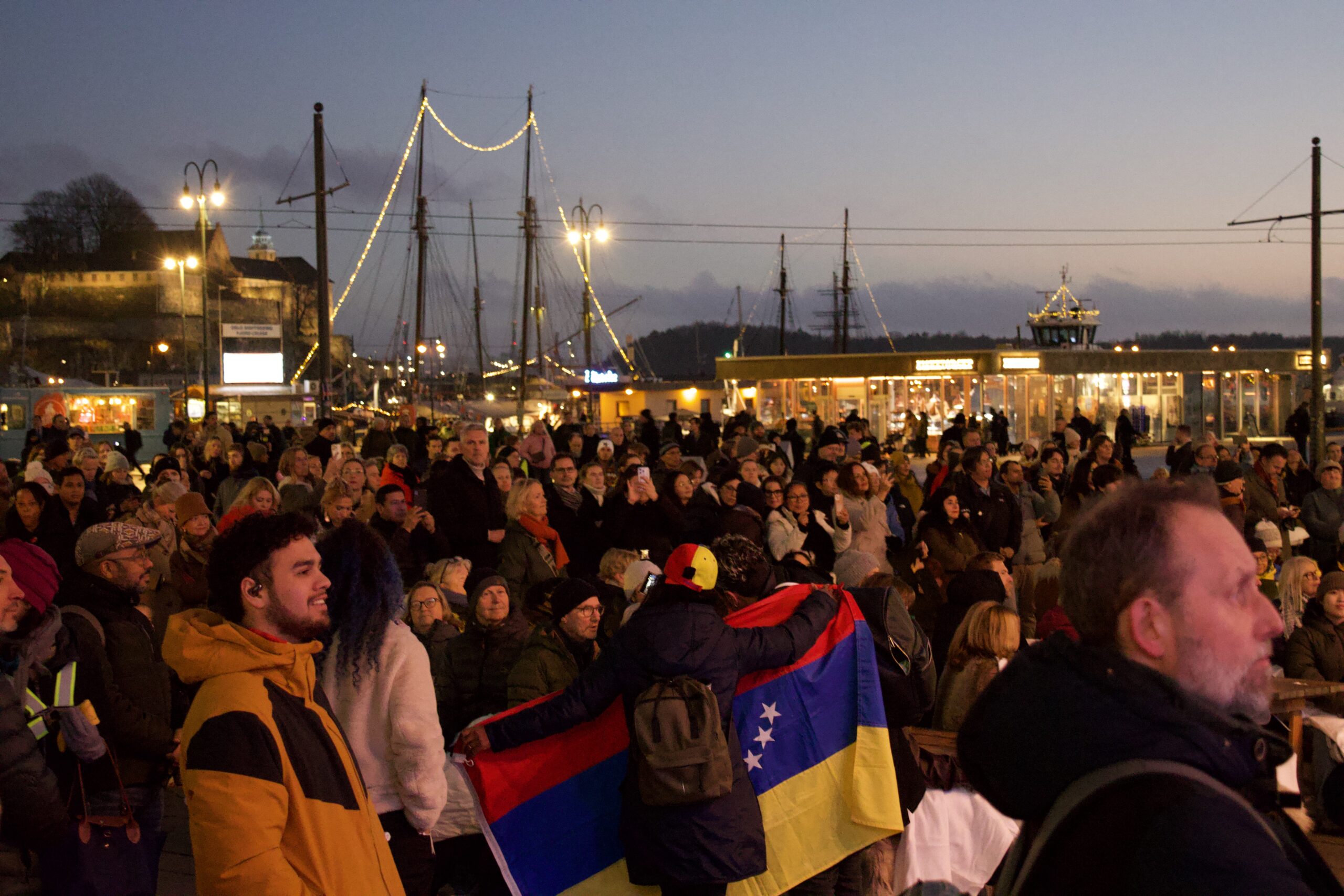
As the day progressed with still no sight of Machado herself, and despite the cold December weather in Oslo, more and more people gathered, facing the large screen in the square, to watch the Nobel Peace Prize ceremony speeches.
“This, for me, is like a birthday, it’s a big celebration. We are all excited. I am proud of my country, of María Corina, and of Oslo.” said one woman in the assembly. That sense of collective celebration, of winning the prize alongside Machado, was also visible in the crowd itself: blue, red, and yellow, the colours of the Venezuelan flag, were proudly worn on scarves, necklaces, dresses, and headwear.
The crowd cheered throughout Anna Corina Sosa’s speech, in which she recounted Venezuela’s recent history and highlighted her mother’s efforts campaigning during the 2024 elections. But the crowd erupted even more enthusiastically when Machado’s daughter announced that her mother was on her way to Oslo and expected to arrive within the next few hours.
In his speech, Jørgen Watne Frydnes, chair of the Norwegian Nobel Committee, reflected on Machado’s achievements while drawing attention to the Venezuelan refugee crisis, human rights violations committed by the current regime, and the rise of authoritarianism. These remarks were framed by a broader question: “Why is it so hard to preserve democracy?” The speech also emphasized that democratic movements rarely operate under ideal conditions and that ideological convictions should not take precedence over human solidarity and dialogue. Conversations in the crowd suggested that this comment served as a subtle reference to Machado’s ties to politically divisive figures, such as Donald Trump. Her support for recent U.S. actions in Venezuela, including offshore military operations, as well as her decision to dedicate her Nobel Peace Prize to Trump, has drawn significant controversy. However, these debates were not particularly present in the crowd. Instead, what could be heard were conversations among some attendees who expressed the belief that all Donald Trump wants for Venezuela is peace.
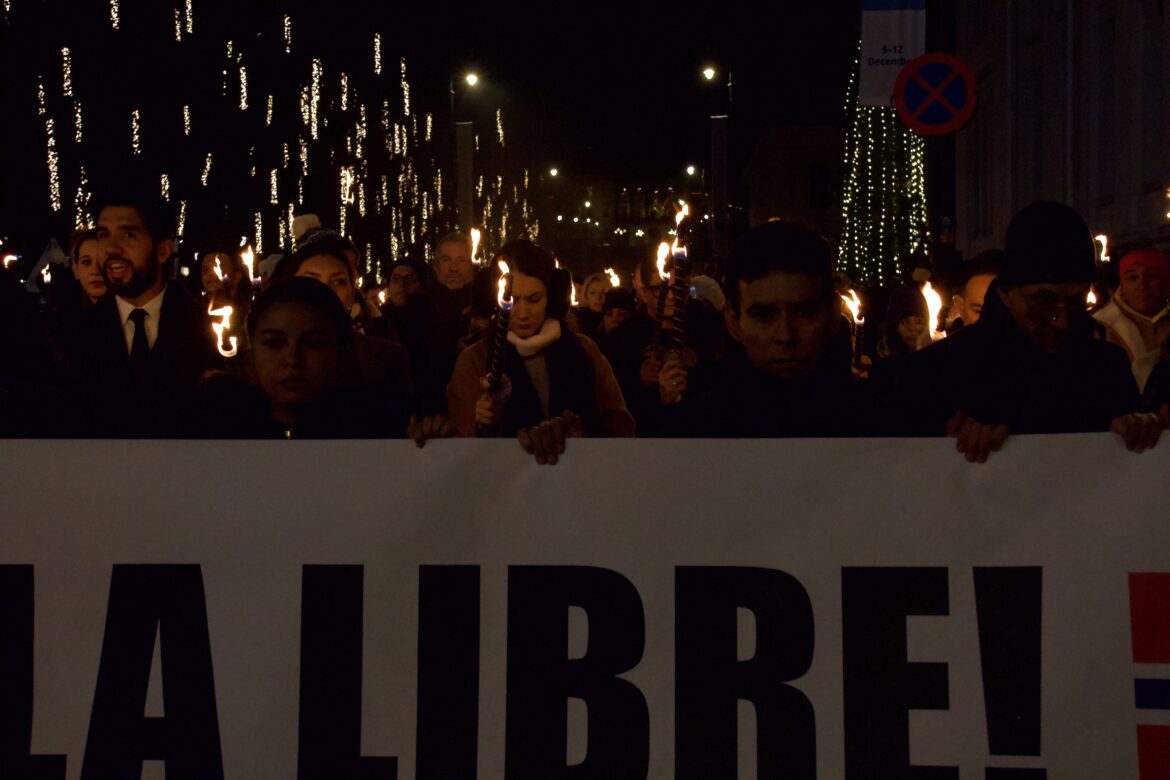
17:45 – The Torchlight Procession
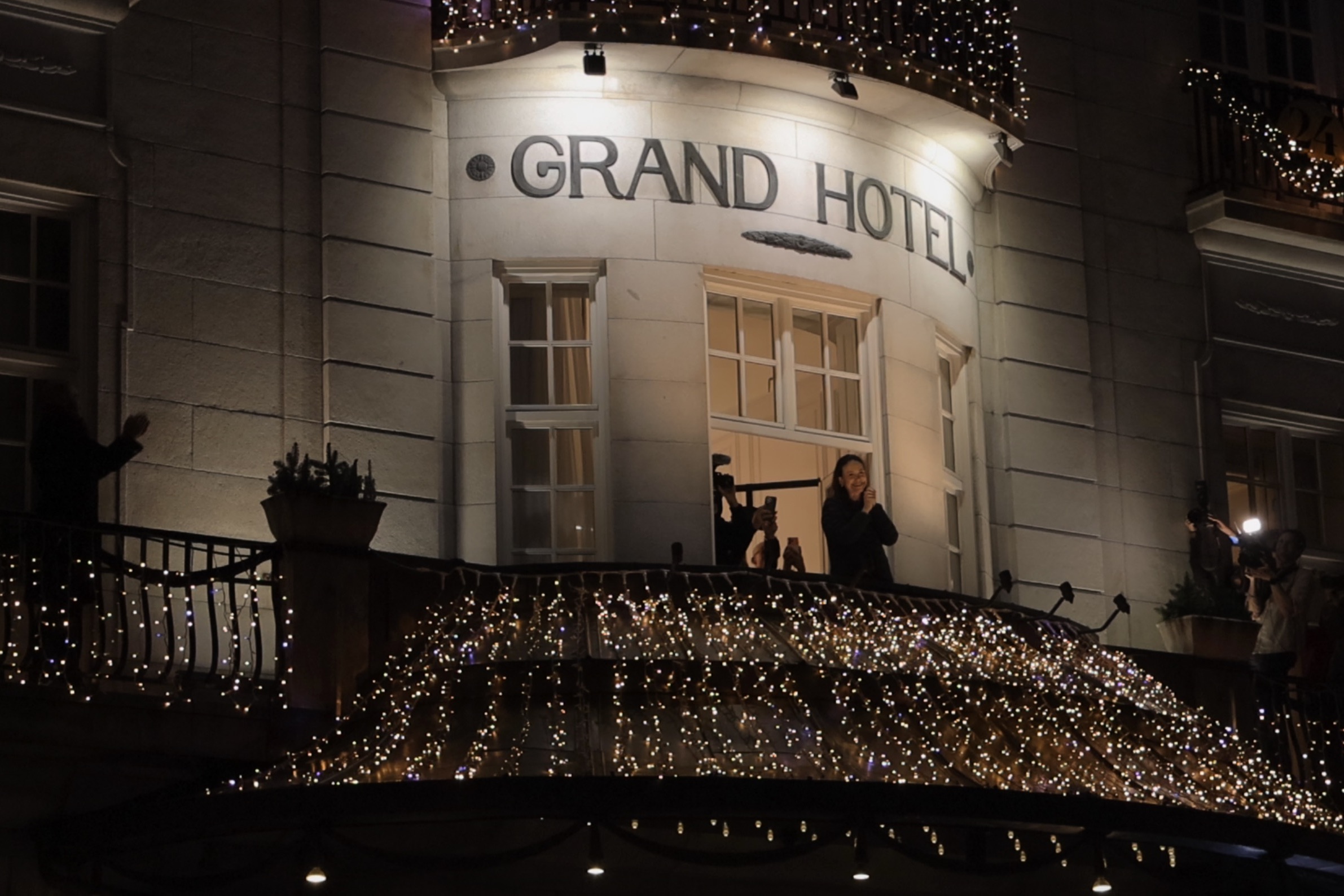
As night fell over Oslo, torches were lit, and a procession began through the streets. Hundreds of people walked together before stopping in front of the Grand Hotel, where the banquet would take place later that evening, and, more importantly, where María Corina Machado was supposed to be staying.
As the torches were extinguished, people began looking up toward the balcony, waiting with hope that she would be the one to conclude the procession. But it was her daughter Anna who appeared instead, taking on for the third time that day the difficult task of standing in her mother’s place. After she waved to the crowd one last time, many people continued to linger around the Grand Hotel, still hoping for another appearance.
20:00 – The Protests
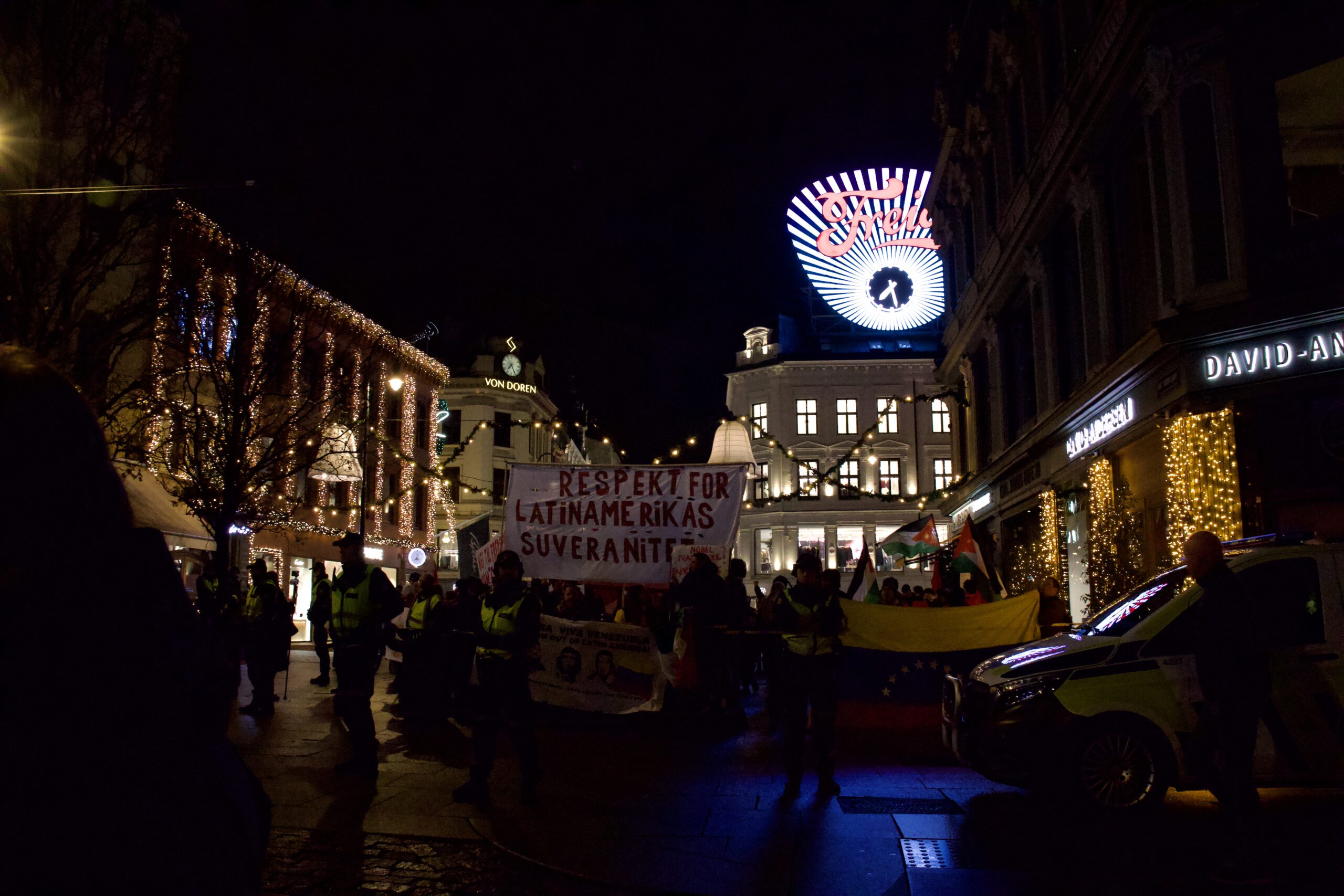
On a smaller street next to the Grand Hotel, protesters stood with flags and banners, engaging in heated exchanges with Machado’s supporters as they walked past. Some had travelled from across Europe, while others were based in Oslo, but all shared the view that Machado should not have received the Nobel Peace Prize, believing her to be neither a figure of peace nor democracy. They pointed to her support for the United States’ actions toward Venezuela, which they describe as violations of international law and expressions of Western interventionism. Machado’s support for Benjamin Netanyahu has also been widely criticized and, for these protesters, stands in stark contrast to the anti-violence and pro-democracy ideals associated with the Nobel Peace Prize.
One protester argued that Machado’s positions amounted to supporting both the mass killing of Palestinians and Donald Trump’s military intervention in Venezuela, undermining Venezuelans’ right to self-determination. Others questioned the narrative surrounding the allegedly rigged Venezuelan elections and emphasized that some level of corruption exists in many countries. In their view, it is Venezuelans currently living in the country who should determine the nation’s future, rather than Western leaders or Venezuelans now living abroad.
2:00 – The Grand Hotel
Journalists and the most fervent Venezuelans were still standing behind the barriers in front of the Grand Hotel, scarcely diverting their gaze from the balcony, all waiting for a sign, a clue that María Corina Machado would appear soon. A man began opening a window, police officers in the street shifted position, camera operators moved into place, and just like that, she appeared on the balcony, waving as the crowd sang the Venezuelan national anthem.
After this long day, only Machado and the few journalists hoping to interview her did not sleep that night. Everyone else went to bed, no doubt with a sense of ease, perhaps dreaming of the future they want for Venezuela.
In January 2026, just a month after the ceremony, the situation shifted significantly as the United States intervened on Venezuelan territory and brought Nicolás Maduro to the United States through military action. Amid these developments, María Corina Machado continued to express her support for Donald Trump, posting on X on January 16: “Together, we will build a free and sovereign Venezuela.” The message followed a meeting in which she presented Trump with her Nobel Peace Prize, a prize she said she wished to share with him, a request the Norwegian Nobel Committee confirmed could not be granted. Despite their meeting and her continued support, Trump has so far declined to endorse Machado as a potential successor to Maduro, arguing that she lacks sufficient domestic support in Venezuela.
Reactions within civil society have been mixed. While some celebrated Maduro’s removal, many others, particularly within Venezuela, expressed apprehension about the future and concerns for their safety and economic stability. Critics also condemned what they see as a violation of international law by the United States and questioned Trump’s intentions, particularly regarding Venezuela’s oil resources. As events continue to unfold, developments in Venezuela will be key to understanding the country’s political trajectory and its broader regional consequences, with significant implications for civilian populations.
Edited by Justine Delangle
Disclaimer: This is an article written by a Staff Writer. Catalyst is a student-led platform that fosters engagement with global issues from a learning perspective. The opinions expressed above do not necessarily reflect the views of the publication.

Ambre Abou Daher is a McGill graduate who earned a B.A. in Political Science and Psychology, with a minor in World Cinemas. She is currently pursuing a master’s degree in Journalism, Media, and Globalisation, where she continues to deepen her interests in human rights, geopolitics, and the regional politics of the Middle East and North Africa (MENA).