
Amidst the various staggering developments that have dominated the news cycle in just the first month of the new year, a quiet storm has been brewing right under the noses of the world’s great powers. Although the conflict in which it takes place is nothing new to global geopolitics, the changes that have taken place are like anything ever seen thus far.
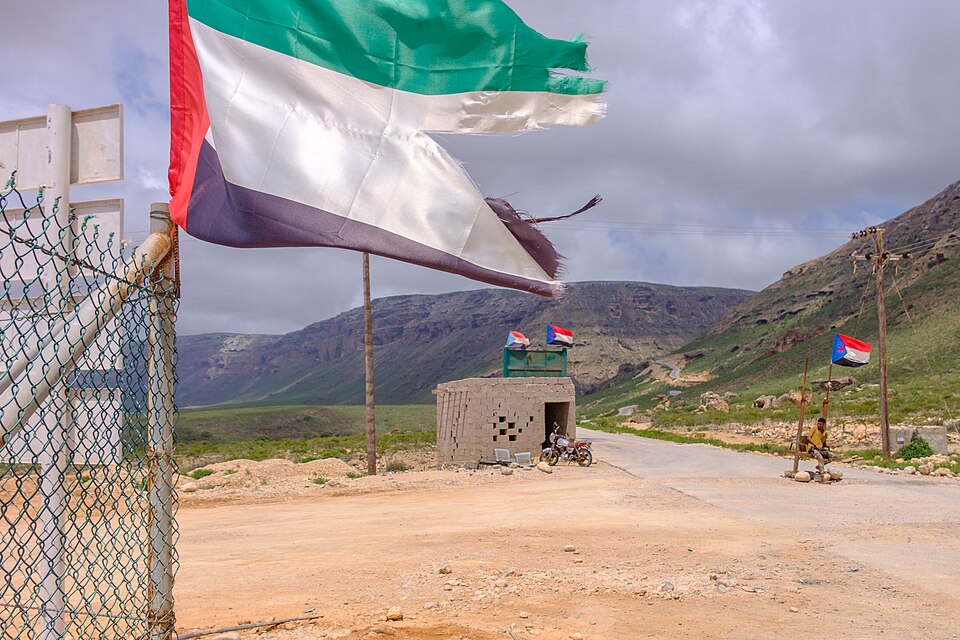
The civil war in Yemen (or more properly, the Second Yemeni Civil war) has been raging since 2014 when rival factions in the nation’s government clashed and began a full-scale battle for sovereignty, with both the Houthi rebels and the internationally-recognized government (IRG) claiming to be Yemen’s rightful governing body. In 2017, a secessionist movement known as the Southern Transitional Council (STC) captured most of Yemen’s south with help from the United Arab Emirates, while Saudi Arabia tried desperately to support the IRG and continue the fight. Despite frequent skirmishes, the lines of control have remained stable for years with no major changes. In short, Iran supports the Houthis as part of their anti-Western “axis of resistance,” Saudi Arabia supports the IRG against them, while the UAE assists the STC. Along with these three major players, terrorist groups such as al-Qaeda have conducted attacks and taken some territory for themselves.
For the past few years, the IRG and the STC, with their respective Saudi and Emirati support, have been largely united against the threat of the Iran-backed Houthis, turning the three-sided war into more or less a two-sided one. However, the STC suddenly turned on the IRG in December 2025, launching an operation that took control of most of its territory as well as the great majority of Yemen’s proven oil reserves. Seen as a complete surprise and an equally striking campaign accomplishment, it was undoubtedly a success for Emirati interests in the region. In late December, the Royal Saudi Air Force began conducting strikes on alleged shipments of Emirati weapons, and the IRG announced a state of emergency as well as an order from the IRG for all Emirati forces to withdraw from Yemen. Not long after, on January 2nd, 2026, an IRG counteroffensive began with Saudi air support, cutting through STC gains like butter, rendering them fully defeated a week later. Their quick gains were simply a paper tiger, and the retaliatory actions against it cost the UAE its whole stake in Yemen’s future.
But what now? The IRG now controls the majority of Yemen’s territory when viewed from a strictly geographical standpoint, but the true picture is drastically different. The Houthis, despite seeming boxed in and surrounded in the northwestern corner of the country, nevertheless have 70 to 80 percent of Yemen’s entire population under their control. Furthermore, they maintain a robust armed presence of around 350 thousand troops, thanks in part to their support from Iran and their hardline stance against Israel. The Houthis are very well armed as well as being quite well trained, evident by their disruption of shipping activities in the Red Sea. Although they allegedly bolster similar troop numbers, even more when put together with active militias, the Houthis remain functionally more powerful. Considering Saudi Arabia to their north, the Houthis are surrounded from the north, south, and west, with the Red Sea to their east. It may seem as if they are lodged in place, about to be subjected to an onslaught by the IRG now that the STC is gone, but that may not be the case. Houthi forces are much better organized than their government counterparts, and so even if a theoretical full-scale offensive was launched, it is probable that it would only serve to weaken IRG forces. Not only would the Houthis likely hold the line, but they would also be able to then launch a counteroffensive of their own should the IRG exhaust their own capabilities trying to break through.
Yet the Houthis are not invincible, and most of the support for their impressive armaments and abilities comes from Iran. If, let’s say, Iran were weakened to the point where they could no longer adequately support the Houthis, they would be in deep trouble, especially with the Saudis poised on their doorstep. Recent anti-regime protests within Iran have left the country largely exposed, and their militant allies throughout the region to fend for themselves until the “king on the chess board” recovers from its internal ailments. The Houthis and their ability to maintain an everlasting, sizable, and dangerous presence in a key strategic location have served as a major exception to most of Iran’s “axis of resistance” crumbling in recent years. Still, former members of the axis, equally as powerful as the Houthis, have since been taken out of the equation. In 2024, a relentless and indiscriminate Israeli air campaign in Lebanon rendered the notorious Hezbollah militant organization largely dead in the water. Not long after, Bashar al-Assad’s regime in Syria was taken down by a group of rag-tag rebels who came out of nowhere and swept through the entire country in less than two weeks, despite assumptions that Assad’s forces held a massive advantage. The point is that there are examples – both from not very long ago and from not very far away – that an organization like the Houthis could be broken by an entity such as the likes of the IRG, especially if Iran continues to wane in power.
But as is usually the case in the Middle East, nothing is ever guaranteed. Iran’s theocratic regime could very well fall, and the Houthis could continue with business as usual. Despite damning comparisons, no two situations are nor ever will be the same. At the time of writing this article, the Emiratis remain expelled from Yemen, with just the Saudi-backed IRG and the Iran-backed Houthis remaining as the sole two major factions. As has been the case with various conflicts around the world, nobody can truly anticipate what will happen next. Anything is possible. What is known, however, is the situation in Yemen that we face now in the present. The UAE, in its push for power across the region, has been dealt a big defeat, leaving the Saudis facing the Iranians alone. It is a statement that displays both power and prestige at its finest in a brute force method. It is too early now to tell what the ramifications of this could be. The Iranians are the weaker backer with the stronger proxy, while on the other hand, the Saudis are the stronger backer with the weaker proxy. It’s not just about who breaks first or who gains the upper hand, but how the broader circumstances of the whole situation sway luck in one’s favor or another. The real deciding factor will be what decisions are made now in this environment while it still exists.
Edited by Alexandria Alikakos
This is an article written by a Staff Writer. Catalyst is a student-led platform that fosters engagement with global issues from a learning perspective. The opinions expressed above do not necessarily reflect the views of the publication.

Oliver “Ollie” Scott-Hansen is an undergraduate student at McGill University studying history and Russian language, hailing from just outside New York City, yet maintaining similarly strong ties to his familial heritage in north and central Italy. He joined the Catalyst team in Fall 2024 as a staff writer, something he enjoys doing as a hobby as well. With a particularly vested interest in Eastern Europe, the post-USSR world, and the Russo-Ukrainian war, coupled with his various connections throughout the global international relations space, Ollie reports on issues throughout the world that mostly center around key geopolitical developments in contentious places mostly involving war/conflict, and domestic affairs within the United States. He has experience mainly reporting from Telegram, carefully analyzing the Russian Invasion of Ukraine through his updates forum there, but also spends considerable amounts of his free time glued to maps and statistics trying to make sense of the crazy world that surrounds our day-to-day lives.