
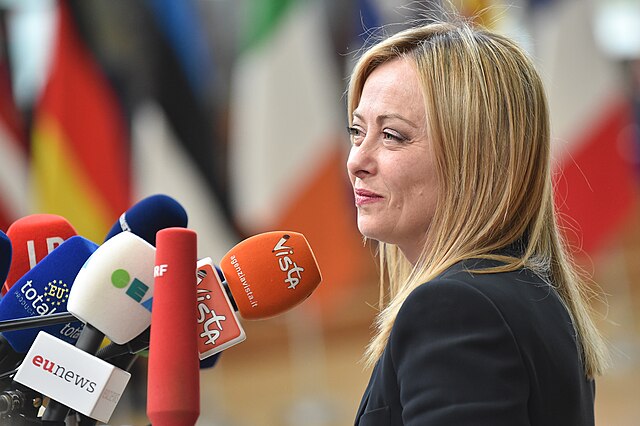
Since 1948, the average duration of an Italian government has been 16 months. However, Prime Minister Giorgia Meloni’s right-wing government, anchored by her national conservative party, Fratelli d’Italia, is already the third longest-serving in the history of republican Italy, ushering in a rare period of continuity. Since 2022, the Meloni government has been pursuing an ambitious reform agenda, with several of these reforms reaching beyond minor individual policy changes and instead pointing toward a broader effort to reshape key aspects of the Italian state. Three reforms in particular highlight three spheres of change, each tied to a fundamental question within Italian society: who belongs, who judges, and who governs. Such questions are reflected in the March 2025 Law No. 74/2025 (jus sanguinis), the March 2026 “Nordio Reform” Referendum, and the proposed reform to Italy’s electoral system.
Citizenship: Who Belongs
Law No. 74/2025, also known as the Tajani Decree and enacted on March 28 of last year, is grounded in Italy’s jus sanguinis, meaning blood right to citizenship. This decree drastically shortened the number of generations that can separate one from their Italian ancestor in order to claim citizenship; specifically, it restricted the ability to claim citizenship to those with an Italian parent or grandparent. This change marks a sharp departure from Italy’s historically accessible and more inclusive approach to citizenship, in which individuals could claim citizenship by demonstrating an uninterrupted line of descent from an Italian-born ancestor who was alive after Italian unification in 1861. The process was nuanced and complex, requiring extensive verified documentation, legal navigation, and coordination with the Italian consulate, but it enabled millions abroad to claim Italian citizenship nonetheless. In fact, the number of Italian citizens living abroad increased by 40 percent between 2014 and 2024, jumping from 4.6 million to 6.4 million. In Argentina alone, 10,000 applications were processed in 2023, and an additional 20,000 were processed in 2024—a 150% increase in one year. As a result, Italian consulates became backlogged with applications, as each case required verification of apostilles, translations, document authenticity, and an unbroken chain of lineage.
The government has justified the 2025 reform on two principal grounds: administrative pressure and the integrity of citizenship. In defending the Decree, Italian Foreign Minister Antonio Tajani argued that “citizenship cannot be automatic for those who have an ancestor who emigrated centuries ago, without any cultural or linguistic ties to the country”, and the stated objective of the reform is to ensure a more meaningful connection between citizens and the state.
However, a court case was brought against the reform by the Court of Turin, citing various constitutional concerns, such as violations of Article 2 (the protection of fundamental rights), Article 3 (equality and reasonableness), and Article 22 (deprivation of citizenship for political reasons). Specifically, these objections suggested that the removal of the pathway to citizenship arbitrarily deprives people of citizenship, invokes unequal treatment toward identical cases, and that the reform is politically motivated rather than logically justified.
The Constitutional Court declared the accusations unfounded, and the law now stands as Italy’s citizenship policy.
Judiciary: Who Judges
Next, Italy recently voted on the Nordio Reform, a proposed judicial reform in a constitutional referendum on March 22–23, 2026, which was voted down with 54% of voters voting no, and 46% voting yes, on a 60% voter turnout. The reform would have separated the career paths of judges and prosecutors, who currently follow the same career path. In addition, the reform would have prevented judges and prosecutors from switching roles, something that only 1% of serving magistrates had done between 2022 and 2024. Furthermore, the reform aimed to reorganize the body responsible for regulating judicial careers, the High Judiciary Council, and separate it into two different bodies, one for judges and one for prosecutors. This would have seen the selection mechanism to be a part of the oversight committees become a lottery, instead of the current system of selection by one’s colleagues. In this proposed lottery, two thirds of the nine members of the oversight committee would be magistrates, and one third would be lay members – legal experts nominated for the lottery by parliament.
Supporters argued that separating these careers would strengthen impartiality, creating a clearer distinction between those who prosecute and those who adjudicate. Prime Minister Meloni stated after the referendum loss that it was a “wasted opportunity to modernize Italy”. The reform is also linked to long-standing claims of a clear judicial left-wing bias by figures such as former Prime Minister Silvio Berlusconi, who said that elements of the judiciary “attack and seek to eliminate their political adversaries” and Justice Minister Carlo Nordio, who said that the reform would correct a “para-mafia mechanism” operating within the judiciary.
While the separation of judicial and prosecutorial careers itself generated relatively limited opposition, the most controversial aspect of the reform was the change to the oversight committee selection process, which Le Monde holds “did not respond to…structural dysfunctions. By targeting governance rather than the day-to-day functioning of the courts, it appeared disconnected from the real expectations of citizens and businesses”.
Elections: Who Governs
The most far-reaching of the proposed changes is an electoral reform aimed at reshaping how political power is distributed. The reform would see direct election for the Prime Minister, and introduce a system that guarantees the winning party or coalition a stable parliamentary majority, provided it reaches a threshold of around 40 percent of the vote. If no coalition reaches 40%, a run-off would be held between the top two blocs, provided both exceed 35%.
This would represent a significant shift from Italy’s current system, which often produces fragmented parliaments and coalition governments. Under the proposed system, the winning party would be granted a majority of seats, allowing it to govern with greater stability, and the official opposition would also be guaranteed a number of seats to protect its influence.
Supporters of the reform, including right-wing populist party Fratelli d’Italia, the centre-right Forza Italia, and Meloni herself, argue that such changes are necessary to address Italy’s long-standing issue of political instability. They contend that a guaranteed majority would enable governments to implement policies more effectively and complete full terms, reducing the potential for legislative gridlocks by ensuring that a majority exists in the government.
The Democratic Party – opposition to Meloni and this reform – argued that “the move is politically motivated, accusing the government of “fearing defeat under the current electoral system” and “changing the rules of the game without any real debate with the opposition”.
Italy stands at a significant institutional crossroads. These reforms, while addressing different areas of policy, collectively raise broader questions about how the country defines belonging, structures institutions, and organizes political power.
Supporters view them as necessary steps toward a more stable and efficient system, while critics see risks to representation, independence, and balance. As these reforms move forward, their significance lies not only in their individual outcomes but in the wider debate they have sparked about the future direction of the Italian state and how it is redefining policy on who belongs, who judges, and who governs. These recent developments in Italy raise the question – how should the Italian government foster progress and redefinition, and are they on the right path?
Edited by Marina Gallo
This is an article written by a Staff Writer. Catalyst is a student-led platform that fosters engagement with global issues from a learning perspective. The opinions expressed above do not necessarily reflect the views of the publication.

Owen Roberts is a first-year student at McGill Unviersity pursuing a B.A. in Political Science. Originally from the United States, he has lived most of his life in Australia and Toronto, Canada. As a writer, he is interested in international relations, American and European politics, and political culture.