
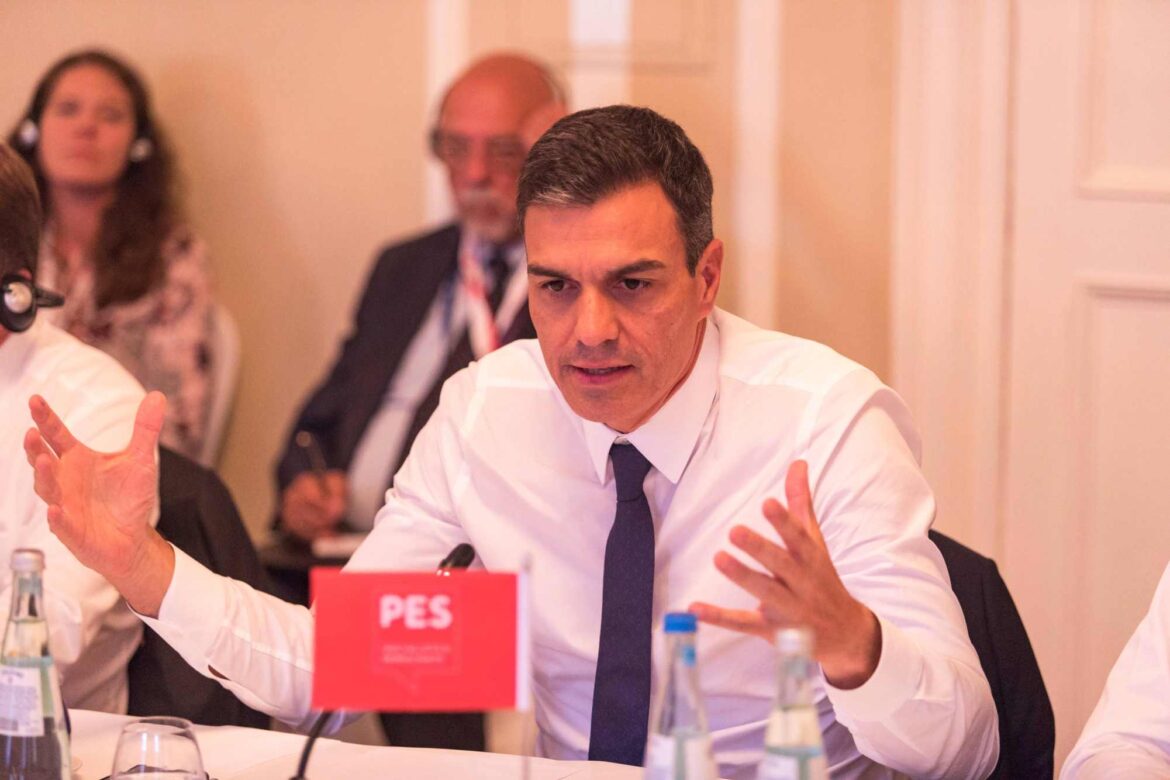
The Prime Minister of Spain, Pedro Sánchez, has recently risen to the forefront of the global arena due to his interactions with Donald Trump. Sanchez has stood up to Trump against the use of Spanish military bases. In a speech on March 4th of this year, he said, “We are not going to be accomplices to something that is bad for the world, simply because of fear of reprisals from some.” Trump has said in response that the U.S. could just “fly in and use [the base]” if it wanted to. Spain was the only NATO member to object to spending 5% of its budget on defense, with Sánchez saying it would be “incompatible with [their] welfare state and worldview.” Both the EU and French President Emmanuel Macron have expressed their support for Sánchez following this exchange. When Trump threatened to cut off commercial relations, the EU said it was ready to react to defend the interests of its member states.
Spain is now leading the global opposition to Trump, and has amassed significant support for doing so. However, this view on the Spanish Prime Minister is not shared by his own citizens. Opinion polling from January of this year shows Sánchez is seen unfavourably by 65% of respondents, with only 34% holding a favourable view. So what gives?
Sánchez’s party, the Spanish Socialist Workers’ Party (PSOE), is currently facing two corruption scandals, one of which began on April 7th. Sánchez was elected in 2018 after his conservative predecessor was removed by a vote of no confidence due to corruption allegations. He controls less than half of the seats in parliament. He has not passed a budget since 2022, and his party lost one-fifth of its seats in the regional chamber. On January 27, Sánchez’s government issued a decree that gave an estimated 500,000 undocumented migrants eligibility for temporary residence permits if they could prove they arrived prior to December 2025 and had lived in Spain for a minimum of five months. While this policy is said to have a limited impact on the economy because it does not introduce anyone who has not been residing in Spain, it is unpopular among Spaniards opposed to immigration. In February, an anti-immigration party, Vox, doubled its seats in a regional election in Aragon, increasing to 14 from 7.
Amid controversy at home over his immigration policy, Sánchez has taken to focusing on the international stage. He published a piece in the New York Times on February 4th about the importance of migrants for the economy as well as one in the Economist on March 6th about why he is opposed to the war in Iran. Columnist for El Confidencial, González Férriz, argues that he has sought to confront Trump due to his unpopularity in Spain. But is this method working? The percentage of favourable respondents in the January polling increased by 4 points between December and January. With general elections coming next year, there is some time before it will be certain.
Edited by Gita Kerwin
This is an article written by a Staff Writer. Catalyst is a student-led platform that fosters engagement with global issues from a learning perspective. The opinions expressed above do not necessarily reflect the views of the publication.

Kendall Fagan is a third-year student at McGill University currently pursuing a BA Honours in International Development and a minor in Economics.