
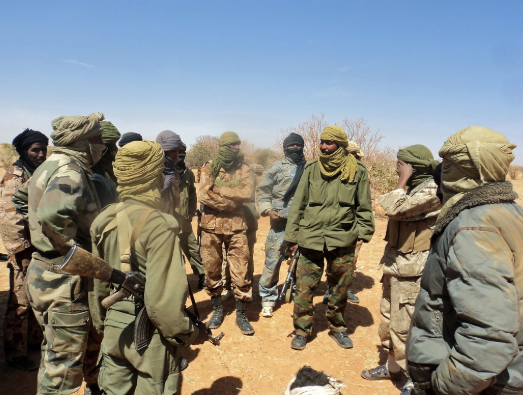
On April 28, 2026, the jihadist group Jama’at Nusrat al-Islam wal-Muslimin (JNIM) announced a strict blockade of Bamako, Mali’s most populous and protected city, effectively cutting off the capital city from the rest of the country. The blockade followed months of intensified fighting and came just days after the assassination of Defence Minister Sadio Camara. While Mali is no stranger to security crises, local politics have become increasingly turbulent in recent years, with two back-to-back military coups in 2020 and 2021 led by the now President Assimi Goïta. JNIM’s attacks expose a deep irony in Goïta’s government: while it rose to power on the promise of security, it now finds itself increasingly unable to mitigate civil unrest.
Context: A Capital under Siege
The siege of Bamako marks an escalation of existing tensions in the region. Following the 2021 coup and the establishment of Colonel Assimi Goïta‘s junta, internal divisions deepened. A fragmented military, coupled with widespread distrust of the government, created a power vacuum leading to a rise in insurgency. In this context, Tuareg separatist groups and jihadist branches (notably JNIM, an Al-Qaeda affiliated coalition operating in West Africa and the Maghreb) allied, launching a coordinated offensive on several key cities and military bases across the country.
Following the announcement of the blockade on April 28, insurgent groups have attacked key transport routes leading into Bamako, disrupting civilian traffic and commercial supply lines. Many passengers were stranded in their vehicles along the Bamako-Kéniéba highway. The local press also reported instances of civilian violence, including the kidnapping of multiple travellers and the burning of dozens of fuel convoys. The immediate effect of the siege was near paralysis. Road closures severely restricted access to and from Bamako. In a landlocked country, supply routes such as the Dakar-Bamako corridor are essential to sustaining the region. With supply chains cut off, access to fuel, sustenance, and essential health services is severely limited for civilians. The resulting surge in prices, now classified as economic warfare, placed immense pressure on Bamako’s limited resources and significantly affected residents’ livelihoods.
Furthermore, the security crisis resulting from the blockade led to additional political instability in Mali, exhausting an already fragile regime. Experiencing the economic effects of the siege, Malian civil society raised concerns regarding the regime’s competence and ability to respond to the crisis. The crisis, in fact, is not seen as an isolated occurrence but rather a continuation of a broader trajectory of institutional decline, pointing to a pattern of structural weakness in local governance. Breaches in security further undermined the regime’s local credibility. For example, the assassination of Sadio Camara was a significant blow to the regime and its followers. The government also suffered significant territorial losses to insurgents, and ongoing military confrontations pushed the junta into a defensive position.
The AES Experiment
For many, Bamako’s blockade is the direct result of leadership failures in the region. Mali, along with Burkina Faso and Niger, underwent a significant shift in governance that coincided with the military coups of 2020 and 2021. The region of West Africa is more broadly designated as a “coup belt,” referring to the surge in coups d’état that has plagued Sahelian politics. However, the three states follow a distinct pattern of governance known as “strongman leadership,” in which authoritarian leaders, often with military backgrounds, sustain legitimacy through military and popular support. By leveraging points of general discontent, Mali’s Prime Minister General Abdoulaye Maiga—along with Burkina Faso’s Ibrahim Traore and Niger’s Abdourahamane Tchiani—garnered mass public backing, even bordering on adoration. They promised to resolve issues such as economic stagnation, civil unrest, and state weakness that had been unaddressed by previous administrations. This strategy proved highly effective in drawing support from disillusioned youth who make up a significant share of their support base.
In 2023, Mali, Burkina Faso, and Niger formed the Alliance of Sahel States (abbreviated to AES, following its French appellation) initially as a military pact and later evolving into an economic confederation. The AES aims to strengthen mutual defence and identifies itself as opposed to Western countries, as well as to its neighbouring West African states, which it deems too reliant on European support. Instead, they align themselves with Russia and its interests. In return, their Russian ally provides drones, aircraft, and weapons for their counterinsurgency campaign. Domestically, the AES states employ similar strategies to undermine democratic institutions, such as silencing journalists and trampling on freedom of the press.
Beyond Bamako
The current blockade of Mali’s capital city highlights the shortcomings of the Sahel’s incoming leaders. Mali’s concentration of political agency within a limited elite resulted in regional and ethnic grievances going unaddressed, leading many to turn to separatism as a last resort. Most notably, Tuareg minorities have, over the years, seen themselves stripped of autonomy over resources and political standing, further driving the separatist movement and leading to the current crisis. The community, a nomadic Berber group originating from North Africa, has long raised grievances regarding exclusion from power by the dominant parties, collateral damage in counterterrorism operations, and, more recently, a strain on their pastoral lifestyle due to desertification.
Mali’s inadequacy in managing the crisis further points to its leadership limitations. While the regime has historically justified its rule by assuring political and economic stability, it consistently fails to deliver on these promises. For example, an overwhelming focus on defence has left concerns about welfare and social services unaddressed. Ironically, despite paying limited attention to these issues, the AES juntas rely on Pan-African and, at times, socialist rhetoric to legitimize their rule. Similarly, many contend that the regimes superficially utilize anti-Western sentiments to garner popular support rather than productively addressing the economic and political legacies of colonialism in the region.
Looking Ahead: The Future of the Sahel Region
Political scientists describe the AES’s shift in governance as a flagrant instance of democratic backsliding: it reflects a shift away from democratic sovereignty and towards military authority as a marker of state legitimacy. This heightened focus on security, through the expansion of armed forces, escalates militarization in the region. However, experts warn this expansion may have the opposite effect: rather than strengthening state security, the development may heighten regional geopolitical tensions and pave the way for larger-scale civil conflict. This possibility becomes increasingly likely since, as seen with Bamako’s blockade, one of the region’s greatest challenges is its growing isolation: both regionally, after cutting ties with the Economic Community of West African States (ECOWAS), and globally, after breaking away from France and the Western sphere. Ultimately, the AES alliance’s self-sufficiency has been tested throughout the crisis and will continue to be challenged in the coming years.
Edited by Lou Didelot
This is an article written by a Staff Writer. Catalyst is a student-led platform that fosters engagement with global issues from a learning perspective. The opinions expressed above do not necessarily reflect the views of the publication.

Marie is a third year student at McGill university, majoring in Political Science and History. She is interested in state development, decolonial theory, and humanitarian affairs, and enjoys writing and editing in her free time.