
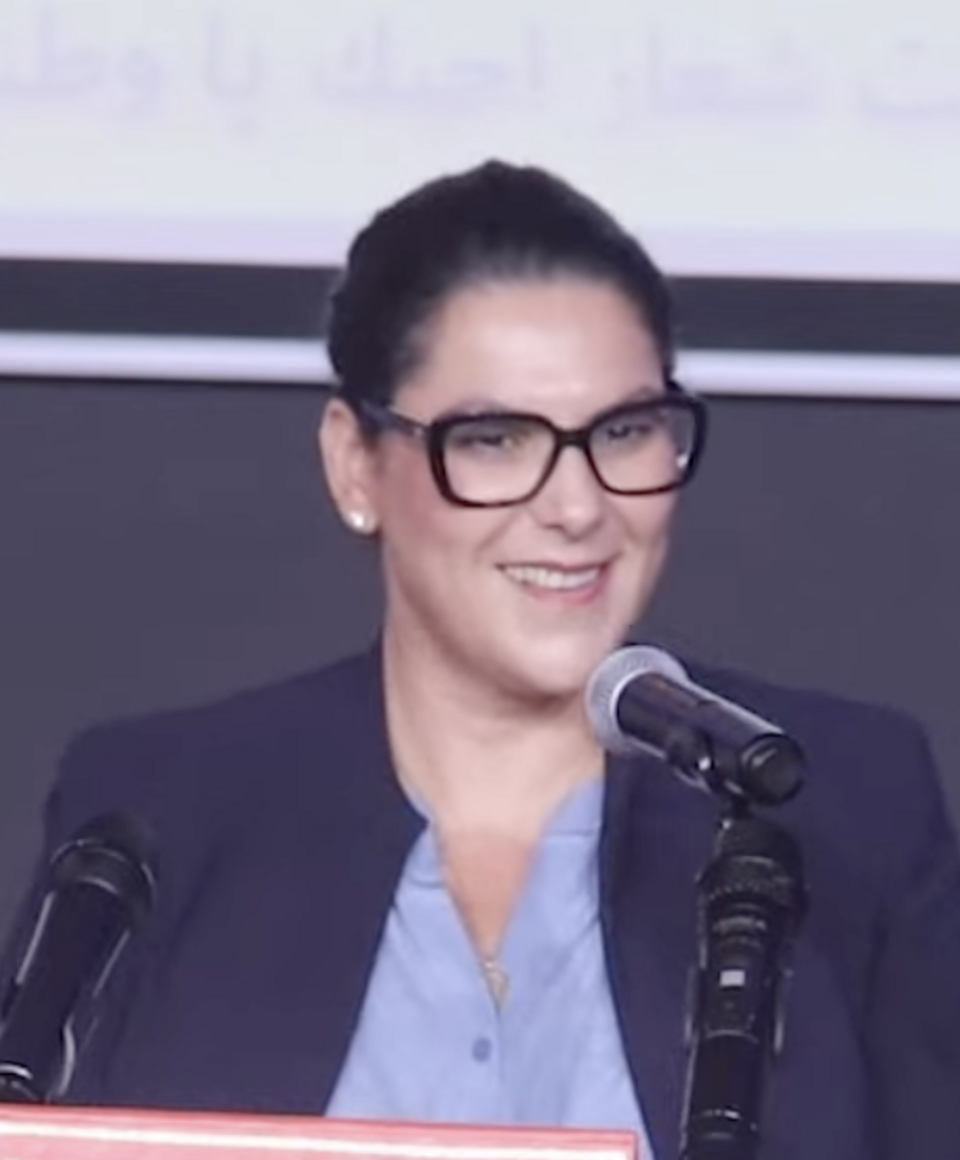
Following the Authenticity and Modernity Party’s (PAM) victory in Morocco’s recent elections, King Mohammed VI appointed Fatima Ezzahra El Mansouri as head of government, marking the first time a woman has held the position in the country’s history. While this development may represent a significant symbolic step forward, a more fundamental question remains: does El Mansouri’s appointment meaningfully change the status of all Moroccan women? The new prime minister’s assumption of office certainly represents a change in the national narrative at the federal level, but, on a broader scale, it constitutes only a limited advancement of women’s rights in Morocco. However, this liberalization is primarily driven by the king and his executive power. It does not necessarily demonstrate the perspective and opinions of the Moroccan population. It also remains unclear whether El Mansouri’s appointment truly represents the crowning achievement of Moroccan feminism and liberalization, or simply reinforces a hierarchical class and gender system through persuasive public relations.
Fatima Ezzahra El Mansouri occupies an extremely privileged socioeconomic position. She is a lawyer who studied in Rabat, France, and the United States. Her experience is far from the average Moroccan experience, much less that of the average Moroccan woman. As of 2024, approximately 48 percent of Morocco’s population attends university, with only 5.4 percent of Moroccan students pursuing their education abroad as of 2023. Women live within an even more constrained reality. Georgetown’s Institute for Women, Peace and Security reports Morocco’s mean years of schooling for women at just 5.3 years. The same tool calculates women’s employment at 21.3 percent and Morocco’s total rank at 0.668 out of 1, with 1 representing total inequality. This number is even lower for Moroccans who study abroad in the United States. Studying abroad in the United States, especially for law, requires vast financial resources and know-how.
However, El Mansouri’s privilege begins before her education abroad. The prime minister comes from a well-established family with considerable political influence. Her father served as a pasha and ambassador, and a relative of hers founded PAM itself. This puts El Mansouri amongst a small class of women born to extremely well-connected, well-financed families. This privileged position within the highest ranks of Moroccan society does not reflect the status of Moroccan women as a whole. In many ways, this appointment does not represent the impressive feminist victory it is made out to be because it does not reflect an intersectional lens. Intersectionality, coined by Kimberlé Crenshaw in 1989, is the “prism for seeing the way in which various forms of inequality often operate together and exacerbate each other.” Ultimately, El Mansouri has benefitted from systems of wealth distribution and nepotism that entrench inequality within Morocco. She holds a class position that places her above the status of the average Moroccan man. While El Mansouri is not the sole beneficiary of Morocco’s system of structural inequality, her participation in such a system weakens the narrative that her appointment is a grand feminist victory.
Nevertheless, for some, the king’s decision may signal a change in women’s status. As the ceremonial and legal head of state, the king speaks for Morocco and shapes its national identity. In the past decade, he has reshaped Morocco’s social agenda, specifically the role and rights of women. This agenda is initiated by the King himself by decree and is usually enacted through reforms to Morocco’s family code, Moudawana. In 2024, the Moudawana was reformed to strengthen women’s rights by expanding custodial mothers’ legal protections, granting women the right to refuse polygamy, and setting the minimum marriage age at 18 years. Alongside social reform, the king also guided the country through major new investments in entertainment, culture, and industry, such as the high-speed rail to Marrakech and the new ports. The legal authority the king holds in lawmaking allows for swift execution of his vision. In this context of cultural and economic change, the appointment of a female prime minister takes on new meaning. It is part of a larger movement, spearheaded by the king, to take Morocco into the future. In this sense, the appointment is significant, as the king views women’s inclusion in government as necessary for the country’s progress. This represents a meaningful step forward for the continent, as Africa has the lowest gender equality scores. El Mansouri’s appointment potentially marks the beginning of a new era in Morocco, one in which Morocco leads the region in industry and equality alike.
The truth of El Mansouri’s feminist victory may lie somewhere between the purported feminist win and the continued elevation of the privileged class. While her class position has allowed her to exist outside of the gender hierarchy, her appointment can still simultaneously signal an important change. To the king’s defence, it is important to recognize that appointing a poor, uneducated, gay woman as prime minister would have been structurally impossible under existing social norms. Therefore, El Mansouri could be the key to opening a pathway to uproot a system that entrenches inequality not just for women but for all of Moroccan civil society.
Edited by Natalia Sodhi.
This is an article written by a Staff Writer. Catalyst is a student-led platform that fosters engagement with global issues from a learning perspective. The opinions expressed above do not necessarily reflect the views of the publication.

Sonia Oulamine is a second-year student at McGill University, currently pursuing a B.A. in International Development Studies with minors in Political Science and Arabic Language. She serves as a writer for Catalyst and has a particular interest in international relations, law, and human rights.