
With recent findings on the detrimental health and environmental effects of fossil fuel exposure, citizens have begun resisting the expansion of industrial projects and bringing their grievances to court over inadequate climate policy.
Australia’s History of Climate Litigation
In Australia, one of the first significant cases to incorporate climate change as a planning consideration emerged in 1994, with Greenpeace Australia Ltd v Redbank Power Pty Ltd (NSWLEC, 1994). The defendant, Redbank Power, sought to construct a new 120-megawatt coal-fired power station in the Hunter Valley, New South Wales. Greenpeace challenged the development, arguing that the power station was unnecessary because demand was insufficient and that it would instead cause a substantial net increase in carbon dioxide emissions. However, the court upheld the development consent, dismissing the appeal because it interpreted existing laws as offering little to no legal basis for choosing climate impacts over development opportunities.
In the years that followed, similar environmental cases, such as Gray v Minister for Planning (NSWLEC, 2006) and Australian Conservation Foundation v Minister for the Environment (FCA, 2016), continued to uphold this precedent of placing industrial priorities above environmental precautions. Only in the last decade have the Australian courts begun to shift toward a more protective response to environmental considerations.
MACH Energy vs Hunter Valley Residents
“Over the past couple of years, one case has dominated the conversation: the highly contested MACH Energy Australia v Denman Aberdeen Muswellbrook Scone Healthy Environment Group. After MACH requested a mine expansion in 2022, nearby residents took their defiance to court, and the case eventually reached the highest level of the Australian legal system.”
The Mount Pleasant Operation
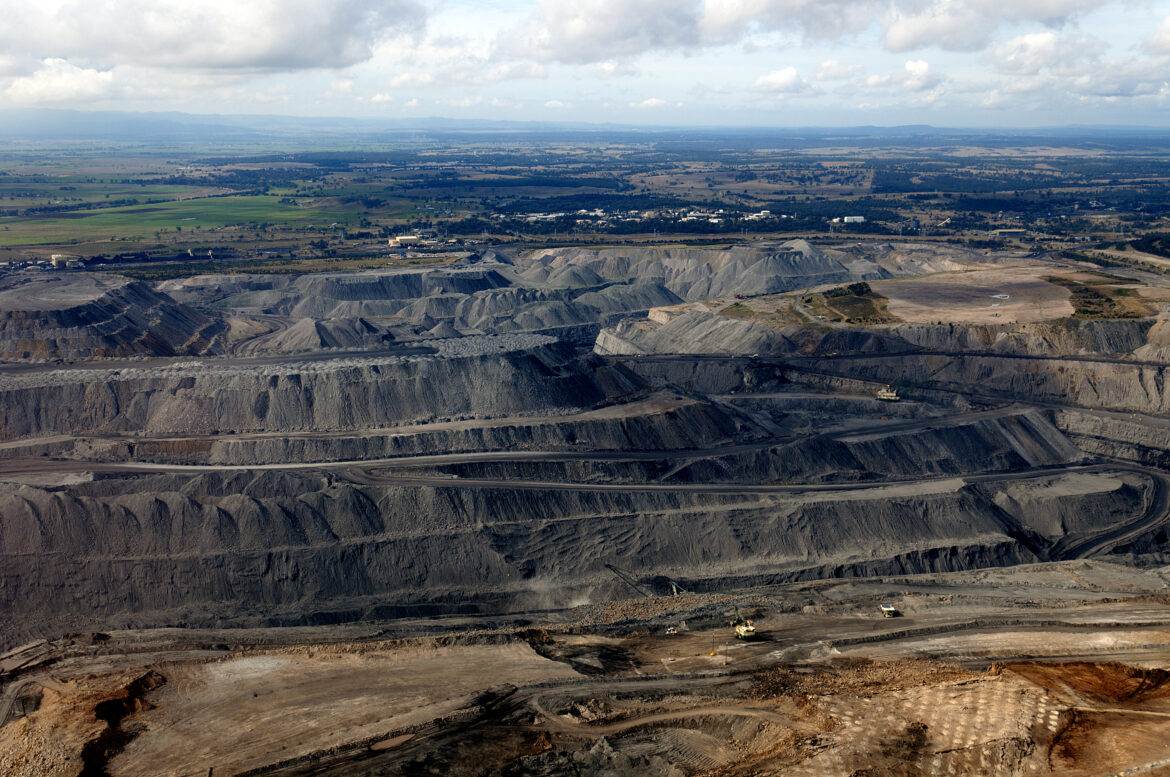
In 1997, the state granted consent to build a large open-cut thermal coal mine in New South Wales, commonly known as the Mount Pleasant Operation. This decision allowed 24/7 open-cut mining of up to 197 million tonnes of coal over 21 years. During the mine’s operation, workers extracted 30 million tonnes, releasing roughly 600,000 tonnes of carbon dioxide into the surrounding atmosphere.
In 2022, MACH energy looked to expand this mine through 2048 and double its extraction output, generating an additional 870 million metric tonnes of carbon emissions, 98% of which would be classified as Scope 3 emissions. Scope 3 emissions are indirect greenhouse gas emissions from a facility’s activities. This distinction matters because it is important to consider all impacts from a potentially harmful facility; in the case of coal mines, direct emissions cover only a fraction of their environmental impact. A far larger share of these emissions comes from burning the coal after it leaves the site, even if that happens overseas. It is important to note both how much the mine emits itself and how many emissions it makes possible.
Mach Energy, which describes itself as being in the business of “developing and operating economical and efficient energy sources, with (a) strong awareness of social and environmental impacts,” has made no significant effort to reduce these emissions and instead aimed to double its existing annual extraction rate from 10.4 million tonnes to 406 million tonnes of coal. Former Australian chief scientist Penny Sackett even estimated that the proposed expansion would rank among “the 650 largest greenhouse gas emitting projects or collective human activities in the world over industries including energy, transport, agriculture, and urban development.”
The Environmental Impact Statement (EIS), prepared for the New South Wales Department of Planning and Environment, estimated that Scope 3 emissions, primarily from burning coal extracted from the mine, would “represent around 0.065% of the global anthropogenic greenhouse gas emissions in 2017.” For a single facility, this percentage is remarkably large, as it means one mine alone accounts for a measurable portion of the world’s annual emissions.
The Response
At the first level, the NSW Land and Environment Court dismissed the case, citing that the Independent Planning Commission (IPC) didn’t need to address specific climate change impacts, because the impacts were global rather than site-specific, under the 1979 New South Wales EPA Act. DAMS HEG appealed this, successfully convincing the Court of Appeal to disapprove the expansion, citing that the planning commission had failed to consider the climate risks adequately. Over the next four years, DAMS HEG continued to fight MACH Energy until the case reached the High Court.
The Final Ruling
Over a five-month trial, DAMS HEG argued that the mine’s planning and approval process failed to comply with multiple environmental protection laws and would result in substantial greenhouse gas emissions. On the defendant side, MACH appealed on three grounds, arguing the Court of Appeal had misinterpreted the planning law that dictates what the IPC must consider when approving a project. In this case, MACH pointed out that the IPC had considered Scope 1 and 2 emissions (direct and indirect emissions from purchased energy), just not the third. Australian courts had historically sided with developers in similar cases, which MACH believed gave it the upper hand.
Ultimately, the High Court ruled that the Planning Commission responsible for approving MACH Energy’s mine expansion had failed to “consider whether to impose conditions to minimize the project’s Scope 3 greenhouse gas emissions “to the greatest extent practicable”, as required by the 2021 State Environmental Planning Policy.” As a result, the High Court declared the approval invalid, halting the proposed development.”
Following this decision, future New South Wales coal or gas projects must consider all upstream, downstream and direct greenhouse gas emissions, propose measures to minimize Scope 3 emissions to the greatest extent, and even consider potential Scope 3 conditions (such as washing coal before exports, limiting exports to only countries with Paris Agreement commitments, requiring carbon capture and storage, and buying carbon offsets).
A Broader Movement
Australia’s position as the world’s second-largest coal exporter makes this case especially important. The director of Johnson Legal suggested the case’s impact “will reverberate around the world,” potentially influencing other countries to reach similar rulings in comparable cases.
This case marks a movement toward rulings aligned with environmental needs, raising the question of whether citizens should be allowed to sue states or large corporations for personal endangerment due to an attributable climate change risk.
Switzerland first explored this in Verein Klima Seniorinnen Schweiz and Others v. Switzerland, where citizens sued the government for insufficient climate policies and emission-reduction targets. What started with a group of elderly women recognizing their exposure to climate-related hazards became the first time an international human rights court ruled that a lack of climate policy violated human rights. In the US, similar cases have emerged, where citizens argue the activities of specific industrial companies (like gas and mining) cause an imminent threat to their health.
Wendy Wales, who helped lead the legal challenge against MACH Energy, put it plainly: “We can’t ignore physics, chemistry and biology…we must live within nature’s limits.” As climate risks grow and the science linking emissions to specific damages improves, courts may increasingly be asked to decide where those limits lie, and who is responsible when they are crossed.
Edited by Emily Nooranbakht.
This is an article written by a Staff Writer. Catalyst is a student-led platform that fosters engagement with global issues from a learning perspective. The opinions expressed above do not necessarily reflect the views of the publication.
