
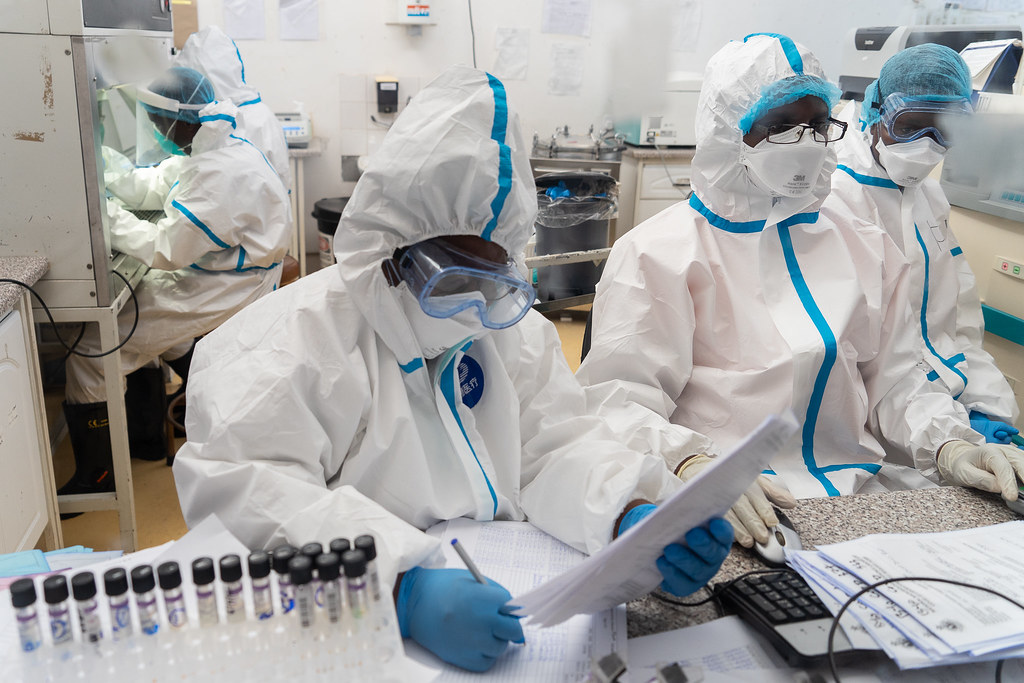
An overview of the United States’ new global health plan, how it works, the consequences other countries face, and why a change in Congress won’t necessarily change anything.
A Brief Overview
On October 1st, 2026, the United States made a major change to how it funds global health. With the new “America First Global Health Strategy (2025),” 36 countries have now signed jointly financed bilateral health agreements with the United States, with large amounts coming from the countries’ own budgets. Miss your payments, and the United States can cut its share. However, funding availability is not guaranteed even if the recipient holds up their end of the deal. This raises questions about the legitimacy and enforceability of the agreements, particularly given that the United States is not legally bound to uphold its commitments, and the administration has already withheld billions appropriated for aid. This raises a further question: will the United States honour its end of the deal, and what are the consequences if it fails to do so?
America’s New Global Health Plan
The America First Global Health Strategy was unveiled in September 2025 as the future of America’s foreign aid program under the Trump administration. It marks a significant shift from previous programs, moving away a predominantly donor-driven approach involving USAID and NGOs toward bilateral government agreements. The aid is co-financed between the United States and the recipient, with places like Botswana providing 80% of the funding themselves. These agreements possess performance benchmarks, which allow the United States to cut aid if certain conditions aren’t met. As of October 9th, 36 countries have signed these bilateral agreements, with US$26.7 billion dollars being promised over the next five years. The nature of the agreements suggests the advancement of American interests as one of its objectives. Although it may be presented as a development initiative, it remains unclear whether its primary motivation is to support developing countries, or to advance American economic and political interests within them.
Why Countries Said No
While deals were quickly made with many countries, there were a few that refused when the United States presented what the aid recipients would have to give in return. In Zambia, negotiations stalled until recently over the fact that the United States wanted cooperation in copper and coal mining in the country. Zimbabwe outright refused over being required to share biological samples and outbreak data, with no clarity on how the information would be used. If this knowledge led to any benefits, such as future vaccines or treatments, Zimbabwe was unsure that the United States would share this information back with them. These are just two examples, but they demonstrate a strategic and exploitative pattern, rather than the claimed life-saving rationale.
Zimbabwe’s Health Crisis
When USAID was slashed in 2025, it caused an increase in many major infectious disease rates, a key one being malaria. Both the number of cases and deaths nearly doubled in the first four months of 2026 without United States support, as research programs, health workers and medical supplies were not readily available. This was supposed to be fixed with a bilateral agreement under the new United States strategy. Because Zimbabwe refused, the country was left without its biggest donor and a weak government ill-prepared to cover the costs. Zimbabwe and other African governments have been calling for “health sovereignty,” meaning less external influence on their own health systems. However, it’s not clear whether these countries can sustain that, or if countries that refuse a United States deal will be left to suffer the consequences on their own. As these countries are critically dependent, the United States can leverage that to demand almost anything from them. This allows them to take advantage of the global health crisis for their own interests, leaving the consequences on the recipient country if they refuse.
Will the United States Uphold Their End of the Deals Already Made?
While the recipient countries have strict commitments on how they must make payments, those commitments are much looser for the United States. In the agreement the United States signed with Nigeria, section 6.8 states, “all MoU activities are subject to the availability of funds, personnel, and other resources”, giving the United States a quick exit from these programs if need be. Funding is already projected to decrease by 29% over the next three years, which raises the question of whether the Trump administration will allocate sufficient resources to fully finance these agreements, or ultimately withdraw from them. With essentially only a handshake agreement, countries must agree to this health plan with little assurance that commitments will be respected, or if the United States will pull funding, as it has done in the past.
Will the Midterm Elections Change this?
The midterm elections are set to be one of the most consequential in contemporary politics. States that haven’t elected a democratic senator in almost a hundred years could flip, and many polls forecast that both the House and Senate will swing back to the Democratic Party. While a Democratic Congress would fight for more foreign aid, it can only appropriate funding for certain projects, not directly give the resources itself. The administration can’t refuse to use the funds, as that would be a violation of the 1974 Impoundment Control Act, but the current administration has and can continue to bypass this. In his current term, Trump has twice used a pocket rescission to cut foreign aid, withholding almost US$6 billion dollars. This is a maneuver where the President requests to rescind or cancel funding close to the end of the fiscal year, leaving Congress unable to allow the full 45 days required for congressional review. This causes the funds to expire, leaving the foreign aid money unspent. When used in 2025, it was the first pocket rescission in almost 50 years, and while the Government Accountability Office (GAO) has declared it illegal, no court has ruled on it. So despite the availability of funds and the prospect of a Congress more favourable to foreign aid, this may not be sufficient to ensure that funds are allocated as intended.
Conclusion
Though the America First Global Health Strategy is meant to be a shift away from traditional donor systems of foreign assistance, it poses more risk to the recipient countries, as funding is not entirely guaranteed under the terms of the bilateral agreements. These uncertainties can’t be eliminated under a Democratic United States Congress, as they lack the ultimate power in distributing money. In recipient countries with healthcare systems that depend on this aid, they can’t afford for the payments not to arrive, but they have no control over whether they will.
Edited by Julia Bolan-Campbell.
This is an article written by a Staff Writer. Catalyst is a student-led platform that fosters engagement with global issues from a learning perspective. The opinions expressed above do not necessarily reflect the views of the publication.
