
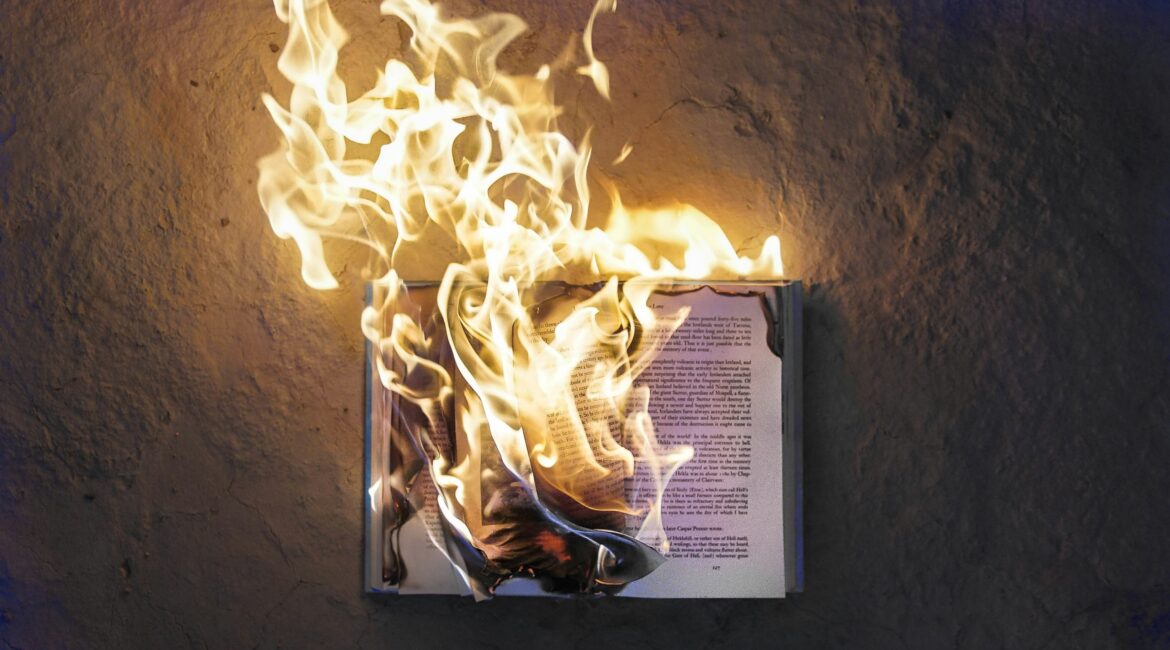
Following the Hamas-led attacks on Israel on October 7, 2023, and Israel’s subsequent military campaign in Gaza, irreparable damage has been inflicted upon the land and people of Palestine. This destruction devastated huge portions of Palestinian society, including academic institutions. Academics, students, and campuses are targeted in a process of systematic dismantling known as “scholasticide,” the intentional targeting of education systems. In April 2024, United Nations (UN) human rights experts flagged a deliberate pattern of destruction of educational infrastructure and warned of the immense harm being inflicted on an integral part of society.
In their April 2024 statement, UN experts reported, 95 professors, 261 teachers, and 5,479 students were killed, while a staggering 625 000 students were deprived of access to education. These losses represent a catastrophic shock to Palestinian students and educators and make learning opportunities within Gaza extremely difficult to reach.
A separate May 2025 report by the UN Independent International Commission of Inquiry documented the January 2024 destruction of the Israa University Al-Zahara campus, rendering it uninhabitable and destroying its museum. That same report described that in November of the same year, Israeli forces told citizens inside the Mahdia al-Shawa secondary school, a building which had been sheltering displaced civilians and receiving aid from the World Food Programme, to exit, then deliberately ignited the building. In a video, two Israeli vehicles are seen leaving the school in flames, a fact which security forces justified by claiming the presence of militants inside the school. This is aligned with a pattern in which Israeli defence forces claim the presence of Hamas militants within empty schools which had been housing citizens displaced by the war. This goes beyond empty schools; the libraries and archives of Gaza that housed Palestinian history and collective memory were not exempt from the bombings. This represents losses greater than books, but an attempt to erase Palestinian identity.
In 2025, the United Nations Educational, Scientific, and Cultural Organization (UNESCO) reported further damage to academic infrastructure. Its November 2025 assessment documented 21 academic institutions across 38 campuses in Gaza, and found that 22 campuses had been completely destroyed while 14 others were damaged. Though these losses are significant, the ramifications extend far beyond physical buildings.
Research by Gianmarco León of Peru points to the long-term consequences of early childhood exposure to conflict. In his research, he found that children exposed to conflict between the ages of two and six years old who missed schooling could not make up for it later in life, leaving lasting gaps in educational attainment. The reconstruction of schools and reenrollment of students can not repair the damage that has been imposed upon young Palestinians. Beyond this, losing early schooling opportunities can limit later educational outcomes. The current generation in Gaza will become the next doctors, engineers, and teachers who serve as pillars of a functioning society and are needed for Palestine’s future. Today’s learning shapes tomorrow’s outcomes. Gaza needs educators and students in positions to teach and learn.
Dr. Ahmed Abu Shaban, a guest professor at McGill from his home university, Al-Azhar University in Gaza, qualified in an interview, “Now, for us as Palestinians, we do believe that universities are not buildings. Universities are about the communities.” Within these communities, education creates opportunity for those with Palestinian identity. “We teach them actually to be Palestinian doctors, Palestinian engineers, Palestinian teachers, who actually reflect this Palestinian identity of the indigenous people of that land”. His sentiments highlight how universities not only provide a pathway for learning, but also foster relationships between generations of students and teachers.
Abu Shaban continues teaching online classes to students in Gaza while at McGill, maintaining his connection to them as best he can. Ultimately, losing these academic spaces disrupts how Palestinians engage with their history and ongoing experiences. To adapt to these difficult times for Palestinian education, Abu Shaban calls for international partnerships between universities to support Palestinian students and institutions in continuing ongoing research and courses. These partnerships would help Palestinian professors and students stay supported and continue training for their future.
The process of scholasticide impacts Palestinian life much beyond just the loss of lecture halls. The destruction of educational life threatens important societal relationships, communal memory, and the promise of a bright future for the next generation. Affecting people of all age groups, the demolition of the school system places an incredible burden on the communities as they attempt to rebuild during and after the war. Thus, revitalizing these academic spaces means also supporting the students and educators who populate them. As Abu Shaban explains, universities are much more than spaces; they are communities. Protecting Palestinian education allows Palestinian people to continue engaging with their history and growing the generations which will form their future.
Edited by Natalia Sodhi.
This is an article written by a Staff Writer. Catalyst is a student-led platform that fosters engagement with global issues from a learning perspective. The opinions expressed above do not necessarily reflect the views of the publication.

Mackenzie Easdon is a third-year undergraduate student at McGill University pursuing a degree in International Development and minoring in Economics. She is particularly interested in current political and economic events.