
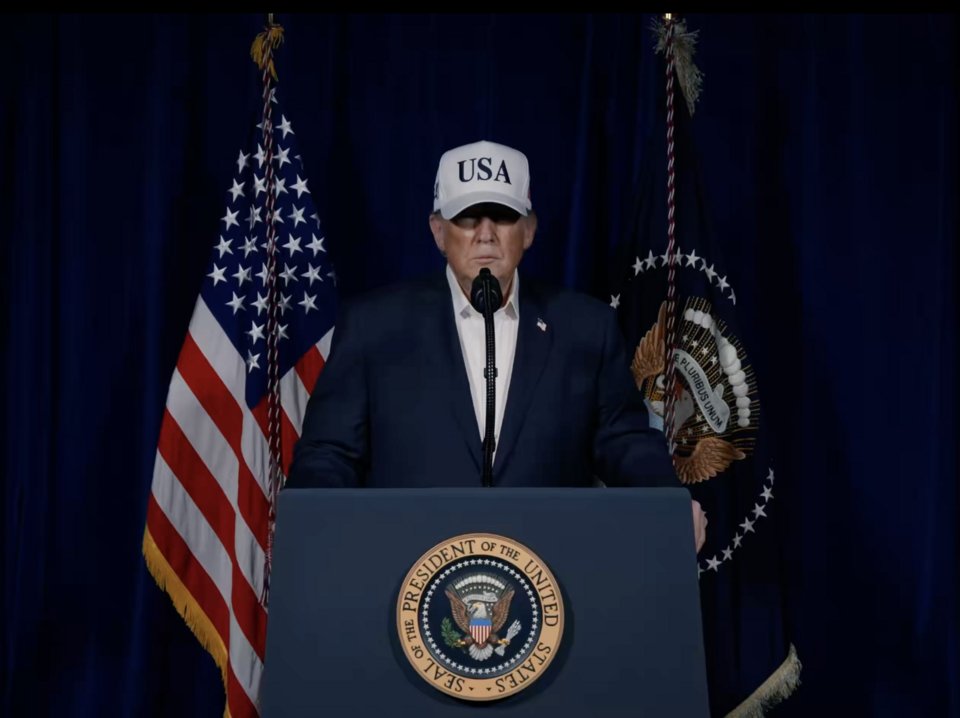
Democrats won in a landslide this past month in the US midterm elections. Both the House and the Senate flipped blue with major wins in Republican strongholds, including Texas and South Carolina. At the time of writing, the race in Mississippi remains uncalled, with Democratic candidate Scott Colom leading by a narrow margin. These results display a dramatic shift from the 2024 elections when Trump was elected, winning 312 of the 435 seats in the House of Representatives.
So what gives? What can explain this massive shift away from the GOP over only two years? Republicans are pointing the finger at the war in Iran for this significant loss. At a rally in Georgia during midterm campaigning, Trump mentioned that despite being told not to discuss the war because “people [were] paying a little higher,” he did not “give a damn.” He said, “We’re making a freaking fortune.” If election results are any indication, this perspective was not well received by Americans.
Vice President JD Vance posted on X on November 4, stating, “the reason we lost is the war.” Iranian officials seem to agree with Vance’s assessment. Iran’s Foreign Ministry spokesperson said that “Americans had sent a clear message and warned Washington against ignoring it.” Trump has reportedly been considering firing US Defence Secretary Pete Hegseth after election night. CBS reported that sources said he was “asking advisers around him and on the phone whether [he] should stay in his job.” Trump even publicly admits that the war was a cause of his midterm loss. Democrats have similar views. Hakeem Jeffries, House Democratic leader, said the midterms were a message that Americans oppose the war and subsequently called on Trump to end it.
Public Opinion of the War
While it is difficult to definitively isolate the reason for the midterm loss, polls show that the public does not support this conflict. A September Reuters/Ipsos poll found that only a fourth of Americans support the war in Iran. The war has caused crude oil and gas prices to soar. The national average for gas rose to US$4.29, an increase from only US$2.98 before the war began last winter. Diesel reached an unprecedented average of $6.35 per gallon. In a country where 92% of households have a car, gas prices have a significant impact.
The Associated Press interviewed Iranians who hoped for the US elections to change US policy toward the nation. It is hard to capture the perspective of these ordinary citizens because of the government’s restrictions on internet use, which prevent media access. Some existing analyses suggest that many Iranians oppose the US and Israeli governments, as well as their own government. However, others believe US intervention could bring about regime change, and because of this, have supported the war. There were strong positive reactions from the public on February 28 when Supreme Leader Ayatollah Ali Khamenei was killed. However, as the war drags on, there is growing concern that the conflict could end without regime change, contributing to lower support for continued intervention. So, while there may be a unifying desire for the conflict to end, many Iranians still hope that US intervention could have a positive impact on their lives.
But even if one attributes American discontent with Republicans to the war in Iran, this cause does not necessarily mean that the newly elected Democrats will have the capacity to end it.
What Power Do the Democrats Have?
On November 4, Chuck Schumer, the Democratic leader of the US Senate, said, “We are going to end the war.” But can he? The United States Congress has the power to influence military spending on Iran through the “power of the purse.” Helima Croft, head of global commodity strategy at RBC Capital Markets, told CBS that this is the “main leverage Congress will have.” Government funding will expire on December 11. If the negotiations continue until Democrats take control of both chambers in January, then they would have substantially more control over next year’s budget. This means that Democrats could prevent new funding for the war from being allocated, and they could also apply pressure by conducting congressional investigations into the Pentagon’s decisions.
What is Still in Trump’s Control?
However, there is a possibility that the president could choose to escalate the war following these results. The Democrats are not in a position to unilaterally stop the war in Iran. Because they currently control fewer than ⅔ of the Senate, they will be unable to override a veto without bipartisan support. To clarify, a substantial proportion of the Republican members of Congress would have to stand with Democrats against Trump to overturn a veto. And Trump has proclaimed that he will become “Mr. Veto” while on the New York Post’s podcast, Pod Force One.
Sanam Vakil of Chatham House, a UK think tank, argues that although Trump needs a diplomatic win, he may hesitate to appear weak. She predicts that there will be increased diplomacy, but also increased military threats in the coming weeks. Essentially, if he chooses to resist the Democrats’ desire to stop the war, he can.
November 19, Trump said that he is “not rushing.” Perhaps he will take the approach of waiting until 2027 to act. There remains much uncertainty in what will happen though, both after December 11, when congressional funding expires, and when Democrats are inaugurated in January.
Edited by Elin Kangarani.
This is an article written by a Staff Writer. Catalyst is a student-led platform that fosters engagement with global issues from a learning perspective. The opinions expressed above do not necessarily reflect the views of the publication.

Kendall Fagan is a third-year student at McGill University currently pursuing a BA Honours in International Development and a minor in Economics.