
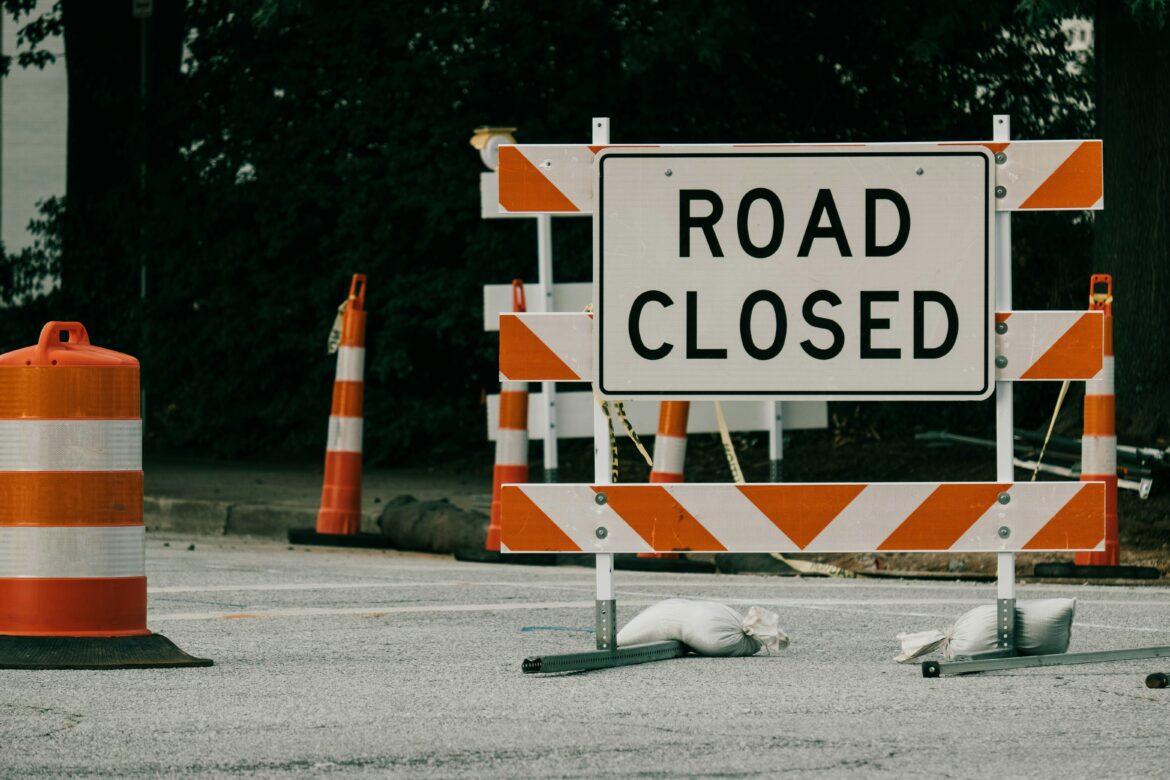
On March 24, 2023, a quiet rural road south of Montreal transformed from the most visible irregular crossing on the Canada-United States border into a dead end. Roxham Road, a road linking upstate New York and Quebec, had become the unofficial entry point for tens of thousands of asylum seekers, who crossed on foot between official ports of entry before subsequently claiming protection in Canada. By March 25, an expanded Safe Third Country Agreement (STCA) was applied along the entire 8,900-kilometre land border, which turned Roxham Road into a dead end. Asylum seekers who crossed irregularly and claimed protection within 14 days are now sent back to the United States. The federal government presented the change as a return to order. Three years later, the more important question lies in what that “order” protects and who is put in danger to maintain it.
The STCA, enacted in 2004, requires refugee claimants to seek protection in the first of the two countries they reach. Originally, the rule applied only to official ports of entry, so claimants crossed between them, at irregular crossing sites like Roxham Road, to have their claims heard. Numbers climbed rapidly: the Royal Canadian Mounted Police (RCMP) intercepted 39,611 migrants entering Canada irregularly in 2022, and unauthorized crossings rose more than eightfold from 2021 to 2022, mostly through Roxham Road into Quebec. Defenders of the closure certainly hold valid concerns. The volume of asylum seekers placed intense pressure on the asylum system and on federal-provincial relations. Quebec officials complained about the cost of supporting claimants awaiting hearings and pressed Ottawa to close the crossing, while the federal government relocated some claimants to other provinces. An irregular border crossing is extremely difficult to defend. Yet, shutting the crossing addressed the manner in which asylum seekers entered Canada, rather than the more fundamental question of whether the country receiving them is safe.
A Label, Not a Fact
A deeper problem lies in the assumption beneath the closure. Canada’s ability to return asylum claimants to the United States depends on its designation of the country as safe. The agreement rests on the premise that both countries are equally safe for people seeking protection. In making this determination, Canadian law directs the government to consider factors, including the country’s record of compliance with the 1951 Refugee Convention, the Convention Against Torture, and human rights more broadly. This designation is ultimately a legal decision, not a neutral observation about the world. It reflects a judgement about how the United States treats refugee claimants at one point in time, so governments can revisit it when the treatment changes. That flexibility matters because, as shown below, the treatment of asylum seekers in the United States drastically changed under the Trump administration, yet Canada’s designation of the country as safe remains in place.
In June 2023, the Supreme Court of Canada unanimously ruled that the STCA is not in violation of section 7 of the Canadian Charter of Rights and Freedoms, which protects life, liberty, and security. However, the Court did not consider the 2023 expansion, and it referred an equality question back to the Federal Court under section 15 of the Charter. The groups that brought the original challenge, including Amnesty International Canada, the Canadian Council for Refugees, and the Canadian Council of Churches, contend that the United States denies refugee status to many individuals fleeing gender-based persecution, thereby rendering the agreement discriminatory. Court rulings establish what governments are legally authorized to do. Rulings do not establish whether the United States is safe.
Conditions in the United States have shifted dramatically since the 2023 ruling. The Trump administration has suspended most refugee pathways and implemented sweeping deportations policies. New York Times investigations found that asylum seekers who reached Canada from the United States are routinely returned and placed in American immigration custody within hours of arriving. In June 2026, two legal challenges followed. First, Amnesty International Canada and the Canadian Council for Refugees filed a new challenge in Federal Court. They argue that border officers do not properly apply the “safety valves” the Supreme Court cited in 2023, which are meant to keep claimants from being returned to the United States when they face unnecessary detention or deportation to a country where their lives are threatened. Second, a group of families returned to the United States launched a separate challenge to the entire agreement under the Charter. Advocates also expect more Haitians to head north after a U.S. Supreme Court decision leaves Syrians and Haitians facing deportation. Immigration, Refugees and Citizenship Canada (IRCC) maintains that the agreement continues to apply, restating that designation rather than defending it.
Out of Sight
Closing a route does not erase the reasons people use it. Advocates and immigration experts warned of deadly consequences before the closure took effect. Within a week, eight people, including two children, died while attempting to cross the St. Lawrence River from Canada into the United States near Akwesasne, a Mohawk community straddling the border. However, the connection between these deaths and the closure remains debated. One of the families was facing deportation from Canada, and police later reported that they believed a local man was connected to the deaths. Regardless, this case exemplifies the pressure a closed road creates: people with few options choose routes with fewer witnesses.
Statistics suggest that closing one entry point shifted claims to another. Refugee claims at Montreal’s airport rose from 3,325 in 2022 to 29,500 in 2023. Experts link the jump to the closure, although one Montreal refugee advocate argues the claimants arriving by air come from different places than those who crossed at Roxham Road. Either way, demand for protection did not vanish. It left the roadside, where cameras and politicians could see it, and entered a processing system that Quebec still shoulders.
The Same Logic, Extended
The logic behind the closure has since moved from the border to Parliament. Bill C-12, the Strengthening Canada’s Immigration System and Borders Act, received royal assent on March 26, 2026. The bill introduces two new ineligibility rules for claims made on or after June 3, 2025. The government will not refer claims filed more than one year after an individual first enters Canada to the Immigration and Refugee Board (IRB), and it applies a similar bar to people who cross irregularly between ports of entry that wait more than 14 days to claim. Ottawa frames the law as relief for a strained system. The Minister of Immigration informed a Senate committee that roughly 37 percent of claims filed between June 3 and October 31, 2025 would be subject to the one-year eligibility restriction, despite the 1951 Refugee Convention setting no deadline for making a claim.
The pattern is consistent. Whether at a gravel road or in a legislative text, the policy treats the volume of claims as the primary problem to manage and narrows access rather than assessing whether the asylum seekers turned away require protection.
Safety Is Not Silence
Border management and refugee protection overlap but have distinct functions: the former controls who crosses a border and where, while the latter determines whether a person fleeing persecution receives safety. A quiet border can coexist with a failing protection system, and a designation of safety can outlast the conditions that justified it. The closure of Roxham Road delivered what it promised for border management: fewer visible crossings. Within two weeks, weekly crossings into Quebec fell from roughly 1,000 to about 100. Whether it delivered safety to people who stopped crossing there, or to those who now arrive by other routes, remains unanswered.
For readers in Quebec — the province that bore most of the pressure at Roxham Road — and for students of development, law, and politics, the lesson is practical. The cost of maintaining “order” falls on the claimants returned to the United States, on those who may turn to riskier routes, on the Quebec system that still absorbs rerouted demand, and on asylum seekers who are deemed ineligible under Bill C-12. A safe third country is not a country that appears on a list. It is a country where a returned claimant receives a fair hearing and real protection. A label cannot answer that question on its own.
Edited by Natalia Sodhi.
This is an article written by a Staff Writer. Catalyst is a student-led platform that fosters engagement with global issues from a learning perspective. The opinions expressed above do not necessarily reflect the views of the publication.

Enrique Aranda is in his first year at McGill University, currently pursuing a B.A. in International Development Studies. He serves as Student Network for Refugees (SNR) Coordinator for the International Development Studies Students’ Association (IDSSA) and is a mentor in IDSSA’s mentorship program. He is particularly interested in refugee protection and human rights law.