
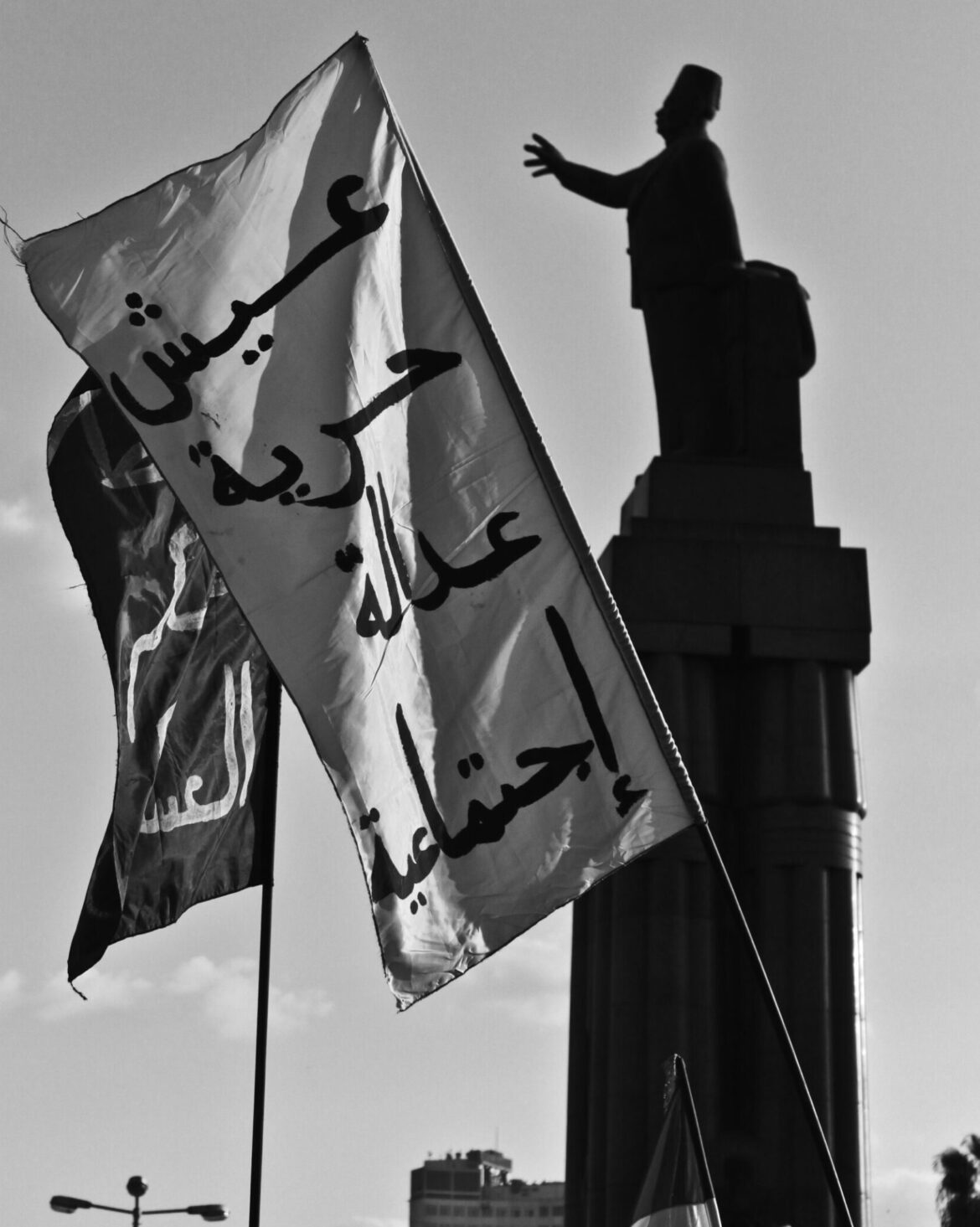
Delving into the heart of the Arab Spring uprising of 2011, this article unveils the transformative power that discourse holds, encapsulating the profound demands for ‘bread, freedom, and justice,’ and their enduring resonance in the aftermath of a revolution.
Cairo, January 2011. In Tahrir Square, a sea of protesters raised their voices in unison, chanting a phrase that would soon reverberate across the world: aīsh, huriyya, ʿadāla igtimāʿiyya, bread, freedom, social justice. Three words, perhaps, simple in form, yet profoundly salient coming from the voices of those under the thumb of autocratic rule.
This chant poses the question: how does one begin to encapsulate decades of anguish and adversity within the confines of a mere phrase? Indeed, the very attempt to distill the depths of human experience into finite words can appear paradoxical. Yet, within this paradox lies the very essence of humanity, an ability to portray profound struggle within the boundaries of speech. In the face of unimaginable suffering, words become tools against corruption. They carry the echoes of generations past and the aspirations of those in the present. “Power to the people,” “¡Viva la Revolución!” and “Bread, Freedom, Social Justice.
Aīsh, huriyya, ‘adāla igtimā’iyya, or, “bread, freedom, social justice’’ were, ultimately, the key demands of Egyptian protesters in early 2011. Alongside their quotability, these words embodied political and spiritual manifestations much grander than their linguistic limitations. These calls initially gained traction during the 2011 Arab Spring, which was characterized by massive, all-out demonstrations and calls for political change throughout the Arab world. Autocratic rule for decades had exacerbated long-standing citizen discontent and sustained long-standing socioeconomic inequalities. Buoyed by the success of their Tunisian counterparts, Egyptian activists and ordinary citizens took to the streets, demanding an end to Hosni Mubarak’s three-decade-long reign of autocracy. It is here that civilians attempted to market their struggle into a quote worthy of being repeated, of being heard, and of being listened to.
Aīsh, bread: transcending its physical form as dietary sustenance, embodied something not only capable of sustaining the body but also the soul. In societies where bread is more than just a commodity, its scarcity is emblematic of larger systemic failures and socioeconomic disparities. In this way, its linguistic presence signifies a proverbial cry against hunger, deprivation, and a system that had by all accounts failed to provide for its people in the most basic of ways.
Huriyya, freedom: the cherished birthright of every human being. It was a cry to break free from the chains of long-standing oppression. It was an outright declaration that liberty was not a negotiable procedure and that no walls could contain the yearning for self-determination and self-expression of the people. The demand for freedom echoed the universal longing of oneself, defying all attempts to suppress the voices of the Arab people.
Lastly, ‘adāla igtimā’iyya, social justice: the rightful cornerstone of a fair and equitable society. It was a demand for a world where privilege and power were not concentrated in the hands of the few entrenched elites but distributed among the many.
Yet, like most revolutions, the initial euphoria of change, that insatiable and intoxicating sense of possibility that permeated the air in Tahrir Square and beyond, ultimately, gave way to the harsh realities of a protracted power struggle. The drafting of a new constitution, initiated with the intention of enshrining principles of pluralism, human rights, and the rule of law, ultimately became mired in controversy and contention. Mubarak’s ouster had quickly resulted in the struggle for power and influence; the ‘supposed’ promise of democracy, administered by the historic presidential elections of 2012, was, instead, overshadowed by deep political polarisation. Later, the rise of the Muslim Brotherhood would allow for the enactment of restrictive laws, cloaked in the guise of “national security”. While various sects of the Egyptian population had been united under a shared discourse, the reality had proved difficult to achieve actionable policy. Assemblies were disbanded, media outlets silenced, and civil society organizations stifled, suppressing the voices of activists and reformers yet again.
Nevertheless, the spirit of Aīsh, huriyya, and ‘adāla igtimā’iyya persisted in the nation’s collective consciousness. Indeed, almost a full ten years after the phrase first echoed through Tahrir Square, in September 2019, Egyptians would once again take to the streets, chanting to protest fuel and subsidy cuts linked to IMF austerity measures. Additionally, the phrase has transcended once more its Egyptian origins in the region, resurfacing in the chants of Sudanese protesters during the 2018–2019 revolution and later in anti-government protests of Lebanon.
In this way, when we reflect on the legacy and discourse of the Arab Spring, let us not forget the lessons it taught us. Let us heed those who dared to imagine a world where bread, freedom, and social justice were not just words to be chanted, but representative of tangible and sought-after realities for all. Here, it comes to be understood, in the corridors of history, that it is often the spoken word – a chant in a town square – that becomes the rallying cry of revolutions and the continued beacon of hope for generations to come.
Edited By Susana Baquero Salah

Katerina Ntregkas is in her fourth year at McGill University, currently pursuing a degree in International Development Studies with a minor in Communication Studies. In her third year with Catalyst, Katerina remains steadfast in analyzing the discourse between the intersection of media and developing world politics.