
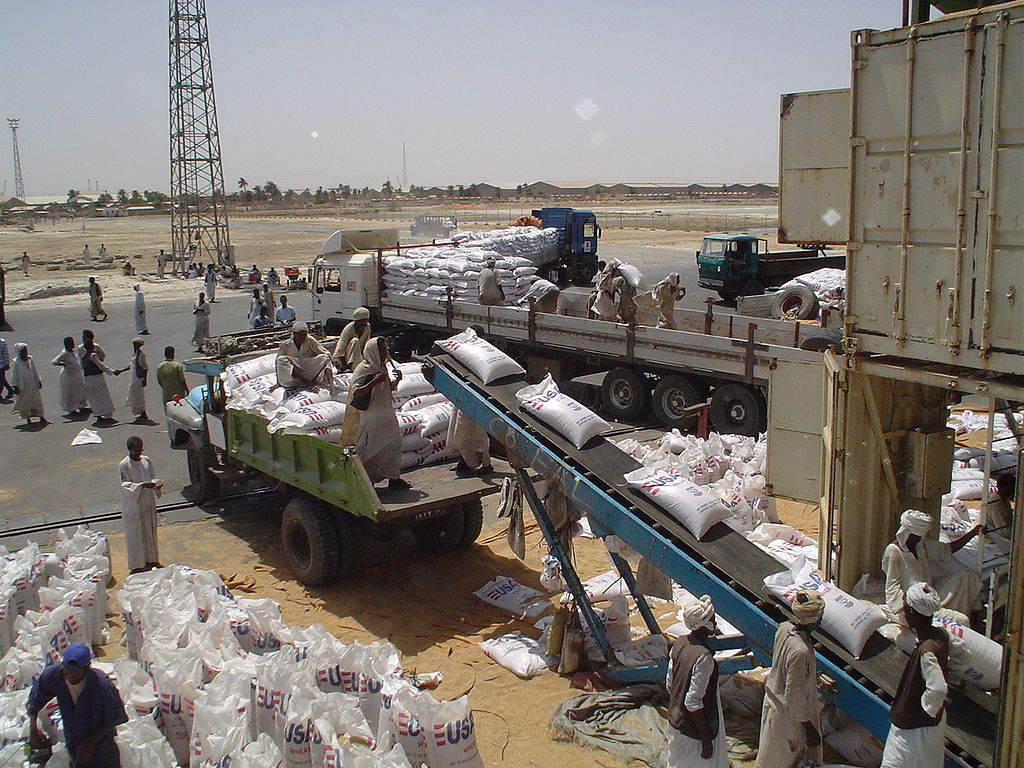
In Sudan, where military conflict has caused mass displacement and a critical humanitarian crisis, Trump’s dissolution of the US Agency for International Development exacerbates civilian suffering.
According to doctors, Trump’s dissolution of the US Agency for International Development (USAID) has had a devastating impact on vulnerable populations in Sudan, where the humanitarian situation was already critical.
The organization, which was established by President John F. Kennedy in 1961 and has since held a key role in conflict mitigation, global health, and food aid distribution programmes, was systematically dismantled starting in January. Its formal closure has entailed the near-total layoff of the 13,000 staff, the cancellation of 83% of aid contracts, and the complete integration of the agency into the State Department. The administration explained this diversion of funds by citing billions in wasted taxpayer money and lacking results.
Key USAID leaders have expressed doubts about the capacity of the State Department to take over the humanitarian duties fulfilled by the Agency. Susan Reichle, a former Senior Foreign Service officer at USAID, has declared that the reorganization of the agency into the State Department amounts to “an absolute train wreck”.
For Sudan, home to the world’s largest humanitarian crisis according to the UN, the impact is already fatal.
Sudan was plunged into war in 2023 when the tensions between the head of the country’s armed forces, Gen Abdel Fattah al-Burhan, and a paramilitary group called the Rapid Support Forces (RSF) and led by Gen Mohamed Hamdan Dagalo, escalated to a widespread military conflict. Tensions are exacerbated by external actors that are funding the conflict to exploit Sudan’s plentiful natural resources, including gold and oil. In particular, the United Arab Emirates and Iran provide arms and funding to the RSF and SAF, respectively.
The groups’ competition for predominance has resulted in the mass civilian displacement of nearly 13 million people, and both sides have been accused of war crimes, including targeted sexual violence, bombings of hospitals and other civilian locations, and disruption of important food centres and aid delivery. Evidence of genocidal violence against certain ethnic groups by the RSF was also found in the region of Darfur. Recently, on June 15, human rights lawyers have accused the RSF of raiding and setting fire to villages in the state of North Kordofan and killing nearly 300 people.
On June 28, Sudan’s military agreed to a weeklong ceasefire proposed by the UN to ease aid delivery in El Fasher, the capital of North Darfur, but it was unclear whether the RSF would agree and comply. Two days later, the group’s rejection of the proposal was signalled by artillery fire targeting El Fasher. The African Union and the UN have expressed a shared priority to establish a ceasefire and unite the military and RSF, but BBC journalists have reported a reticence to work towards these goals, especially from the army. No significant progress has been made, and the human cost continues to rise.
As a result, ongoing fighting has limited agricultural production while food remains difficult to afford. A physical cash shortage has led to the implementation of a food voucher system, and government monopolies on some essential markets such as corn, flour, sugar and salt have made the purchase of groceries both difficult and expensive. Presently, a pound of sugar costs 20,000 Sudanese pounds ($33). In March, 22 million Sudanese people needed food aid, but with Trump’s new policies, that number is likely to increase.
Programs funded by USAID — such as soup kitchens — were a lifeline for the hungry and ill, especially as disease began to ravage vulnerable communities. According to a series of local interviews conducted by the Washington Post in Khartoum, cuts to US aid meant that babies and children starved and critical medical supplies were never delivered, which has increased the number of cholera outbreaks in the region. A report by the World Health Organization estimated that 5 million Sudanese people are expected to lose access to lifesaving health services as a result of US cuts.
Sudan is certainly not the only country predicted to suffer as a result of the dissolution of USAID, as the positive impacts of the agency’s existence have had a far reach during its sixty years in action. A study by medical journal The Lancet found that USAID programs have saved more than 90 million lives in the past two decades, most of which can be attributed to medical programs targeting HIV/AIDS, malaria, and other tropical diseases. The researchers also found that the current cuts could, if left unchanged, cause the deaths of 14 million people by 2030.
Although USAID — and the global aid industry — are not perfect, the early evidence on the loss of the organization depicts a bleak picture of devastating loss and avoidable death. This important shift marks a drastic change in the global aid climate and in the future of vulnerable communities. USAID, which was once the nexus of international humanitarian aid, is leaving at a precarious moment, and it will take time to fully ascertain the breadth of the impacts of Trump’s policies on humanitarian crises — in Sudan and elsewhere.
Edited by Lara Cevasco
This is an article written by a Staff Writer. Catalyst is a student-led platform that fosters engagement with global issues from a learning perspective. The opinions expressed above do not necessarily reflect the views of the publication.

Noé Beaudoin is a second year student at McGill majoring in International Development Studies and Economics and minoring in English. As a writer for Catalyst, she seeks to explore the interaction between current events abroad and cultural discourse and is particularly interested in the Middle East and climate action.