
In 2023, the Brazilian city of Curitiba was named the “Smart City of the Year” at the Smart City Expo World Congress in Barcelona; however, it did not always have such a strong reputation. From 1940 to 1960, the population more than doubled from around 125,000 to over 360,000. Without the necessary infrastructure to manage this unprecedented growth, thousands were left impoverished, and growing, unorganized favelas led to traffic jams that halted movement throughout the city. Curitiba was seen as a chaotic city with limited social support for its citizens and few opportunities for job growth. To combat this, the city created the Institute of Research and Urban Planning of Curitiba (IPPUC) in 1965 to monitor the implementation of a master plan that would guide the city in a new direction—one of order, economic, commercial, and industrial growth. Jaime Lerner, elected mayor of Curitiba in 1971, spearheaded this change, guiding the country into an era of managed growth.
The Origins of Bus Rapid Transit
Since the start of his 1971 term, Jaime Lerner faced immense pressure to widen and add more lanes to roads to increase the number of automobiles on the road at any given time and accommodate growing traffic. However, knowing this was only a temporary solution that did not ensure future growth, Lerner cut three lanes of traffic for a new bus system.
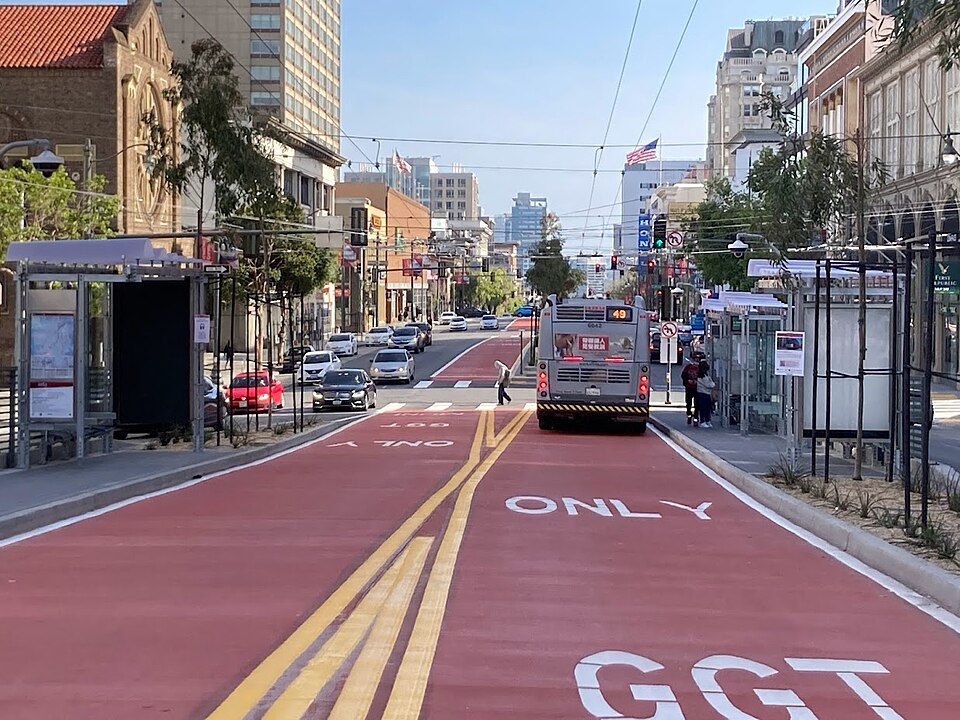
Although Curitiba could have benefited from a metro rail system, it lacked the funds to undertake such a large-scale project. Instead, Lerner adopted a different approach called Bus Rapid Transit (BRT). He designed the city around structural axes using a “trinary road system” with three lanes per street. The middle lane was strictly reserved for buses, providing a two-way road with dedicated boarding terminals, while the two outer lanes handled one-way automobile traffic. This system runs along five structural axes across the city, transporting passengers within the city centre and also to peripheral residential areas. This setup allowed buses to move quickly and efficiently across the city, functioning like a metro and avoiding regular traffic.
In the 1980s, Lerner observed that pedestrian traffic jams slowed bus service because people boarded and disembarked at each station. The IPPUC implemented three innovations: (1) building longer buses to add a higher rider capacity, (2) enforcing a pre-payment system so bus drivers did not have to manage ticket sales, and (3) raising platforms to quicken the transition from the train to the platform without stairs that led to congestion. Crucially, Lerner established a precedent of revisiting the master plan with the IPPUC every 10 years to assess and make any needed changes.
Overall, the creation of this system decongested downtown traffic, decreased commuting times, and was so highly used that the project more than broke even. Since its creation in the 1970s, public transport ridership has steadily grown, as its citizens recognize it as both the cheapest and fastest mode of transport. It carries around 2 million passengers per day and reaches 80 km across the country with 350 different access stations. Recently, the city even began converting its buses to electric, biodiesel, and hybrid engines, and hopes to be 100% electric by 2050.
Bus Rapid Transit Around the World
BRT effectively combines the efficiency of metros with the flexibility and low cost of buses, while offering environmental benefits by encouraging people to avoid using private vehicles. Many cities around the world followed in Caribata’s example. To successfully implement this system, cities must simply follow Jaime Lerner’s five features: dedicated right-of-way, busway alignment, off-board fare collection, intersection treatments, and platform-level boarding. While still mainly used in Latin America, Bus Rapid Transit can now be found on every inhabited continent. Globally, Market Reports estimate that over 600 kilometres of BRT projects are currently underway.
In Canada, Vancouver recently released its own proposal (2026) for a modified BRT, including two lines: King George and Langley-Haney Place. The city plans to introduce 41 kilometres of rapid transit to the suburban municipalities of Surrey, Langley, and Maple Ridge. The Langley-Haney line connects Kwantlen Polytechnic University, the Ridge Meadows hospital, and the town shopping center to the downtown core and periphery, easing the commute for workers and students. The two lines will be connected by the Surrey Langley SkyTrain, also reducing travel time between the east and west of the city. This modified BRT would reduce travel time from the suburbs to the city by 40% to approximately 40 minutes.
In Mississauga, Ontario, the Mississauga Transitway is an exclusive 18 km bus corridor with 12 stations. Mississauga’s transit provider, MiWay, recorded 52 million annual bus boardings (trips taken) in 2025, generating 98 million dollars in revenue for the city. Since its construction, the city has revisited and analyzed the system’s efficiency and accessibility, soliciting feedback from passengers and professionals. In fact, construction to update two east-west routes is announced for April 2026, proving it is a system capable of continually updating and modernizing to stay relevant in a world dominated by cars.
In Ulaanbaatar, Mongolia, a new BRT construction loan was recently approved by the Asian Development Bank. It will offer Mongolian citizens a first-of-its-kind public transportation service. Much like Curitiba in the 1940s, Ulaanbaatar currently faces rapid population growth, high levels of traffic and congestion, and an infrastructure incapable of providing fast transport within the city; it is thus a model candidate for implementing a BRT.
In 2025, Senegal became the first country in Africa to build a fully electric BRT. Citing successes in Latin America, the city of Dakar built its BRT to cut passenger time from 90 minutes to 45 minutes, reducing CO2 emissions by 59,000 tons per year and local air pollutants by 20 tons of PM2.5 annually. The project also added 180,000 jobs in socio-economically disadvantaged areas of the city. Dakar’s BRT system serves as a model for the rest of Africa to emulate.
BRT is able to be implemented all around the world due to its versatility, ease of construction, and relatively low cost. It is especially useful for developing countries, as it stimulates more job growth (urban planners and workers for BRT), but is also good for developed countries that are looking to reduce carbon emissions and more efficiently connect different parts of the city.
Edited by Lily Christopoulos
Disclaimer: This is an article written by a Staff Writer. Catalyst is a student-led platform that fosters engagement with global issues from a learning perspective. The opinions expressed above do not necessarily reflect the views of the publication.
