
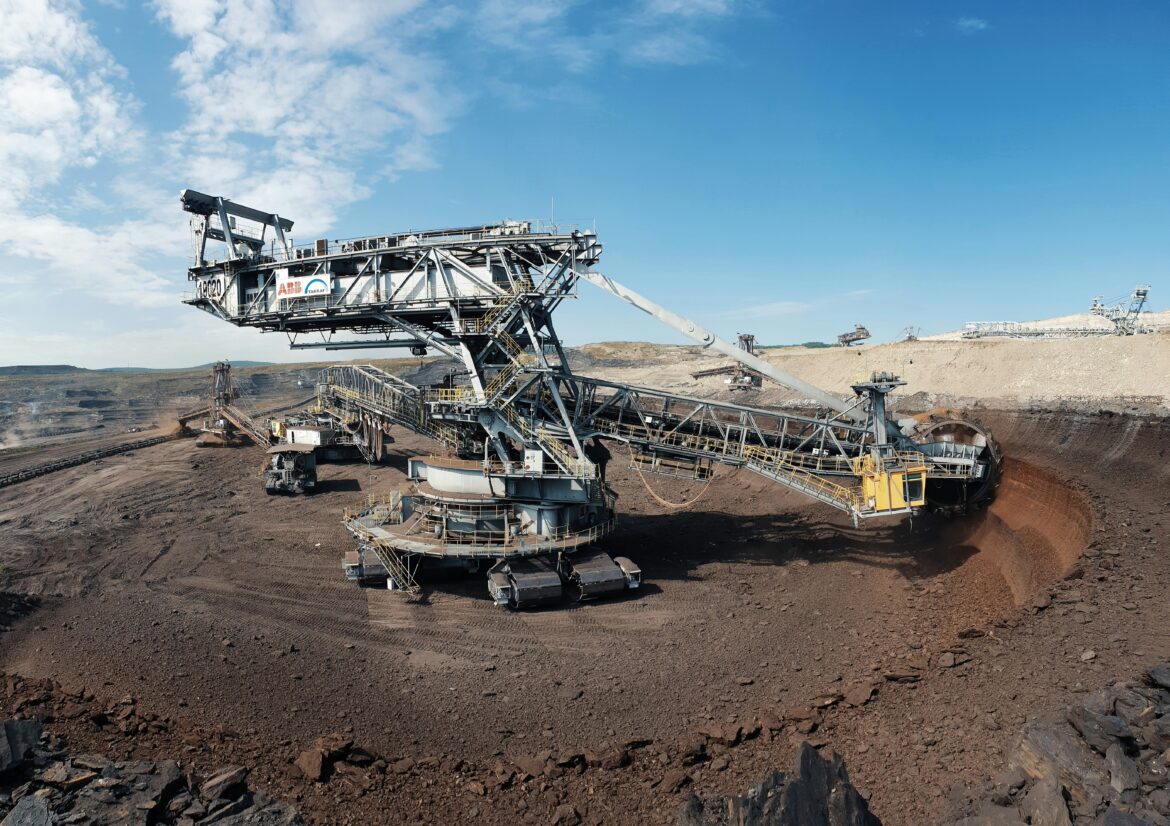
Canada is home to roughly half of the world’s publicly traded mining and mineral exploration companies. These large Canadian firms frequently frame their operations abroad as vehicles for development, emphasizing the capacity of their projects to “transform lives” and “create better futures” for communities. These same firms, however, have been faced with allegations of human rights abuse for nearly three decades, and their projects are regularly met with vast local political mobilization against their operation. As of February 1, 2026, MiningWatch Canada, a federally registered non-profit organization that supports those harmed by Canadian mining practices, submitted a report documenting 27 cases of violations of environmental protection and human rights. These infringements are associated with 20 multinational Canadian mining companies operating in nine Latin American countries. The report details incidents of violence that contributed to 44 deaths, 403 injuries, and 709 cases of “criminalization.”
Far from representing novel developments, these recent violations are part of an enduring parasitic relationship between Canadian mineral companies and the foreign host countries in which they operate. In 2018, the government established the Office of the Canadian Ombudsperson for Responsible Enterprise (CORE) to respond to allegations of abuse by Canadian firms and provide an institutional framework for independent investigation. However, the office has been without a full-time Ombudsperson since May 2024, and without even an interim Ombudsperson since May 2025. CORE continues to accept new cases even though no new investigations can progress without an Ombudsperson in place. Despite mounting criticism, meaningful accountability by both the Canadian government and corporations remains extremely limited. Federal responses thus far have proven to be largely symbolic, lacking the enforcement power and resources to initiate reform effectively. The persistent malpractice by Canadian corporations may not suggest a regulatory failure, but rather a deliberate disregard of the harms experienced by affected communities in order to preserve existing power structures.
Examples from an Emerging Mining Frontier: Ecuador
In 2024, 1,344 Canadian mining companies collectively held Canadian mining assets (CMAs) valued at $352.6 billion. Among them, 747 firms held $240.6 billion in assets outside Canada, an 8.1 percent increase from their holdings in 2023. Foreign Canadian mining firms operate across 95 countries and account for approximately two-thirds of the total value of CMAs. A significant share of these holdings is concentrated in Latin America and the Caribbean, which accounted for half of all CMAs overseas in 2024.
Across Latin America, Canadian mining companies have been repeatedly linked to environmental degradation, labour abuses, and violent conflict within local communities. The hostilities surrounding Atico Mining, a Vancouver-based corporation, serve as a demonstrative example of the forceful tactics often employed by Canadian corporations to repress opposition to their projects abroad. The company’s La Plata gold and copper project has been opposed by residents for over 15 years. Atico Mining’s 2,222-hectare concession covers land that has been used for agriculture and livestock farming for over a century. After an attempt to resume a consultation process that would set the stalled mining project back in motion, residents erupted in protests in March of 2024. Almost 700 police and military personnel deployed by Atico Mining used tear gas and rubber bullets to suppress the crowds. At least 36 protesters were injured, and 72 were charged with acts of “terrorism”. Neither the Canadian Embassy nor Atico Mining was held accountable. Despite years of conflict and widespread international criticism, Atico Mining recently secured environmental licensing from the Ecuadorian Ministry of Environment and Energy and is nearing the commencement of construction for the La Plata project as of February 2026. Rather than resolving underlying conflicts with local communities, the Ecuadorian government under President Daniel Noboa has repressed opposition in pursuit of further economic gain.
Contradictions Within Canada’s Global Presence
Canada’s unflattering global reputation regarding its mining practices has not deterred the government from negotiating a series of free trade agreements to secure further protections for its corporations abroad. Embedded within these agreements is investor-state dispute settlement (ISDS), a mechanism that allows foreign investors to sue governments over policies that may impede profits, even if the policies aim to promote environmental preservation or human rights. The ISDS system confines arbitrations to the companies and governments involved, excluding local populations affected by the foreign investments in question. Canadian mining firms are responsible for more than one-third of ISDS claims, making them the most active users of the system.
A telling example of how the ISDS mechanism manifests in practice is the case of Copper Mesa vs. Ecuador, which exemplifies the exploitative application of investor protections by a Canadian firm. Copper Mesa Mining engaged in intimidation and violence against local communities in Ecuador that opposed their project. The company hired paramilitaries that physically attacked community members and opened fire on those attempting to block entry to the mining concessions. After the Ecuadorian government intervened and suspended licensing, Copper Mesa sued Ecuador for undermining its expectation of a predictable legal environment. Although Ecuador cancelled the project due to the company’s failure to consult affected communities and secure approval for its environmental impact assessment, the ISDS tribunal ultimately sided with Copper Mesa and mandated Ecuador to pay US$24 million in compensation. The tarnished international standing of Canadian mining corporations is not an accidental designation but a predictable outcome of years of deliberate, profit-driven mismanagement and the use of ISDS mechanisms within predatory treaties.
Prime Minister Mark Carney’s recent special address at the World Economic Forum in Davos, Switzerland, centred on charting a disciplined path forward for intermediate powers navigating the current rupture within the global order. His critique of the very international system that has long benefited Canada prompts reflection on the injustices perpetrated by Canadian corporations abroad. If Canada truly possesses the capacity to shape a new global order grounded in the respect for human rights and sustainable development that Carney endorses, such an endeavour must begin with extensive reform of one of the country’s most profitable sectors. At a minimum, this would require adequately resourcing oversight bodies such as CORE and the suspension of blatantly exploitative provisions embedded within Canada’s trade and investment agreements. While it is unreasonable to expect complete alignment between Canadian corporate activity and every articulation of Canadian leadership perspective, Carney’s emphasis on “values-based leadership” begs the question of whether his call for an end to unfair subordination will apply to one of Canada’s most lucrative industries. Is it possible for Canada to champion human rights while maintaining its position as a global mining leader?
Edited by Marina Gallo
This is an article written by a Staff Writer. Catalyst is a student-led platform that fosters engagement with global issues from a learning perspective. The opinions expressed above do not necessarily reflect the views of the publication.

Natalia Sodhi is in her third year at McGill University, currently pursuing an Honours B.A. in International Development Studies with a minor in Urban Geography. She serves as a staff writer for Catalyst and is particularly interested in the global refugee crisis, international migration flows, and sustainable urban development.