
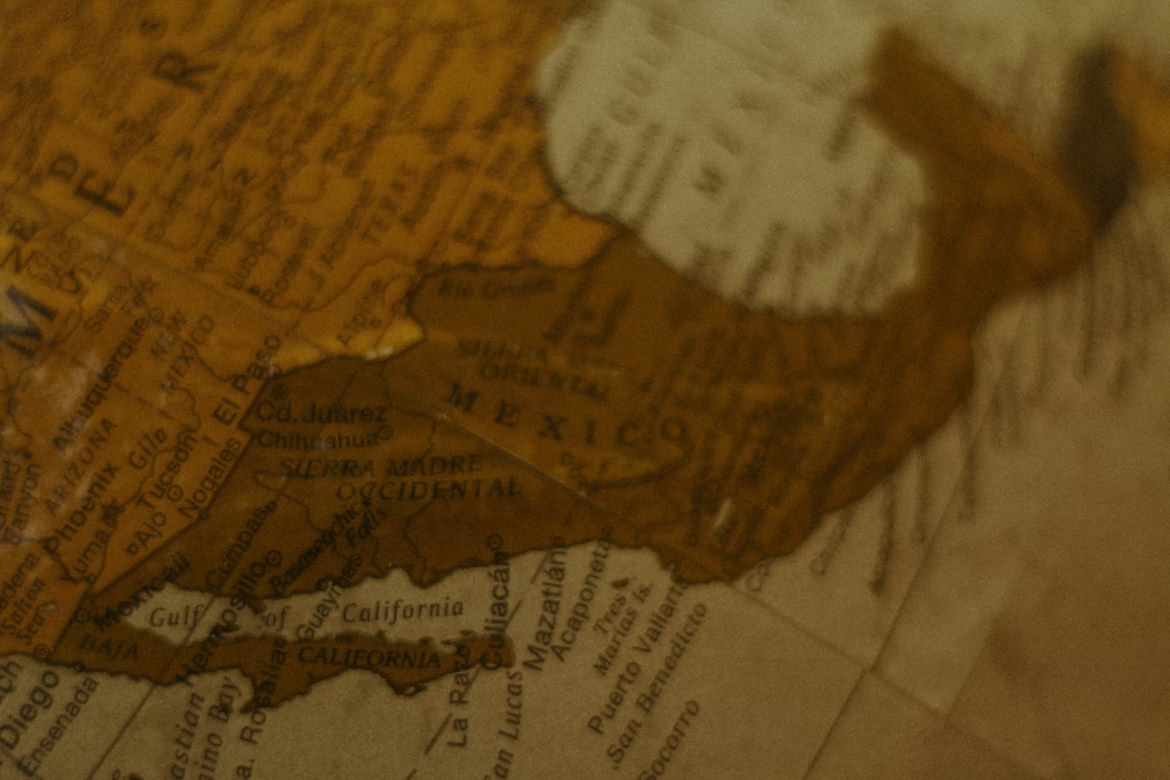
On February 22, Mexican forces shot and killed Nemesio Oseguera Cervantes, more commonly known as “El Mencho,” exacerbating threats of cartel-initiated violence. Cervantes was the mastermind behind the Jalisco New Generation Cartel (CJNG). The CJNG emerged as an independent entity following a split from the Sinaloa cartel in 2010 after a long and complex history of destruction, infighting, and legal loopholes. Like most cartels, the CJNG generates the majority of its profits from the transportation of contraband to the United States, though they also engage in extortion, migrant smuggling, and oil and mineral theft.
The CJNC: An infamous history
Fentanyl overdose deaths in the US steadily increased for about a decade starting in 2013, reaching a peak of nearly 74,000 casualties in 2022. During President Trump’s second term, the US placed emphasis on a law enforcement-focused strategy, allocating significant resources to stifle the supply of Fentanyl by cartels, thereby indirectly diverting attention away from other major illicit substances such as cocaine and methamphetamine. The CJNG capitalized on this preoccupation with the Fentanyl crisis as they increased their transport of cocaine and methamphetamine, using speedboats and narco-submarines travelling from Colombia to Ecuador before coming in on the Mexican Coast. Once they would reach the coast inconspicuously, drug contents could be trafficked into the US. El Mencho identified this prevalent desire in the market, with US cocaine usage increasing by 154 percent from 2019 to 2026, and was able to make significant profit through the illegal economic venture.
Law-enforcement strategies aimed at cartel suppression often result in a “ballooning effect”. The theory suggests that when there are crackdowns on drug crime in a prevalent location, rather than the positive effects of suppression spilling over to other regions, cartels simply relocate their illicit practices to new hubs. In the case of the CJNG, the cartel maintained their profits by identifying alternative routes to the US and taking advantage of less closely monitored areas across Mexico.
The Hit: lead-up to El Mencho’s death
President Donald Trump has placed increasing pressures on Mexico’s President Claudia Sheinbaum to “get their act together” and eliminate the threat of the drug-trafficking cartels in the past few months. President Trump has issued similar sentiments to Latin American nations in the past, a prominent example being when he delegitimized Colombia from being a drug control partner of the US in 2025 after they failed to make what was deemed sufficient progress in tackling the problem domestically. Mexico similarly has a history of partnership with the US in the realm of drug control, which contributed to the heightened tensions in February.
On February 20, with the help of US intelligence, Mexican authorities received information about a cabin where Cervantes was sequestered in Talalpa, Jalisco. After being guided there by one of Cervantes’ romantic partners, the authorities initiated a ground force mission to capture the infamous leader. On February 22, the forces were met with violent backlash, being shot at as they closed in on El Mencho’s hideout. Although Cervantes fled the scene along with two bodyguards, all three men later died mid-flight en route to a hospital after sustaining serious injuries.
Effects on Travel, Safety, and the Economy
The aftermath of El Mencho’s death ignited outrage amongst cartel members throughout Mexico. As a result, for the first time in the country’s history, coordinated attacks occurred in more than 20 states simultaneously. Arson and road blockades posed threats in cities, and any unnecessary travel was deemed too perilous. Tourists and locals alike were bound to their respective accommodations and waited for word that the threat had subsided.
After the events in late February began to unfold, the Canadian government designated the CJNC as a terrorist organization, citing its presence as a threat to civilians and the operation of governments to enforce laws. The CJNC’s brutality and violence is deliberate and calculated, designed to show dominance over rivals and deter acts of local resistance.
The United States and Canada both temporarily suspended travel to Mexico and urged their citizens to comply with safety measures as more information emerged. Not only did the suspension deter US and Canadian citizens from travelling to their southern neighbour, but alsoput tourists in a precarious situation.
In the past few decades, Mexico experienced a large influx of tourists, with an average annual increase of 3.3 percent. Unlike many other nations, Mexico’s post-pandemic numbers are higher than those of the pre-pandemic period, giving it a clear comparative advantage in tourism aiding its GDP. The nation is also committed to hosting several World Cup soccer matches this summer, which could earn the nation upwards of 200 billion pesos, or around 15 billion CAD from tourism and an uptick in support for local businesses. Approximately 12,000 jobs would result from the event, further solidifying it as an enormous economic opportunity for the country.
However, Mexico’s perception abroad, in light of this cartel violence, could stand in the way of reaping these economic benefits. While there is no debate that the cartels need to be contained and controlled, systemic corruption and bribery of the police, military and even politicians, prevent the successful execution of this task. For example, in 2024, Mexico’s then Secretary of Public Security, Genaro Garcia Luna, was tried in a US court for accepting millions of dollars worth of bribes from Cartel leaders. Two months later, a large-scale arrest of 92 municipal officers took place after the group attempted to prevent state authorities from accessing a police surveillance camera office. Prosecutors claim this was an act of corruption and an attempt to pass along information to cartels. Large-scale deception occurring at all levels of government does not leave Mexican citizens confident in their government’s ability to neutralize cartel threats in the near future.
Widespread media coverage painting Mexico as a war zone already caused irreparable damage to the country’s image. Thus, Mexico will need to take great care in salvaging its image if it hopes to regain tourists’ trust and retain prospective revenue in the months ahead.
Edited by Lily Christopoulos
Disclaimer: This is an article written by a Staff Writer. Catalyst is a student-led platform that fosters engagement with global issues from a learning perspective. The opinions expressed above do not necessarily reflect the views of the publication.

Catherine Hearle is in her second year at McGill studying Philosophy and Economics. She has been a staff writer for Catalyst since February 2026, and is particularly interested in the intersection between religion and politics.