
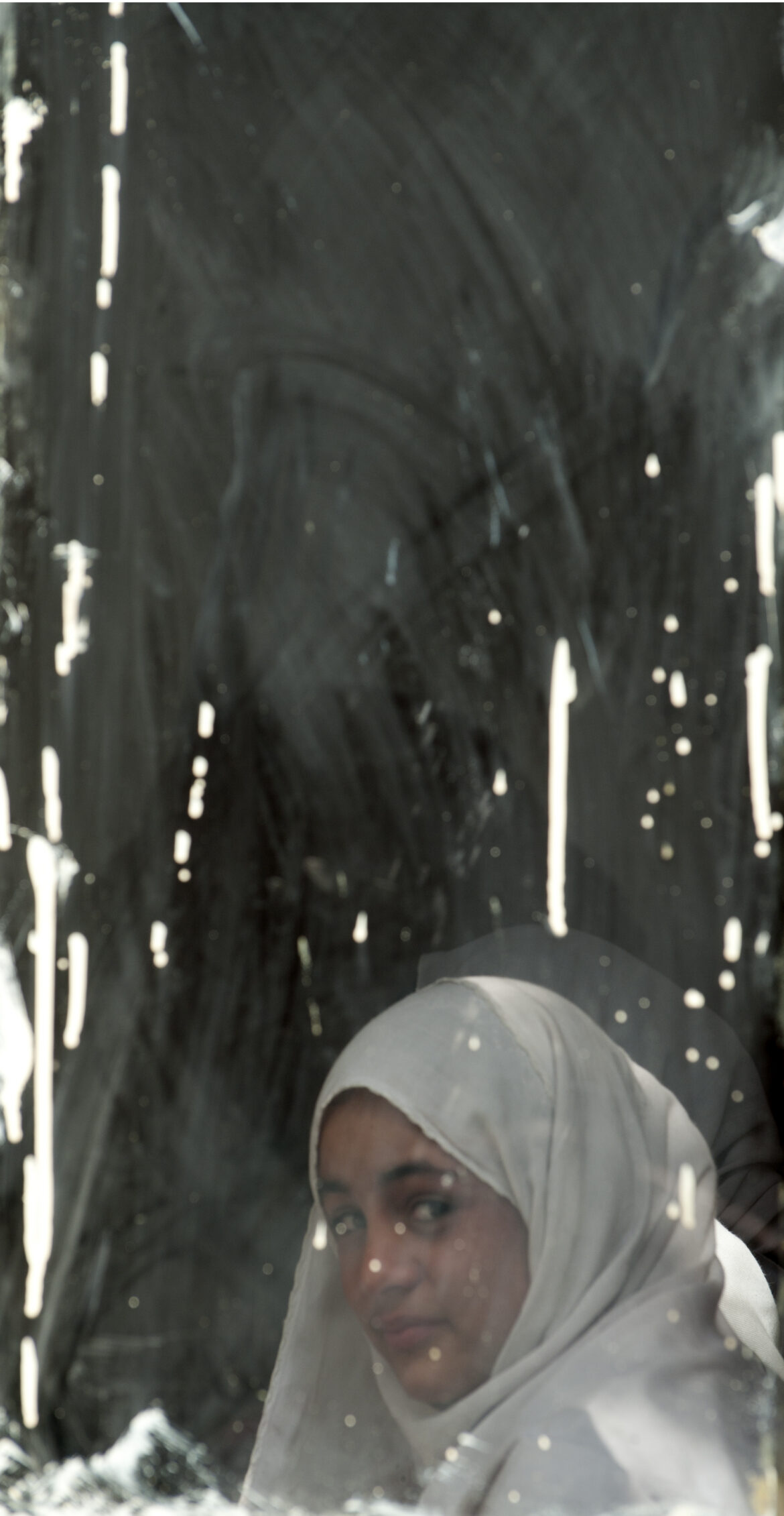
Tourism in Afghanistan was not conceivable nor commercialized during the 20-year US military occupation, nor at its end in 2021, when American forces dramatically pulled out from Kabul. The international community expected the Taliban to swiftly regain control and implement restrictive policies in line with their conservative interpretation of Islam, despite Taliban promises to guarantee human rights. Indeed, the Taliban partly or fully repealed American policies and implemented socially repressive ones, especially concerning women. Five years later, the political landscape of Afghanistan is even more severe than in 2021. Yet, despite this turmoil, tourism in Afghanistan is gaining popularity as a surge of young travelers share their experiences on social media platforms like TikTok: the good, the bad, and the ugly.
The Condition of Afghan Women
The condition of Afghan women’s political rights and social status was, in part, used as a pretext for the 20-year US occupation of Afghanistan. It is important to recognize this false pretext when examining the current state of Afghan women so as not to construct simplistic or even imperialistic conceptions of reality. That said, the condition of women living under the Taliban is truly grave. Since 2021, the Taliban has effected one of the most extreme systemic reversals and erosion of women’s rights in the 21st century. The following is a list of revoked rights of Afghan women as documented by human rights organizations such as Amnesty International and the United Nations Human Rights Council:
- Women are refused access to any private business or health care if not in the company of a mahram (male guardian)
- Women are banned from secondary and higher education
- Women may not receive health care from male doctors
- Women may not travel without a mahram
- Women may not enter public parks
- Women’s voices may not be heard in public, including singing
- Women may not participate in sporting events
- Women may not work in the public sector, except for a few occupations
In addition to these formal restrictions, police and male family members perpetrate violence against women, uphold the practice of child marriage, and enforce veiling through coercion and physical force. It is important to keep this reality in mind when considering the ethics of travel to a country that is so far down the spectrum of women’s rights. It is also important to keep in mind that these living conditions are not an inherent result of religion, geography, or ethnicity, but rather of power systems that perpetuate political violence against women.
Filmed Perspectives
Having established the realities for Afghan women under Taliban rule, we can now examine Afghanistan through the eyes of the foreigner as depicted in TikToks frequently labelled with #VisitAfghanistan.
Sydnexexplore, a white American male content creator, posted a travel TikTok about his safe experience visiting the country in 2025. He begins explaining that he did not get his “information” about Afghanistan from the “mass media,” insinuating that it misleads viewers about the country. As someone who has “actually been there”, he attests that dangers common in “the West,” such as pickpocketing, are absent in Afghanistan. He further describes the country as “hospitable” and “respectful,” noting a general lack of firearm danger. However, he acknowledges the potential danger of unlawful imprisonment and recommends a guide for advanced travellers.
Another TikTok, filmed by female content creator Chloejadetravels, seeks to inform its audience about the problems Afghan men and women face. For example, she explains that the government forced people to move out into “barren lands”, into “displaced homes,” likely referring to the forced evictions of the Hazara minority. She also draws attention to “morality” laws that disproportionately target women, criminalizing acts such as listening to music, removing her hijab, visiting parks, and photographing the Taliban. She ended the video by reminding viewers: “Rules continue to get stricter and come down on women…Don’t forget about the Afghan people.”
Finally, a third TikTok, filmed by Matthoetravel, a white man, begins with him walking through a park and asking an (unconfirmed) Taliban member, “Having fun is not banned in Afghanistan?” In reply, the Taliban chuckles and says, “I think so, we gotta arrest them,” and the pair laugh together. Matthoetravel then explains to viewers that he is in a beautiful park in Kabul and joins a group of men playing volleyball. This particular TikTokker has made multiple videos while in Afghanistan, supposedly with the “Talibros” (a contraction of “Taliban” and “Bros”). He also posts videos about other developing countries, which equally receive numerous complaints. For instance, commenters reported his Facebook videos filmed in Bangladesh and accused him, in the comments, of having a “degrading mindset” because of his overemphasis on slums.
The Comparison
In comparing the rhetoric and visual choices of these three TikToks, three strains of perspective on approaching a developing or authoritarian country emerge: the passive, the progressive, and the regressive.
Sydnexexplore’s TikTok focused on danger in the sense of danger to one’s possessions: robbery, pickpocketing, and gun violence. However, he did not address the humanitarian crisis or the Taliban. It was passive. This TikTok identified some pros and cons of the trip, yet remained unmoved by them, as if this trip existed in a pocket of time separated from the reality of Afghans. The subtext of this video falsely claims that one can travel without understanding that, as long as you do not need to confront a problematic regime, you can enjoy the fun aspects alone. Travelling does not make you exist outside of a society’s problems; they are part of the package.
More concerning, however, is Matthoetravel’s approach, which precariously walks a tightrope between introducing Afghan culture to the world and normalizing an oppressive regime. None of his videos addresses the country’s political state or features any women. Yet, his friendly disposition towards Taliban members, or fake ones, is like rubbing salt in the wound. He disrespects the sacrifices and strength of Afghan women who live under this regime for likes. To make women’s misery your pleasure without even a mention, however, is to engage in the same systems of patriarchy and misogyny that subjugated her in the first place.
Finally, Chloejadetravels’s TikTok is progressive as she used her platform to speak out for the Afghan people. By highlighting the severe restrictions women face and the forced expulsions of minority groups, she brings attention to the reality of living in Afghanistan while simultaneously being grateful for her trip. Not only did she see the “good” and the “bad,” but she is also saddened by the bad because she has known the good. This rhetoric is positive, as she urges viewers to remember and to keep vigil for the people we cannot help but root for. Her tone and emphasis differ so sharply from the regressive TikTok’s portrayal that one might assume they depict two entirely different societies.
Now, why does the depiction of Afghanistan in popular media matter? Are people not allowed to film whatever they want? Yes, but also no. As a foreigner, you are choosing to travel to a country. That country is not Schrodinger’s cat. It exists in its form whether or not your eyes are looking at it. If you choose to come, you are choosing that country in its current form; you cannot experience your trip apart from its form. And, if you cannot experience a country separate from its form, then you have a duty to do it justice, to depict it in its full form, not fractured shards. To visit a country that is extremely oppressive towards half its population and essentially in a gender-apartheid and not comment on it is not showing its full profile; it is an injustice. However, just showing its profile, like Sydnexexplore, is not enough. Only by truly reckoning with the state of society and attempting to understand its good, bad, and ugly have you travelled. Otherwise, you are merely moving from one spot on Earth to another.
Edited by Lily Christopoulos
Disclaimer: This is an article written by a Staff Writer. Catalyst is a student-led platform that fosters engagement with global issues from a learning perspective. The opinions expressed above do not necessarily reflect the views of the publication.

Sonia Oulamine is a second-year student at McGill University, currently pursuing a B.A. in International Development Studies with minors in Political Science and Arabic Language. She serves as a writer for Catalyst and has a particular interest in international relations, law, and human rights.